Most Profitable Healthcare Franchise Opportunities in Peru
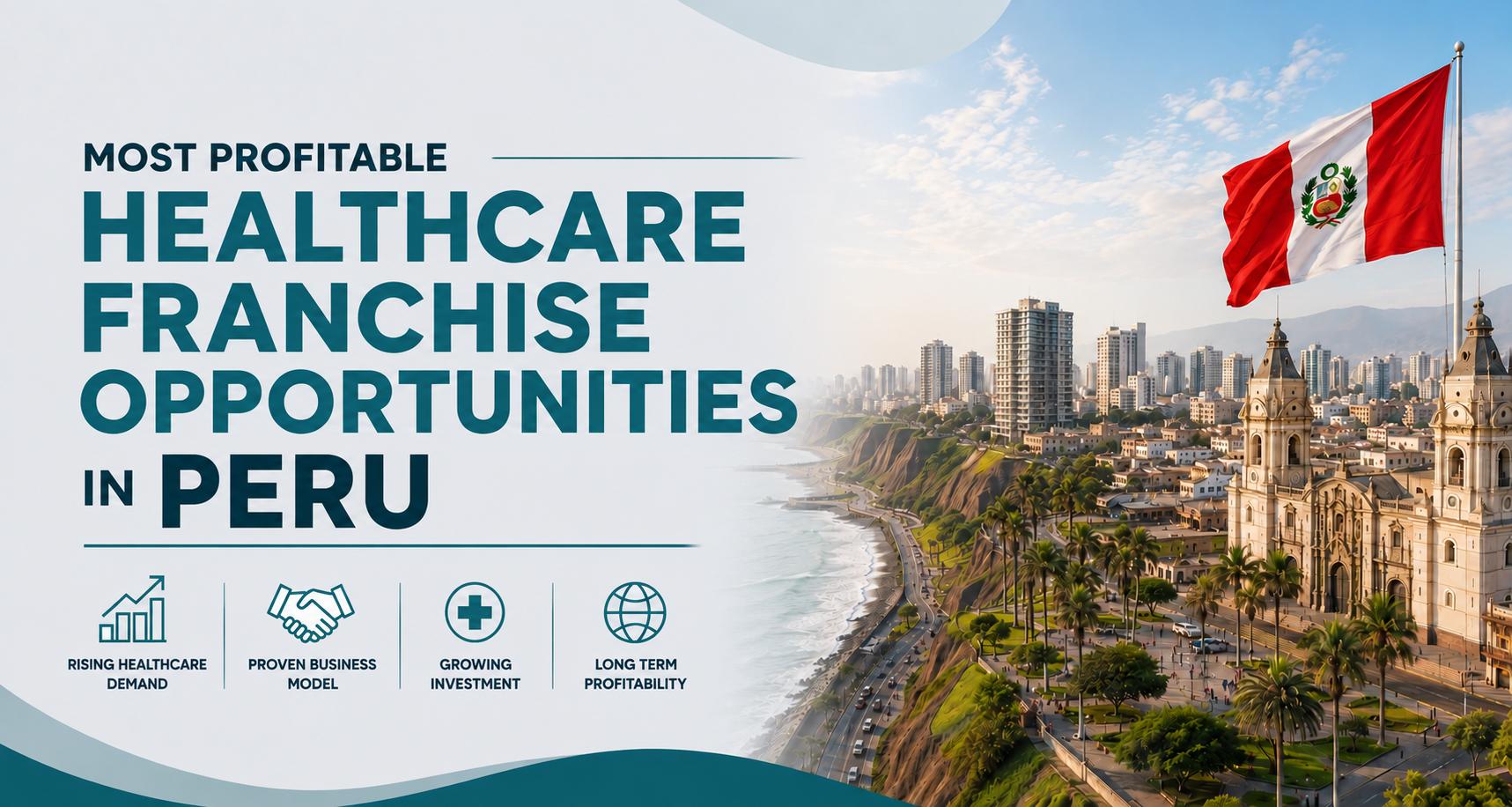
Peru’s healthcare sector offers opportunities for entrepreneurs looking to enter a market built around essential and specialised services. Growing healthcare needs, increasing private healthcare spending, and demand for specialised treatments are creating room for new healthcare businesses.
For investors, a franchise can provide an established route into this sector, combining a recognised brand with structured operations, training, and ongoing support. From diagnostics and dental care to aesthetics and hair restoration, different models can serve Peru’s changing healthcare needs.
This guide explores the market conditions supporting healthcare franchising in Peru, the benefits of choosing a franchise model, and the opportunities entrepreneurs can consider when planning their investment.
Key Takeaways
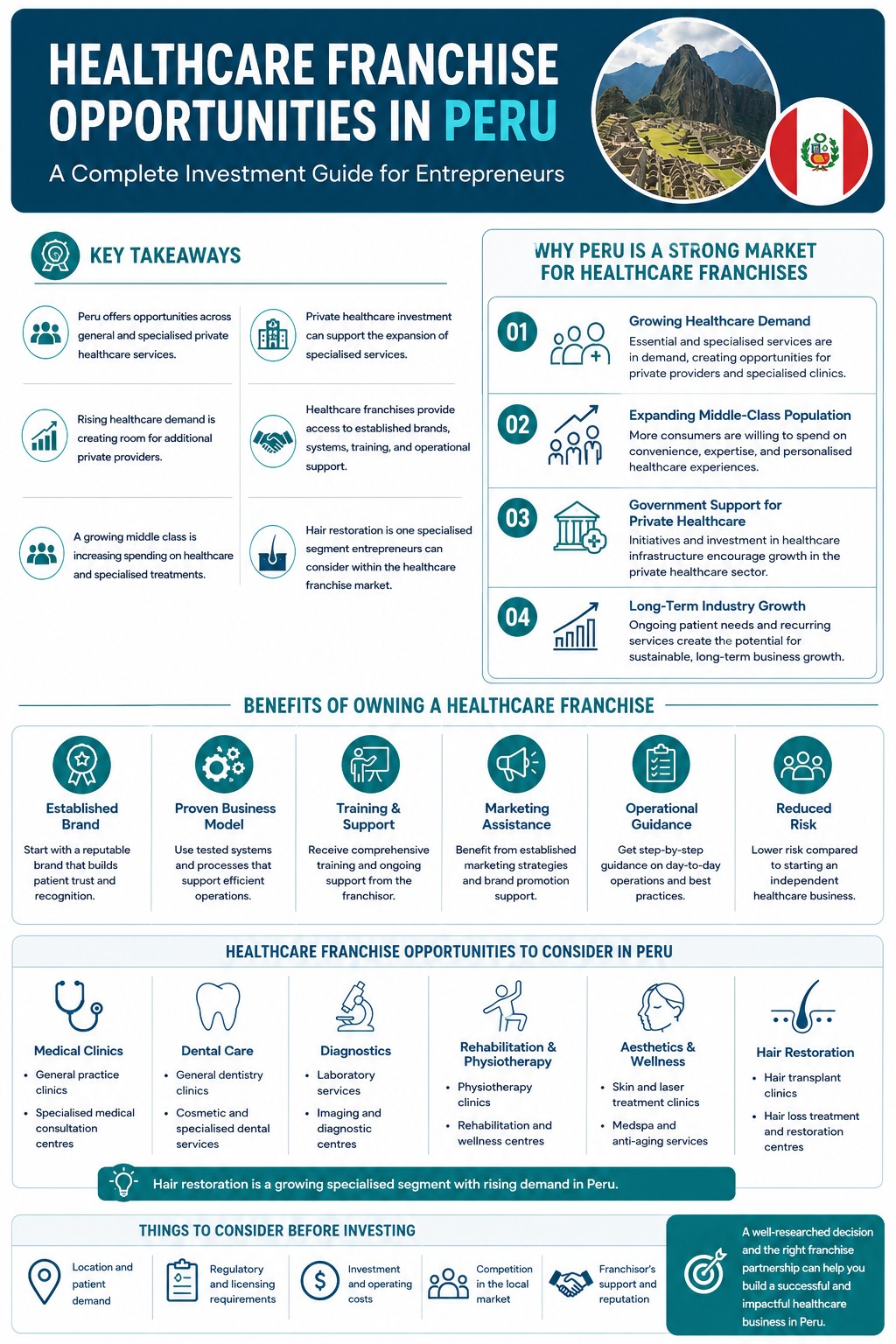
- Peru offers opportunities across general and specialised private healthcare services.
- Rising healthcare demand is creating room for additional private providers.
- A growing middle class is increasing spending on healthcare and specialised treatments.
- Healthcare franchises provide access to established brands, systems, training, and operational support.
- Hair restoration is one specialised segment entrepreneurs can consider within the healthcare franchise market.
Why Peru Is a Strong Market for Healthcare Franchises
Peru’s healthcare market presents opportunities for entrepreneurs because demand is being influenced by population growth, changing healthcare preferences, and greater interest in private and specialised services. For franchise investors, these factors create opportunities to enter established healthcare categories while addressing specific patient needs.
Growing Healthcare Demand
Healthcare is an essential service, which creates consistent demand across medical consultations, diagnostics, dental care, rehabilitation, and specialised treatments. As healthcare needs increase, private providers can play an important role in giving patients additional options for accessing professional services.
For entrepreneurs, this creates opportunities to establish businesses focused on specific healthcare requirements rather than operating as general medical facilities. Specialised clinics can build their proposition around a particular treatment area and develop expertise within that segment. A franchise model can further support this approach by providing established processes, training, branding, and operational guidance.
Expanding Middle-Class Population
A growing middle-class population can create greater demand for private healthcare services, particularly when consumers are willing to spend on convenience, specialised expertise, and personalised treatment. Healthcare spending can extend beyond essential medical needs into areas such as dental care, aesthetics, wellness, and hair restoration.
For entrepreneurs, this creates an opportunity to serve consumers looking for specialised services and higher-quality experiences. A healthcare franchise can provide an established service framework while allowing investors to build a local patient base. However, location, pricing, service quality, and the specific needs of the target customer remain important when evaluating an opportunity.
Government Support for Private Healthcare
Private healthcare has an important role alongside Peru’s public healthcare system, creating opportunities for businesses that can provide specialised and accessible services. Government initiatives and investment in healthcare infrastructure can also contribute to the broader development of the sector.
For entrepreneurs, this provides a basis for exploring private healthcare models across areas such as diagnostics, dental services, rehabilitation, aesthetics, and specialised clinics. Investors should still understand the licensing, professional, facility, and operational requirements applicable to their chosen service. A franchise can help entrepreneurs navigate the business side through established systems, although regulatory compliance remains the responsibility of the local business.
Long-Term Industry Growth
Healthcare is a sector built around ongoing patient needs rather than short-term consumer trends. This gives healthcare businesses the potential to develop long-term patient relationships through consultations, treatments, follow-ups, and recurring services.
For franchise investors, this can make specialised healthcare an attractive category to explore. Businesses focused on diagnostics, dental care, rehabilitation, aesthetics, and hair restoration can meet specific, recurring needs. The opportunity ultimately depends on choosing the right service, location, and business model. Entrepreneurs should assess patient demand, competition, investment requirements, staffing, and franchisor support before committing long-term.
Benefits of Owning a Healthcare Franchise
A healthcare franchise can give entrepreneurs a structured way to enter the private healthcare market without developing every part of the business independently. The benefits can include:
- Established Brand: A recognised healthcare brand can help build patient awareness and credibility.
- Proven Business Model: Franchisees can access established operational systems rather than developing processes from scratch.
- Training & Expertise: Franchisors may provide clinical, administrative, and business training based on their franchise model.
- Operational Support: Assistance with clinic setup, processes, staffing, technology, and day-to-day operations can simplify market entry.
- Marketing Support: Established marketing resources can help generate awareness and attract potential patients.
- Specialised Opportunities: Entrepreneurs can enter focused healthcare segments such as hair restoration, where specialised expertise and brand credibility can differentiate the business.
For investors, the combination of healthcare demand and franchise support can provide a structured foundation for building a specialised healthcare business in Peru.
Most Profitable Healthcare Franchise Opportunities in Peru
Peru’s healthcare sector offers opportunities across both essential and specialised services. Here are some of the most promising franchise models entrepreneurs can consider based on market demand and business potential.
1. Hair Transplant Clinics
Hair restoration is a specialised healthcare segment serving patients looking for professional solutions to hair loss. A dedicated clinic can offer consultations, hair transplant procedures, restoration treatments, and post-procedure care. The specialised nature of the service allows entrepreneurs to build a focused business rather than competing across multiple healthcare categories.
DHI International offers a specialised hair restoration franchise model, providing access to its DHI technique, clinical training, operational guidance, and marketing support. For entrepreneurs in Peru, this creates an opportunity to enter a focused healthcare segment with an established international brand and structured business model.
Start Profitable Healthcare Franchise in Peru
Join DHI Today2. Diagnostic & Medical Laboratory Centers
Diagnostic centres and medical laboratories provide essential services such as blood testing, imaging, pathology, and other diagnostic procedures. These services support doctors in identifying and monitoring health conditions, creating consistent demand from both patients and healthcare providers.
Entrepreneurs can explore independent diagnostic centres or franchise models that provide established systems, technology guidance, and operational support. Investment requirements can be significant because of equipment, facility setup, qualified technicians, licensing, and maintenance. Location also matters, particularly accessibility and proximity to residential areas, hospitals, clinics, and medical professionals. A well-managed diagnostic business can build long-term relationships with patients and healthcare providers.
3. Dental Clinics
Dental clinics offer a broad range of services, including preventive care, general dentistry, orthodontics, implants, cosmetic dentistry, and restorative treatments. This diversity allows entrepreneurs to choose between general dental practices and specialised treatment models. Regular consultations and follow-up treatments can also support ongoing patient relationships. A franchise may provide established branding, treatment protocols, marketing resources, training, and operational systems.
However, investors must account for qualified dental professionals, equipment, clinic infrastructure, licensing, and staffing requirements. Choosing a location with suitable demographics and accessibility is equally important. A strong patient experience and consistent service quality can help a dental franchise establish long-term demand.
4. IVF & Fertility Clinics
Fertility care is a highly specialised healthcare segment covering fertility assessments, consultations, assisted reproductive procedures, and IVF services. Entrepreneurs entering this category need substantial clinical expertise, specialised equipment, qualified professionals, and strict regulatory compliance. The specialised nature of fertility care can create a focused market position for businesses capable of delivering professional and patient-centred services.
Investors should carefully evaluate the clinical capabilities, technology, reputation, training, and operational framework of any franchise opportunity. The location and accessibility of the facility also matter because fertility treatment often involves multiple consultations and appointments. This model can suit investors prepared for the higher operational and professional requirements associated with specialised healthcare.
5. Home Healthcare Services
Home healthcare provides medical and supportive services to patients outside traditional clinical settings. Opportunities can include nursing care, elderly assistance, post-surgical support, rehabilitation, and daily healthcare services. This model can appeal to entrepreneurs because it focuses on delivering care directly to patients rather than relying on a large clinic facility.
However, success depends heavily on qualified staff, scheduling, transportation, patient safety, and service quality. A franchise can provide established processes, training, technology, and operational support to help manage these requirements. Investors should also evaluate local demand, staffing availability, service coverage, insurance, and applicable healthcare regulations before choosing a home healthcare franchise.
Factors to Consider Before Choosing a Healthcare Franchise
Choosing a healthcare franchise requires more than comparing franchise fees. Investors should evaluate the complete business model and determine whether it fits their capital, experience, and long-term objectives.
- Market Demand: Identify the healthcare service most needed in your target location.
- Total Investment: Consider franchise fees, clinic setup, equipment, staffing, marketing, and working capital.
- Brand Reputation: Review the franchisor’s experience, patient reputation, track record, and market presence.
- Training & Support: Understand the clinical training, operational assistance, marketing support, technology, and launch guidance provided.
- Regulatory Requirements: Check the licences, professional qualifications, facility standards, and healthcare regulations applicable to the business.
- Location: Assess accessibility, target patients, competition, rental costs, and proximity to complementary healthcare services.
- Scalability: Consider whether the model can support additional locations or expand its service offering over time.
Why Choose DHI for a Healthcare Franchise in Peru?
For entrepreneurs interested in a specialised healthcare franchise, hair restoration offers a focused business opportunity rather than a broad multispecialty clinic model. DHI International specialises in hair restoration and provides franchise partners with an established framework for entering this segment.
The DHI franchise model includes access to its Direct Hair Implantation technique, specialised clinical training, operational guidance, marketing support, and established protocols. Its international presence also gives franchise partners access to a recognised global healthcare brand.
For investors in Peru, this combination can provide a structured way to enter the hair restoration market while building a locally operated healthcare business. The opportunity is particularly relevant for entrepreneurs looking for a specialised service with a clear market proposition.
Conclusion
Peru’s healthcare sector offers entrepreneurs multiple ways to enter a market with ongoing demand, but the right opportunity depends on choosing a service with clear demand, sustainable business potential, and the right operational support.
Among the options discussed, hair restoration offers a specialised opportunity for entrepreneurs looking to build a focused healthcare business. Rather than developing the clinical processes, training systems, and brand independently, investors can explore an established franchise model through DHI International.
With its specialised hair restoration expertise, Direct Hair Implantation technique, clinical training, and franchise support, DHI provides a structured route into this segment. For entrepreneurs planning their next healthcare investment in Peru, a DHI franchise can be a strong opportunity to consider.
FAQs
1. Is investing in a healthcare franchise profitable in Peru?
Yes, a healthcare franchise can offer strong profitability potential in Peru because it combines essential healthcare demand with specialised services. Results depend on location, patient volume, pricing, operating costs, investment size, brand strength, and management.
2. Which healthcare franchise offers the highest ROI?
Specialised healthcare franchises such as hair restoration can offer strong ROI potential because of their focused services and premium positioning. However, actual returns depend on investment, treatment volume, pricing, location, operating costs, and business management.
3. How much investment is required to start a healthcare franchise in Peru?
Investment varies by healthcare segment, brand, location, clinic size, equipment, staffing, and franchise fees. Entrepreneurs should calculate the complete requirement, including setup costs, working capital, marketing, licensing, and ongoing franchise-related expenses.
4. Do I need a medical background to own a healthcare franchise?
Not necessarily. Entrepreneurs can manage the business while qualified healthcare professionals handle clinical services. However, medical procedures must be performed by appropriately qualified professionals, and the business must meet applicable licensing, staffing, and healthcare requirements.
5. Which cities in Peru offer the best healthcare franchise opportunities?
Lima offers the largest and most developed healthcare market, while cities such as Arequipa, Trujillo, and Cusco can also present opportunities. The best location ultimately depends on population, demand, competition, accessibility, and target customers.
6. Why is a hair transplant franchise considered a profitable healthcare business?
A hair transplant franchise can offer strong business potential by combining specialised healthcare with premium treatment services. An established brand such as DHI can also provide clinical training, operational support, marketing resources, and a structured business model.