Shedding After Hair Transplant: What’s Normal and When to Be Concerned
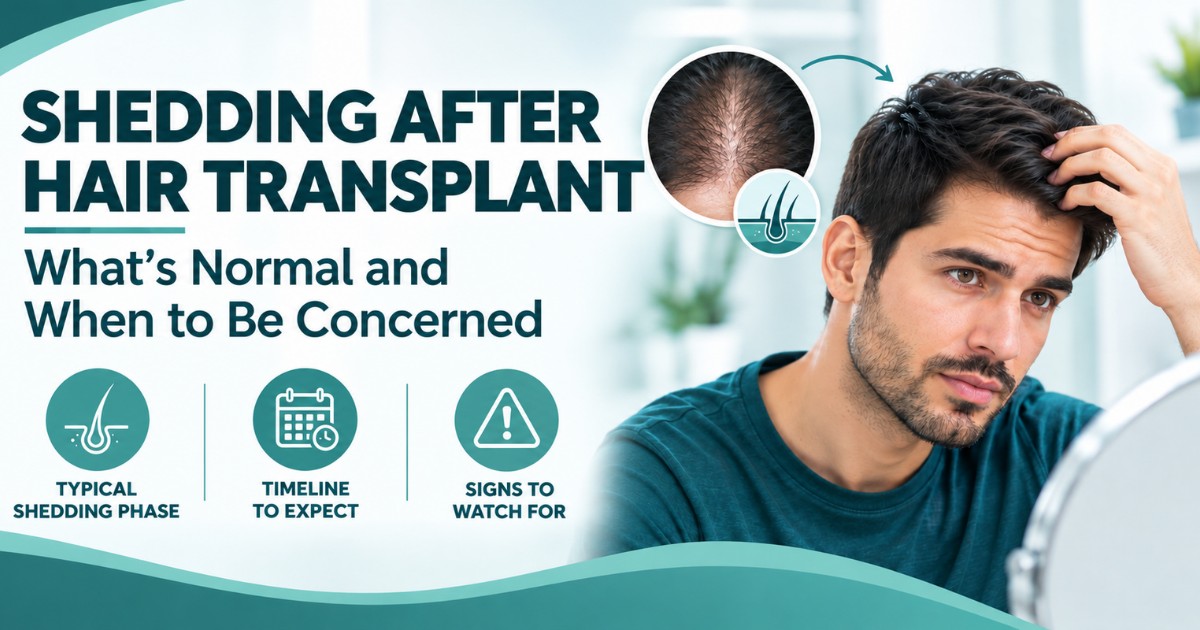
Shedding is a normal part of the healing process following a hair transplant. The loss of transplanted hair in the weeks after your procedure can be worrying, but it does not necessarily mean that the transplant has failed.
Transplanted hair may begin to fall out as new hair emerges. According to DHI International, temporary shedding of transplanted hair is common after a hair transplant and can occur before new hair growth begins.
Knowing what to expect at each stage of hair recovery can help make the process easier to navigate. It can also help patients understand what is generally expected during recovery and when they should seek advice from their medical team.
Key Takeaways
- Hair shedding following a hair transplant is common.
- Some transplanted hairs may fall out during the first few weeks.
- Temporary shedding after a hair transplant is sometimes referred to as shock loss.
- New hair will generally start to grow at about 3-4 months after your transplant.
- The new hairs may be fine or thin at first, then get thicker.
- Native hair may continue to thin depending on the underlying cause of hair loss.
- With correct aftercare, you can help to safeguard the scalp during your recovery.
- Reach out to your doctor if you experience any signs of abnormal, excessive, or continuous hair loss.
Why Does Hair Shed After a Hair Transplant?
Hair naturally cycles through three phases: growing, transitioning, and resting. After a hair transplant, newly transplanted follicles need time to adjust and go through the normal hair-growth cycle. During this time, the actual shaft of your hair may fall out.
So, hair falling out after surgery doesn’t necessarily mean you lost a transplant. The visible hair shaft can shed while the transplanted follicle remains in place and continues through its growth cycle.
According to DHI International, it is normal for transplanted hair to shed after the hair transplant procedure.
Looking for Hair Transplant?
Book an AppointmentThe Hair Growth Cycle Explained
The hair-growth cycle has three main phases: anagen, catagen, and telogen.
Anagen is the active growth phase in which the hair is actively growing. Catagen is a short transitional phase between the anagen and telogen phases.
Hair can fall out at the end of a resting phase and will be replaced by a new one. You can see some hair temporarily enter a resting phase before beginning a new cycle of growth. For this reason, visible hair growth is not instantaneous following surgery.
What Is Shock Loss?
Shock loss refers to the temporary shedding of existing, non-transplanted hair around the recipient area following a hair transplant. It can occur as a response to surgical trauma, inflammation, temporary changes in blood supply, or disruption of the normal hair-growth cycle.
It commonly develops within 2 to 8 weeks after surgery, although the timing can vary from person to person. In most cases, the affected native hair begins to grow back within the following months.
It is important to distinguish shock loss from the normal shedding of transplanted hair. After transplantation, the visible hair shafts from transplanted grafts may shed around 2 to 4 weeks after the procedure, while the follicles remain in place and enter a resting phase before producing new hair growth.
Does Shedding Mean the Graft Has Failed?
No. Shedding after a hair transplant does not necessarily mean that the transplanted graft has failed.
DHI recovery advice that transplanted hairs may shed during the first few weeks after the procedure as part of the natural hair-growth cycle. The visible hair shaft can fall out while the follicle remains beneath the scalp and later produces new hair growth.
So, seeing transplanted hairs fall out during the early recovery period does not by itself indicate graft failure. If you have concerns about excessive shedding or your recovery, your surgeon can assess your scalp and advise you based on your individual healing process.
The Normal Shedding Timeline After a Hair Transplant
Every patient heals differently, but there is a typical progression from early healing and shedding to new growth and maturing. This may explain why your hair can look sparser at different times during recovery.
Week 1–2: Crust Formation and Early Detachment
Within the first 2 weeks, the scalp is healing. Mild redness, swelling, and crusting may occur during the early healing period.
Patients are instructed to adhere to mild scalp-care instructions. Direct shower head pressure on the implanted area is discouraged in the initial healing phase.
Small crusts or altered appearance of transplanted hairs may be a normal part of the healing process. Patients should not scratch, rub, or unnecessarily touch the transplanted area.
Week 2–6: The Main Shedding Phase
Loss of hair is likely to be more conspicuous during this phase. According to DHI, shed hairs tend to fall out around 2-4 weeks after the procedure.
Depending on the individual patient, there may be more or less visible shedding in the transplanted region.
The amount and timing of shedding can vary between patients depending on individual factors and the natural hair-growth cycle. Less hair is seen falling out during this phase is not an indicator of failure.
Month 2–4: The Dormant Phase
This phase involves almost no growth after the shedding process. This stage can be frustrating because visible new hair growth does not occur immediately after shedding.
The follicles that have been transplanted, however, may be in a resting phase. The new hair growth does not appear above the scalp at once.
Month 4–8: Early Regrowth Begins
By the fourth month, you might begin to notice some early regrowth. The new hairs may also initially look finer, lighter, or thinner than the surrounding hairs.
This is common at this early stage of development. As the new hairs mature, they may gradually become thicker and more noticeable.
Growth may not be even. One area may lighten sooner than another, so comparing your growth to another patient’s timeline may cause concern.
Month 9–12+: Maturation and Final Density
Hair keeps growing even after the first signs of regrowth. Hair continues to mature after initial regrowth, and the time to see the final result can vary by patient.
At this stage, transplanted hairs will continue to increase in mass and length. The ultimate outcome depends on many factors, including your hair type, the total donor supply, your treatment plan, and growth pattern.
Shedding of Transplanted Hair vs. Shedding of Native Hair
| Aspect | Transplanted Hair | Native Hair |
| Shedding during recovery | Temporary shedding can occur during the early stages of recovery. | Native hair can continue to shed over time depending on the underlying cause of hair loss. |
| What happens afterward? | The transplanted hair is intended to provide replacement hair in areas affected by hair loss. | Existing hair may continue to be affected by the original cause of hair loss. |
| What happens afterward? | Hair transplantation provides replacement hair but does not necessarily stop the underlying hair-loss process. | Native hair may continue to thin or shed if the underlying condition remains active. |
| Long-term consideration | Native hair may continue to thin or shed if the underlying condition remains active. | DHI discusses treatments such as minoxidil and finasteride for certain types of hair loss. |
| Medical guidance | Your doctor can assess your recovery and provide appropriate aftercare advice. | Treatment depends on the individual patient and the cause of hair loss, so you should discuss suitable options with your doctor. |
Factors That Influence How Much Hair You Shed
Extraction and Implantation Technique
The hair transplant technique used depends on several factors, including how the grafts are extracted, handled, and implanted.
The DHI method uses a specialised DHI Implanter to insert the follicles into the recipient area. This technique provides control over the angle, direction, and depth of the implantation.
Given this, shedding does not necessarily mean the method has failed. Shedding might be a temporary part of the recovery phase.
Graft Handling and Time Outside the Body
DHI technique reduces graft handling and minimises the time the follicles remain outside the body before implantation. Controlled implantation is another feature of the method.
Even with proper graft handling, temporary hair loss can occur. Patients should therefore base their recovery expectations on the overall time it takes for hair to grow back, not on how many hairs they have post-transplant.
Pre-existing Androgenetic Alopecia
Native hair may continue to deteriorate after hair transplantation. Treatment can include advice on transplanted areas as well as any continuing native hair loss, if applicable.
Post-Operative Care and Aftercare Compliance
DHI International provides post-operative guidance on scalp washing, medication, exercise, sun exposure, and other aspects of recovery. Patients should not scratch or unnecessarily touch the transplanted area.
While good aftercare cannot completely eliminate natural shedding, it can minimise its impact on the scalp and the hair restoration area.
Stress, Nutrition, Smoking, and Medication
Lifestyle factors may also affect overall hair and scalp health. A healthy diet is recommended, including nutrients such as protein, zinc, B-complex vitamins, and vitamin D, for healthy hair.
Additionally, patients should adhere to their surgeon’s advice concerning smoking, alcohol, exercise, medication, and other such aspects of health.
How to Support Healthy Regrowth After Shedding
If shedding has started, don’t try to speed things up by encouraging new growth. Focus on aftercare and let the newly transplanted follicles complete their natural recovery and growth.
Washing and Handling the Scalp Correctly
This early recovery phase requires gentle scalp washing. You can begin normal shampooing around Day 3, but avoid direct shower-head pressure on the graft area for two weeks.
Patients should follow the washing method their DHI expert recommends. Do not scratch, rub, vigorously towel dry, or do anything that may irritate the healing scalp.
Medical Support: Minoxidil, Finasteride, and Physician Guidance
Minoxidil and finasteride are among the hair-loss treatments for certain types of hair loss.
They don’t work for everyone. A doctor can assess the type and cause of your hair loss and determine whether medication may be appropriate. Do not start, stop, or change hair-loss treatment medications without proper medical consultation.
Nutrition and Lifestyle Factors
A healthy diet can support overall hair and scalp health while your hair is recovering.
Patients should follow their doctor’s recommendations regarding exercise, smoking, alcohol, sun exposure, and other activities after the procedure.
Why the DHI Technique Minimises Shedding Concerns?
DHI does not aim to prevent the normal shedding that can occur after a hair transplant. Instead, its implantation approach is designed to provide precise placement of individual hair follicles during the procedure.
DHI International uses a specialised DHI Implanter to implant follicles directly into the recipient area. The implanter lets the doctor control the angle, direction, and depth of each implant, supporting careful placement based on the patient’s hair pattern and desired result.
The DHI methodology also focuses on minimising unnecessary graft handling and reducing the time follicles remain outside the body. This controlled approach supports careful graft handling and placement during transplantation.
Temporary shedding may still occur during the early stages of recovery and does not necessarily indicate an unsuccessful procedure. As the scalp heals, the transplanted follicles can progress through their natural growth cycle before new hair begins to appear.
Get a Free Hair Transplant Consultation
Book an AppointmentConclusion
Hair shedding after a transplant can be a normal part of recovery and does not automatically mean the transplant was unsuccessful. According to DHI International, inserted hairs may shed for 3-4 weeks, and hair production usually begins at 3-4 months.
It takes time to recover. After the early shedding, there is a resting phase, then new growth, followed by slow thickening and maturation. Following your surgeon’s aftercare guidelines, caring for your scalp, eating well, and keeping follow-up appointments can support your recovery.
If you experience sudden, excessive, or ongoing hair loss that concerns you, contact DHI International for an individual assessment.
FAQs
1. How long does shedding last after a hair transplant?
Most shedding happens within the first few weeks post‐transplant. According to DHI, the most noticeable shedding commonly occurs between the second and fourth weeks after the procedure.
2. Is it normal for transplanted hair to fall out after two weeks?
Yes. DHI International reports that transplanted hairs may fall out as early as the second to fourth week. This temporary shedding is sometimes referred to as shock loss and can be part of the normal post-transplant recovery process.
3. Can I lose my original hair after a transplant?
Yes. Native hair may continue to thin post-transplant in androgenetic alopecia patients.
Transplanting hair may replace hair in some areas, but it does not always eliminate the hair-loss process. Your doctor can let you know if further treatment might be useful.
4. No Shedding After a Hair Transplant: Is It Normal?
Yes. You will shed less hair than this patient.
The amount of hair you lose can vary from patient to patient. You or your surgeon may be able to detect minor shedding.
5. Does shedding affect the final result?
For example, temporary shedding might not impact the end result. DHI notes that hairs transplanted in the procedure can fall out before new hairs start to grow.
New growth can begin at 3-4 months, then follow on thickening and maturation.
6. When should I contact my surgeon about hair loss after surgery?
Please seek advice from your surgeon if you have any concerns about your healing process or if you experience sudden or ongoing hair loss.
Your medical team can inspect your scalp to assess whether your healing appears to be progressing as expected.