Genetic Baldness: Causes, Early Signs, Treatment Options and Prevention Tips
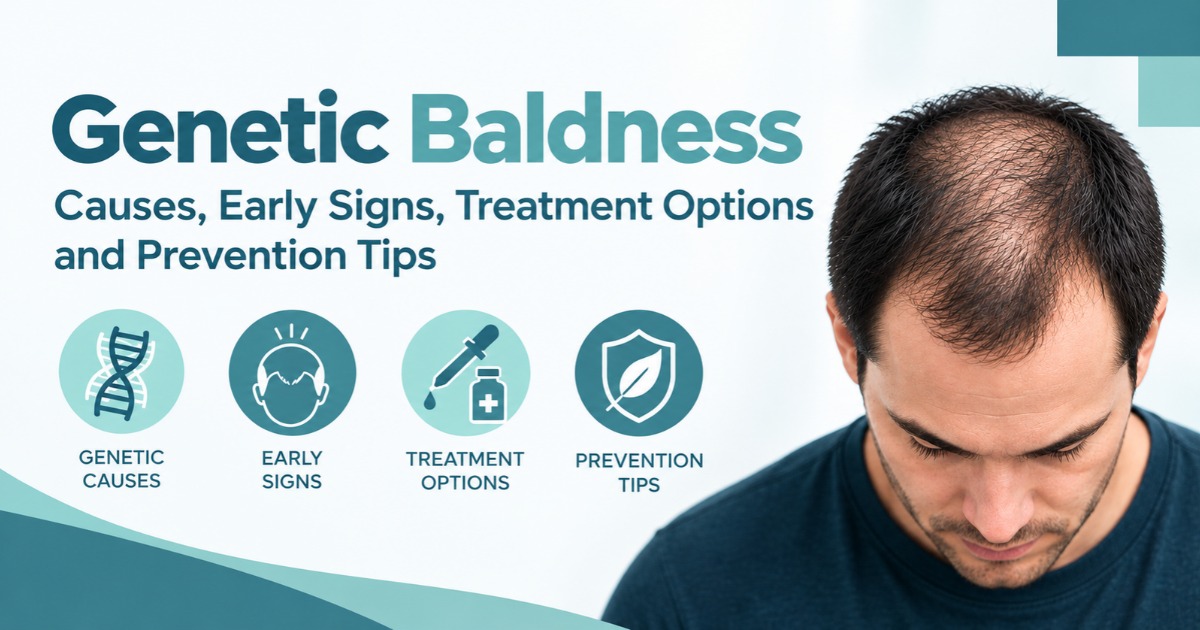
Genetic baldness is a cause of progressive hair loss for both men and women. Genetic baldness is often linked with alopecia, a hereditary type of hair loss that is influenced by genetics and hormones.
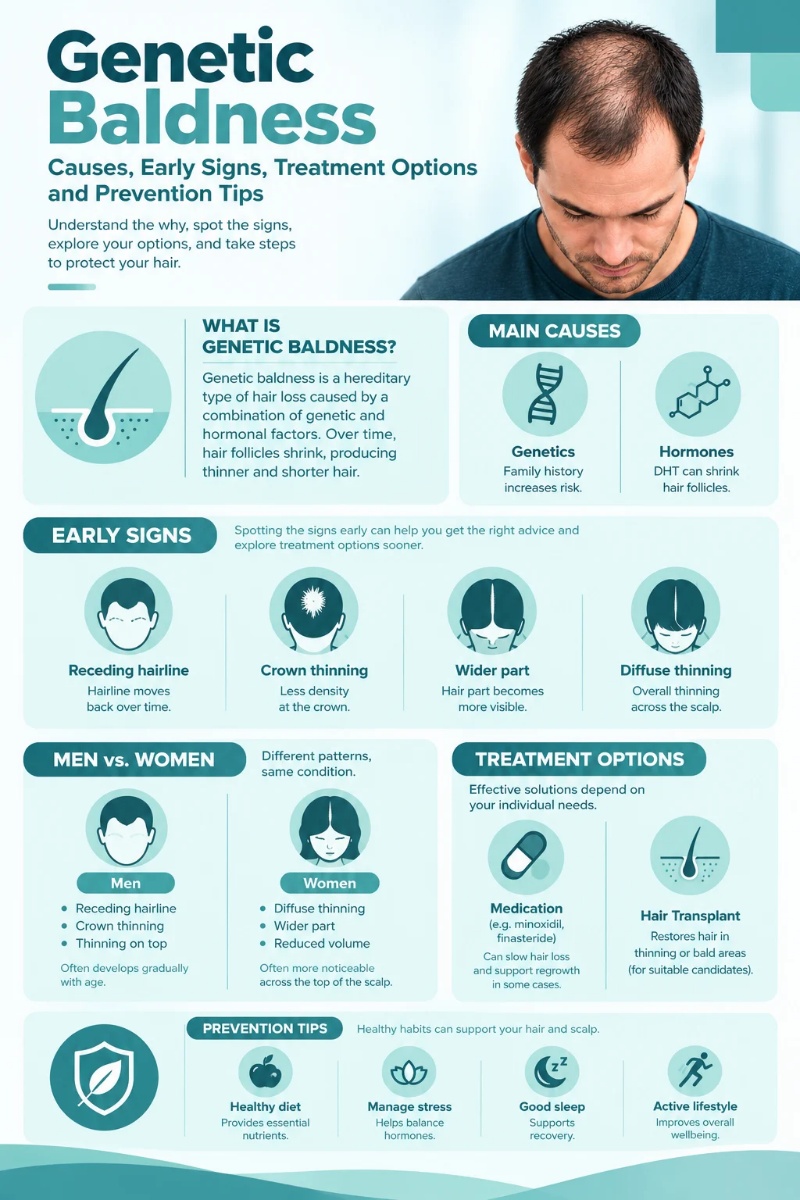
As genetic baldness develops gradually, the early signs can be hard to spot. Early signs of baldness may include a receding hairline, thinning at the crown, a widening hair part, diffuse thinning across the scalp, or a mix of these changes.
Spotting the signs of genetic baldness can help a person understand the problem and find a suitable treatment. DHI International talks about treatments and hair transplantation as options to manage certain types of hair loss.
Key Takeaways
- Genetic baldness is often linked with alopecia, a hereditary type of hair loss.
- Genetic factors and hormonal factors can contribute to hair thinning caused by genetic baldness.
- Men commonly develop a receding hairline, crown thinning, or both as signs of baldness.
- Women commonly experience diffuse thinning over the top of the scalp, often making the hair part visible in cases of genetic baldness.
- Genetic baldness is characterised by hair miniaturisation, which makes strands progressively finer and shorter.
- Recognising the signs of genetic baldness can prompt an appropriate assessment of the hair‑loss pattern and possible causes.
- Minoxidil and finasteride are hair‑loss treatments that DHI discusses for some kinds of genetic baldness.
- Hair transplants can restore hair in selected thinning or bald zones.
- The right treatment depends on the individual’s hair‑loss pattern, medical history, and overall condition.
What Is Genetic Baldness?
Genetic baldness is baldness related to your genetics. DHI International: Androgenetic alopecia is a genetically predisposed hair loss due to genetic and hormonal factors; we can include androgen-related cases in both men and women.
Baldness. Cells in the hair follicle gradually die off, so head hair thins and eventually falls out.
Hair loss patterns can also be different. Men tend to develop a receding hairline or thinning at the crown, while women tend to develop diffuse thinning across the entire scalp. Because genetic baldness develops over time, you may notice early signs, which can help identify the pattern of hair loss and other potential causes.
What Causes Genetic Baldness?
Genetic hair loss can generally have genetic and hormonal origins. DHI claims that both male- and female-pattern baldness may have a genetic role, with family history playing a role.
DHI also explains that shrinkage of targeted hair follicles is due to a hair-loss hormone called DHT, or dihydrotestosterone. As the affected follicles miniaturise, the hairs they produce become thinner and shorter. This can cause hair thinning or balding.
Other causes of hair loss: In addition to those already mentioned, DHI explains some other causes or conditions that can cause or worsen hair loss. DHI also talks about the effect of hormonal changes, pregnancy, menopause, thyroid problems, PCOS, stress, nutrition, medication, and other medical conditions on different types of hair loss.
So, thinning hair isn’t always a sign of baldness. You need to get a diagnosis for the cause.
Genetic Baldness in Men vs. Women
| Aspects | Men | Women |
| Common pattern | Androgenetic alopecia commonly appears as a receding hairline, thinning at the crown, or both. | Hair loss more commonly appears as diffuse thinning rather than a clearly defined bald spot. |
| Hair Line | The hairline can progressively recede as male-pattern baldness develops. | The hairline can progressively recede as male-pattern baldness develops. |
| Top and crown | Thinning can affect the hairline, crown, and top of the scalp. | Thinning is mainly seen on the top and crown, with the hair part often becoming wider. |
| Hair Density | Hair density can progressively decrease in affected areas. | Women may experience reduced hair density and volume while retaining the overall hairline. |
| Visible pattern | Hormonal changes associated with menopause, pregnancy, and PCOS may contribute to hair loss. | A wider part and diffuse thinning are more characteristic. DHI also describes a “Christmas tree” pattern around the parting as a feature associated with female-pattern hair loss. |
| Hormonal Factors | Male-pattern hair loss is associated with genetic sensitivity to androgens, particularly DHT, which can cause affected hair follicles to progressively miniaturise. | Hormonal changes associated with menopause, pregnancy, and PCOS may contribute to hair loss. |
Early Signs of Genetic Baldness
Recognising the early signs of genetic baldness can encourage timely assessment and help you explore appropriate treatment options.
The pattern can vary between individuals. One person may develop a receding hairline, while another may experience more general thinning.
Receding Hairline
A receding hairline is a common early sign of genetic hair loss in males. A man’s hairline may slowly move backwards, especially near the temples. Over time, the change may become more noticeable as hair density decreases. Finer and thinner hair can be an early sign of crown thinning.
Thinning at the Crown
Crown thinning can also be an early sign of genetic hair loss. At the initial stage, this is barely noticeable. Hair in the crown becomes finer and reveals the scalp underneath.
Finer and thinner hair is one of the earliest signs of crown baldness. Later, this is followed by the appearance of a bald spot or thinned area.
Widening Hair Part
A widening hair part can be an important early sign when assessing hair loss in women. Thinning around the hair parting is a common feature of female-pattern hair loss. As density decreases, the scalp becomes more visible.
Overall Hair Thinning
Some patients will not have a distinct bald spot. They may notice their hair seems thinner than normal across the scalp. Changes may become more noticeable when styling the hair or comparing recent photographs with older ones.
Diffuse thinning at the top of the scalp is one of the most typical patterns of genetic baldness in women.
Smaller or Thinner Hair Strands
Hair miniaturisation is another important feature of androgenetic alopecia.
Affected follicles may produce finer, shorter, and less pigmented hairs. Hair miniaturisation is associated with androgenetic alopecia.
It can occur before bald spots develop, which is why gradual changes in hair thickness should be taken seriously.
Increasing Scalp Visibility
With a reduction in hair density, the scalp becomes more visible. This may be noticeable around the crown, hair part, or top of the head, depending on the individual’s pattern of hair loss. However, increased scalp visibility does not mean that complete baldness is inevitable. It can indicate a change in hair density and may warrant further assessment if the change is new or progressing.
How Is Genetic Baldness Diagnosed?
To diagnose genetic baldness, clinicians assess the hair pattern and its progression.
DHI International’s Diagnostic System for Alopecia (DSA) uses a comprehensive approach to assessing hair loss, including genetics, environment, psychological factors, and diet.
A comprehensive assessment helps differentiate genetic or hormonal hair loss from other hair loss issues. DHI International can diagnose the following types of hair loss, among others: androgenetic alopecia, alopecia areata, telogen effluvium, etc.
Knowing the cause of hair loss matters because it affects treatment. With a specialist’s help, they may assess your hair pattern and other factors to determine the best treatment approach.
Treatment Options for Genetic Baldness
Treatment methods for genetic baldness vary based on the extent and pattern of hair loss.
Minoxidil
Minoxidil is a commonly used medical treatment for certain forms of hair loss. According to DHI International, minoxidil is a topical treatment that stimulates hair growth and slows down the rate of hair loss.
Men and women can apply minoxidil for the specified form of hair loss. However, minoxidil does not necessarily restore all lost hair. Your doctor will help to establish whether minoxidil is suitable for your type of genetic baldness.
Finasteride
Finasteride is another medication used for some types of genetic hair loss, in particular male-pattern baldness.
According to DHI International, Finasteride reduces the level of DHT – the hormone causing hair follicles’ miniaturisation. Whether finasteride is appropriate depends on the individual patient’s circumstances and should be discussed with a doctor.
Other Medical Treatments
Treating genetic hair loss may require several procedures, depending on each person’s situation. Various medical and non-medical options can address hair loss, emphasising the importance of identifying the cause before treatment.
In women, factors such as hormonal changes, menopause, pregnancy, PCOS, and thyroid conditions may need to be considered when assessing hair loss. In men, stress, lifestyle and other factors matter. Because hair loss can have many causes, patients should avoid self-treatment and self-diagnosis.
Hair Transplantation
Hair transplantation can be used for genetic baldness that causes hair thinning or bald spots that need to be filled.
The procedure involves transferring hair follicles from a donor area, typically at the back or sides of the scalp, to areas affected by thinning or baldness. DHI International uses its Direct Hair Implantation (DHI) technique to extract and implant individual hair follicles into the recipient area.
Using the DHI Implanter, the surgeon controls the depth, direction, and angle of implantation when placing individual follicles.
Hair transplantation can restore hair in selected areas, but it does not necessarily stop the underlying hair-loss process affecting non-transplanted hair.
This is especially relevant for patients with genetic progressive baldness. A detailed consultation can determine whether hair transplantation is indicated and which treatment options are available.
Get Free Consultation for Hair Transplant
Book an AppointmentConclusion
Genetic baldness is a common form of progressive hair loss that can affect both men and women. It is usually associated with hereditary factors and hormones.
Men may experience a receding hairline and crown thinning, while women more commonly experience diffuse thinning, a widening hair part, and reduced hair density over the top of the scalp.
Early symptoms like thinner hair strands, increased visibility of the scalp or changes in hair density should not be neglected. Recognising the cause early helps you understand your treatment options.
Medical treatments such as minoxidil and finasteride may be appropriate for certain types of hair loss, while hair transplantation can restore hair in selected areas.
The appropriate treatment depends on the hair-loss pattern, medical history, underlying cause, and individual treatment goals. Professional consultation is needed before choosing a treatment method for genetic baldness.
FAQs
1. Can Hereditary Factors Cause Baldness?
Yes. Genetic factors that come from both parents can lead to hair loss in men and women.
2. Can genetic baldness start at a young age?
Yes. Genetic hair loss can begin at a relatively young age. Early signs may include a receding hairline, thinning on the top of the scalp, or reduced hair density in certain areas.
3. Where does genetic baldness come from?
Genetic baldness mostly comes from genes that a person gets from their parents. Hormones can also play a role. DHT can cause hair follicles to get smaller in people who’re at risk.
4. Can genetic baldness be reversed?
Treatment can help control hair loss and bring back hair in thinning or bald areas. Treatments might include medicine or hair transplant surgery depending on the person.
5. Can minoxidil stop genetic hair loss?
Minoxidil may help slow hair loss and promote hair growth in some people. Its suitability and effectiveness can vary depending on the individual and the type of hair loss. Talk to a doctor before starting treatment.
6. Is hair transplant a permanent solution for genetic baldness?
Hair transplantation can provide long-term hair restoration in selected areas affected by genetic baldness. However, it does not necessarily stop the underlying hair-loss process from affecting existing native hair.
7. Can women experience genetic baldness?
Yes. Women can have hair loss. It usually causes thinning over the top. The back of the head, not a clear receding hairline.
8. How do I find out if my hair loss is genetic or caused by stress?
A specialist can look at the pattern of hair loss and a person’s medical history to figure out the cause. Hair loss can have different causes.