
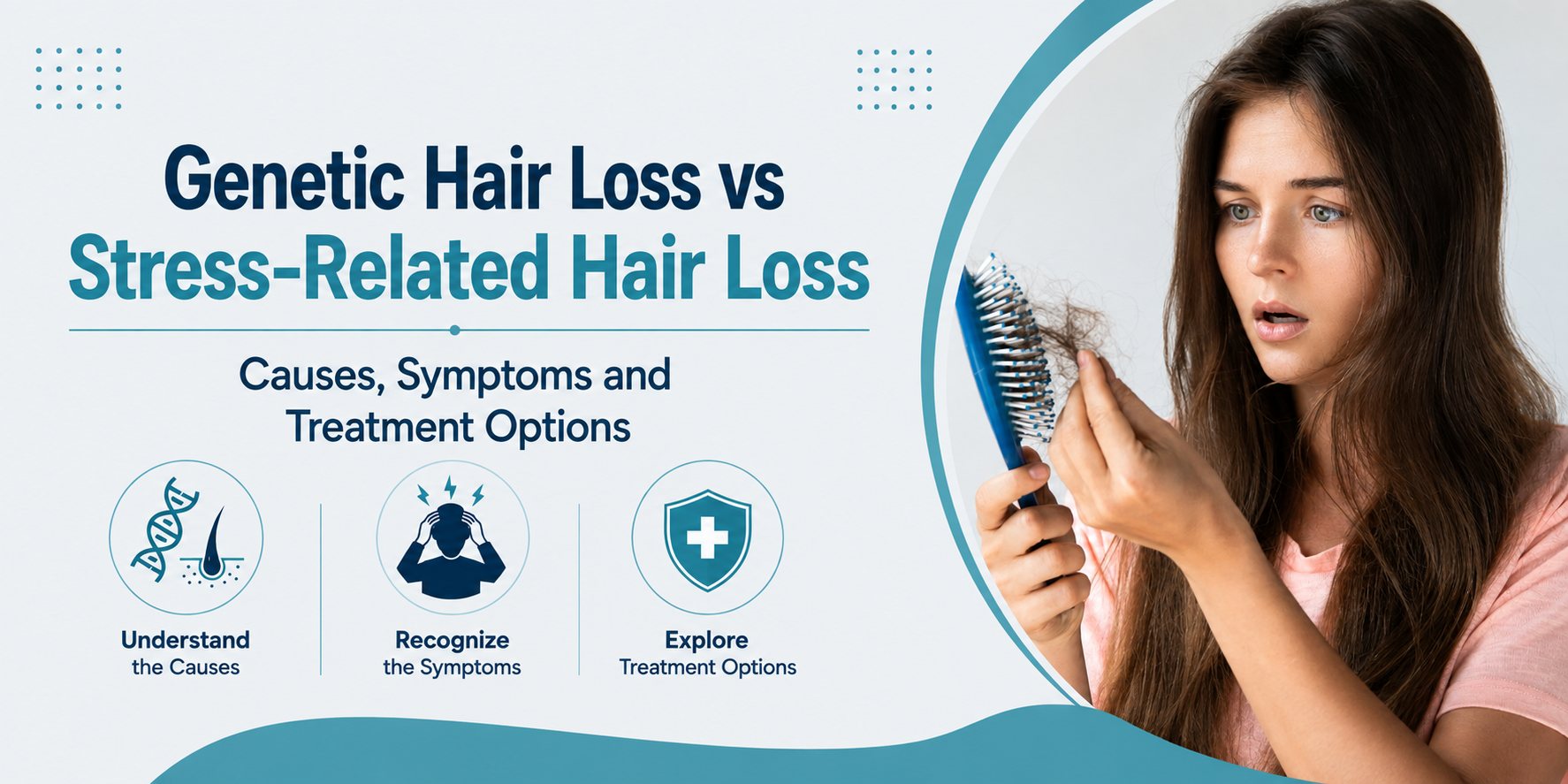
Not all hair loss follows the same pattern. Some types develop gradually because of inherited changes in hair follicles, while others can appear after periods of significant physical or emotional stress.
Genetic hair loss typically progresses slowly, often affecting predictable areas such as the hairline, crown, or part. Stress-related shedding, on the other hand, can cause noticeably increased hair fall after events such as illness, surgery, childbirth, or intense psychological stress.
Understanding the difference matters because the cause influences the expected course, chances of regrowth, and appropriate treatment approach.
Key Takeaways
- Genetic hair loss is linked to inherited sensitivity of hair follicles and usually develops gradually.
- Stress-related shedding can occur after significant physical or emotional stress.
- Genetic thinning often follows recognisable patterns, while stress-related shedding is generally more diffuse.
- Stress-related shedding may improve once the underlying trigger is resolved.
- Early diagnosis can help identify the actual cause and guide appropriate treatment.
- Hair loss should not automatically be attributed to stress without professional evaluation.
What Is Genetic Hair Loss?
Genetic hair loss, also called hereditary or androgenetic hair loss, is the most common type of hair loss in both men and women. It occurs when inherited genes cause hair follicles to gradually shrink, producing finer and shorter hairs over time.
The condition usually develops progressively rather than appearing suddenly. In men, it commonly affects the hairline, temples, and crown. In women, overall thinning and a widening part are more typical, while the front hairline often remains intact.
Without appropriate management, the affected follicles can continue to miniaturise. Early diagnosis and treatment can help slow progression and, in some cases, improve hair growth.
Common Signs of Genetic Hair Loss
The signs can differ between men and women, but common changes include:
- Gradual thinning rather than sudden shedding
- Receding hairline or temples
- Thinning around the crown
- Widening of the central hair part
- Reduced overall hair density
- Finer hair strands
- A thinner ponytail in women
These changes typically develop gradually, which means they may be difficult to notice without comparing photographs over time.
What Is Stress-Related Hair Loss?
Stress-related hair loss commonly refers to telogen effluvium, a temporary form of excessive hair shedding that can occur after significant physical or emotional stress. Triggers can include serious illness, surgery, childbirth, or major psychological stress.
Unlike hereditary thinning, the shedding is generally more diffuse rather than concentrated in a particular pattern. People may notice considerably more hair on their pillow, brush, clothing, or in the shower.
Importantly, the shedding often appears a few months after the triggering event, so the cause may not be immediately obvious. When the underlying trigger resolves, many people gradually regain their usual hair fullness.
Common Signs of Stress-Related Hair Loss
Common signs include:
- Noticeably increased hair shedding
- Hair coming out in larger amounts during washing or brushing
- Overall reduction in hair volume
- Thinning across the scalp rather than one specific area
- Shedding developing after illness, surgery, childbirth, or significant stress
- Gradual return of fullness after the triggering factor is resolved
Because several conditions can cause similar symptoms, persistent shedding should be evaluated rather than automatically attributed to stress.
Genetic Hair Loss vs Stress-Related Hair Loss: Key Differences
Although both conditions can cause noticeable hair thinning or shedding, they differ in their causes, patterns, duration, and typical progression. The comparison below highlights the key differences to help you understand which type may better match your symptoms.
| Factors | Genetic Hair Loss | Stress-Related Hair Loss |
| Main cause | Inherited genetic factors | Significant physical or emotional stress |
| Onset | Gradual and progressive | Often follows a triggering event |
| Pattern | Hairline, crown, or widening part | Usually diffuse thinning |
| Shedding | Usually gradual | Often noticeably increased |
| Duration | Can continue progressively | Often temporary |
| Common triggers | Genetic predisposition and hormonal sensitivity | Illness, surgery, childbirth, major stress |
| Regrowth | May require treatment | Often improves after the trigger resolves |
| Treatment focus | Slowing progression and supporting regrowth | Identifying and addressing the underlying trigger |
Note: The two conditions can also occur together. A person with genetic hair loss may experience increased shedding after a stressful event, making professional assessment important for identifying the underlying pattern.
What Causes Genetic and Stress-Related Hair Loss?
Although both conditions involve changes to the hair growth cycle, their underlying triggers are different.
Causes of Genetic Hair Loss
Genetic hair loss results primarily from inherited genes that make certain hair follicles progressively more sensitive to androgen hormones. This sensitivity causes affected follicles to shrink gradually, producing finer hairs and shorter growth cycles.
The condition can be inherited from either side of the family, and having relatives with pattern hair loss can increase susceptibility. Age also influences its development, although it can begin relatively early in adulthood.
Causes of Stress-Related Hair Loss
Stress-related shedding occurs when a significant physical or emotional event disrupts the normal hair growth cycle. Potential triggers include severe illness, high fever, surgery, childbirth, major psychological stress, and other substantial changes affecting the body.
The shedding may not appear immediately after the event. It can become noticeable months later, which is why identifying the original trigger can sometimes be difficult. Once the underlying stressor is resolved, hair growth may gradually return toward its previous level.
Can Stress Trigger or Accelerate Genetic Hair Loss?
Stress and genetic hair loss are different conditions, but they can occur at the same time. Significant physical or emotional stress can trigger excessive shedding, making existing genetic thinning appear more noticeable.
In someone already predisposed to pattern hair loss, a period of increased shedding may reveal areas that were gradually becoming thinner. However, stress does not necessarily change a person’s genetic predisposition itself.
If shedding continues after the stressful event has passed, or if a receding hairline, widening part, or crown thinning becomes more apparent, a professional assessment can help determine whether genetic hair loss is also involved.
How Is Hair Loss Diagnosed?
Diagnosing hair loss starts with understanding when the shedding began, how quickly it developed, and where the hair is thinning. A dermatologist or hair restoration specialist may examine the scalp and hair pattern while reviewing medical history, family history, medications, recent illnesses, stress, and other potential triggers.
A scalp examination can help distinguish patterned thinning from diffuse shedding or patchy hair loss. Depending on the suspected cause, the doctor may recommend blood tests or other investigations to identify conditions such as nutritional deficiencies or thyroid problems.
An accurate diagnosis is important because treating genetic thinning and stress-related shedding requires different approaches.
Treatment Options for Genetic Hair Loss
Treatment for hereditary hair loss focuses on slowing progression, preserving existing follicles, and improving hair density where possible. The appropriate option depends on the stage of hair loss, age, gender, donor availability, and individual treatment goals.
Medical Treatments
Medications such as minoxidil may be recommended to support hair growth and slow further thinning. Other prescription treatments may be considered depending on the patient’s condition. These should only be used under appropriate medical guidance because suitability and potential side effects vary.
Hair Transplantation
Hair transplantation can be considered when genetic hair loss has created areas with insufficient density, and the patient has an adequate donor supply. Healthy follicles are taken from a suitable donor area and placed into thinning or balding regions.
The procedure does not stop future genetic hair loss in untreated areas, so long-term planning is important. A specialist can assess donor quality, hair-loss progression, and the areas that would benefit most from transplantation.
Supportive Hair-Loss Treatments
Supportive treatments may be recommended alongside the primary treatment plan depending on the patient’s condition. Options can include PRP, GFC, or regenerative treatments such as Regenera Activa for appropriate cases.
These approaches are generally intended to support existing follicles rather than replace follicles that are no longer present. Their suitability should be determined through a professional assessment.
Treatment Options for Stress-Related Hair Loss
When hair shedding is linked to stress or a significant physical event, treatment generally focuses on identifying the trigger and supporting the return of a normal hair-growth cycle.
Addressing the Underlying Trigger
The first step is identifying what may have triggered the shedding. This could include significant psychological stress, illness, surgery, childbirth, nutritional issues, or another physical event.
Where possible, addressing the underlying factor can help the hair cycle return toward normal. If a medical condition or nutritional deficiency is suspected, appropriate treatment should be guided by a healthcare professional.
Supporting Healthy Hair Regrowth
Once the underlying trigger has been addressed, hair may gradually return toward its previous density. Maintaining adequate nutrition, gentle hair care, sufficient rest, and overall well-being can support general hair health.
However, persistent shedding should not automatically be attributed to stress. If hair loss continues or progresses, a specialist should evaluate whether another condition, including genetic hair loss, may also be contributing.
Is Stress-Related Hair Loss Reversible?
Yes, stress-related shedding can often improve once the underlying trigger is resolved. Hair growth does not return immediately because follicles need time to move through their natural growth cycle.
Regrowth may therefore take several months, and the timeline varies between individuals. If shedding continues for an extended period, becomes progressively worse, or is accompanied by patterned thinning or bald patches, another cause should be investigated.
A professional evaluation can help determine whether the shedding is consistent with a temporary stress-related condition or whether additional treatment is needed.
When Should You See a Hair Loss Specialist?
Consider consulting a specialist when hair loss is persistent, rapidly increasing, or visibly changing the density of your hair. Early evaluation can help identify the cause before assuming that stress or genetics is responsible.
Professional assessment is particularly important when you notice:
- A receding hairline or widening part
- Increasing scalp visibility
- Persistent excessive shedding
- Bald or clearly defined patches
- Thinning around the crown
- Hair loss involving eyebrows, eyelashes, or beard
- Scalp irritation or other unusual symptoms
A specialist can evaluate your hair and scalp, identify potential causes, and recommend a treatment plan based on your individual condition.
Hair Loss Treatment Options at DHI International
DHI International approaches hair restoration through diagnosis and personalised treatment planning rather than using the same procedure for every patient. Its process includes assessing donor hair strength, hair density, scalp condition, and the patient’s pattern of hair loss before developing an individual treatment plan.
For patients with genetic hair loss who are suitable candidates for transplantation, DHI offers its Direct Hair Implantation (DHI™) technique. The technique uses a patented implanter for direct placement of follicles, allowing the doctor control over implantation angle, depth, and direction.
DHI International also lists non-surgical hair restoration options, including PRP/GFC and Regenera Activa, for appropriate cases. The most suitable approach depends on the diagnosis, stage of hair loss, donor availability, and treatment goals.
Conclusion
Hair loss can have more than one cause, and distinguishing between genetic thinning and stress-related shedding is important before deciding on treatment.
Stress-related shedding may improve once the underlying trigger is addressed, while genetic hair loss tends to require longer-term management. In some cases, both can occur together, making professional assessment especially valuable.
The right approach is therefore not simply to treat the visible hair loss, but to identify what is causing it first. Once the cause and extent of hair loss are understood, you can explore suitable options, whether that involves medical treatment, supportive therapies, or hair restoration procedures.
FAQs
1. Does stress cause permanent hair loss?
Stress-related shedding is often temporary and may improve once the underlying trigger is resolved. However, persistent shedding or underlying genetic hair loss can continue, so ongoing or worsening hair loss should be professionally evaluated.
2. Can stress make genetic hair loss worse?
Stress can trigger increased shedding, which may make existing genetic thinning more noticeable. While stress does not directly cause genetic hair loss, both conditions can occur together and contribute to more visible hair loss.
3. Does genetic hair loss grow back naturally?
Genetic hair loss generally progresses gradually and may not fully reverse on its own. Early treatment can help slow progression and support existing hair. Hair transplantation may be considered when permanent thinning has developed.
4. How long does stress-related hair shedding last?
Stress-related shedding may continue for several months after the triggering event. Once the underlying cause is addressed, hair growth can gradually return. If shedding persists or worsens, a specialist should evaluate other possible causes.
5. Can a hair transplant treat genetic hair loss?
Yes, a hair transplant can restore hair in areas affected by genetic hair loss when sufficient healthy donor follicles are available. It does not prevent future thinning, so treatment planning should consider long-term hair-loss progression.
6. Is a hair transplant suitable for stress-related hair loss?
A hair transplant is generally not the first approach for temporary stress-related shedding. Hair may recover after the underlying trigger is addressed. A specialist should first determine the cause and assess whether permanent hair loss exists.
7. When should I see a hair transplant specialist for hair loss?
Consider seeing a specialist when hair loss is persistent, progressive, or creating visible thinning, bald patches, or a receding hairline. An assessment can determine the underlying cause and whether medical or surgical restoration may be appropriate.