10 Early Signs of Hair Loss You Should Never Ignore
Hair loss rarely happens overnight. In many cases, your hair and scalp show subtle changes before noticeable thinning or bald spots appear. Recognising these changes early can help you understand whether your hair loss is temporary or may require professional attention.
From excessive shedding and a widening part to finer strands and slower regrowth, these signs can indicate that your hair density is changing. While some daily hair fall is completely normal, persistent or noticeable changes should not be ignored.
Here are 10 signs that can help you identify potential hair loss early and take the right steps before the condition progresses.
Key Takeaways
- Losing some hair every day is normal, but persistent excessive shedding may need attention.
- A widening hair part can indicate reduced hair density.
- Receding hairlines are often an early sign of pattern hair loss.
- Increased scalp visibility may indicate progressive thinning.
- Finer hair strands can signal changes in follicle activity.
- Slower regrowth may become noticeable after shedding.
- Sudden bald or thinning patches require professional evaluation.
- Tracking changes over time can help identify progressive hair loss.
How Much Hair Loss Is Normal?
Losing hair every day is part of the natural hair growth cycle. It is normal to notice some strands on your pillow, comb, clothing, or in the shower. However, consistently heavy shedding or a visible change in hair density can indicate an underlying problem.
The important factor is not simply how many strands you lose, but whether your shedding has noticeably increased or your hair appears thinner than before. Changes in your part, hairline, crown, or overall volume can provide useful clues.
If excessive shedding continues for several weeks or is accompanied by visible thinning, bald patches, or slower regrowth, consider consulting a hair-loss specialist for an appropriate evaluation.
10 Early Signs of Hair Loss You Should Never Ignore
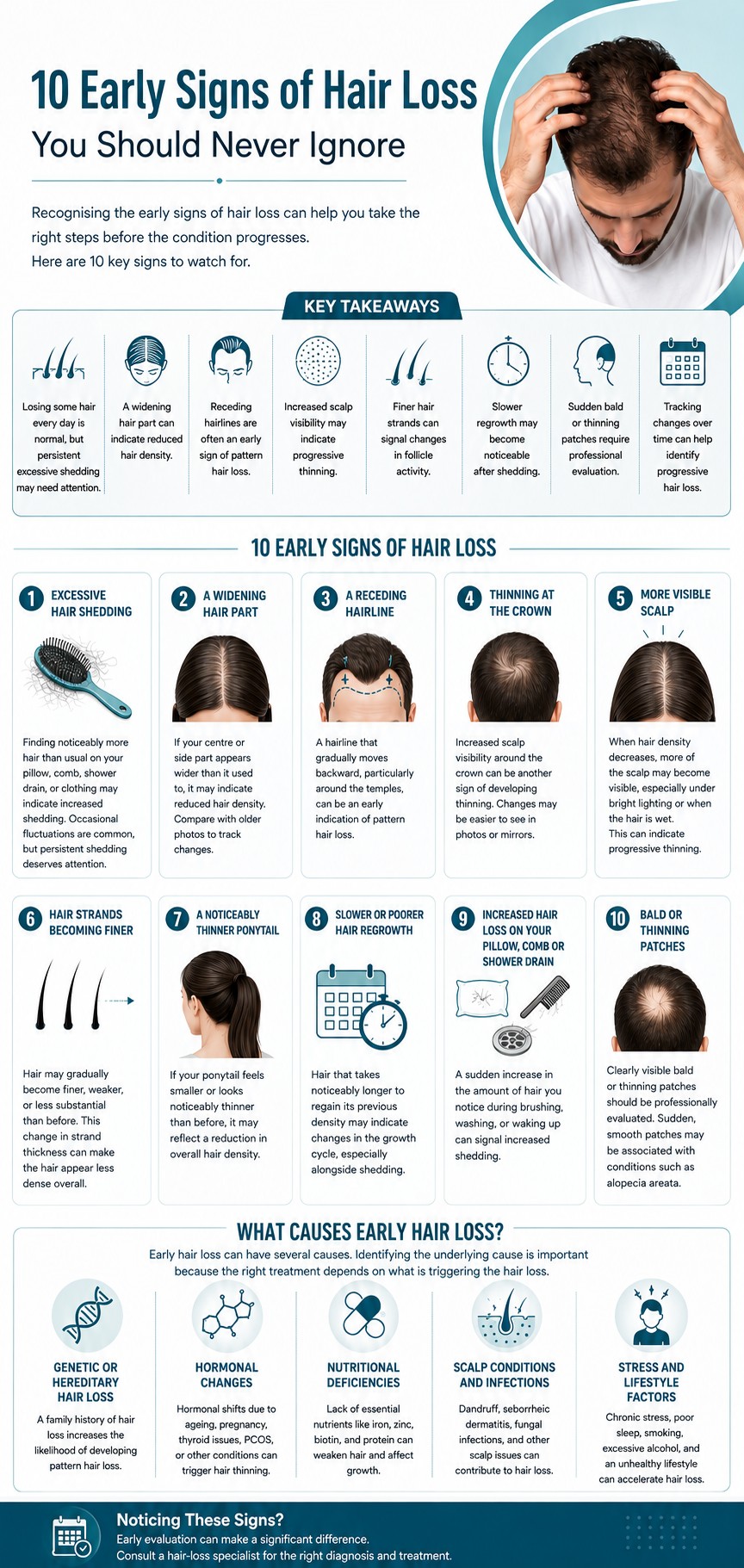
1. Excessive Hair Shedding
Finding noticeably more hair than usual on your pillow, comb, shower drain, or clothing may indicate increased shedding. Occasional fluctuations are common, but persistent excessive hair fall deserves attention, particularly when it continues for several weeks.
2. A Widening Hair Part
If your centre or side part appears wider than it used to, it may indicate reduced hair density around the scalp. This change can develop gradually, making it easier to notice when comparing recent photographs with older ones.
3. A Receding Hairline
A hairline that gradually moves backward, particularly around the temples, can be an early indication of pattern hair loss. Tracking your hairline over time can help you identify whether the change is becoming progressively noticeable.
4. Thinning at the Crown
Increased scalp visibility around the crown can be another sign of developing hair thinning. Because this area can be difficult to see yourself, changes may become noticeable through photographs, mirrors, or comments from others.
5. More Visible Scalp
When hair density decreases, more of the scalp may become visible, especially under bright lighting or when the hair is wet. Increasing scalp visibility across previously covered areas can indicate progressive thinning.
6. Hair Strands Becoming Finer
Hair may gradually become finer, weaker, or less substantial than it was previously. This change in strand thickness can make the overall hair appear less dense, even when the number of visible hairs has not changed significantly.
7. A Noticeably Thinner Ponytail
If your ponytail feels smaller or looks noticeably thinner than before, it may reflect a reduction in overall hair density. Comparing its thickness over time can help you recognise gradual changes that may otherwise go unnoticed.
8. Slower or Poorer Hair Regrowth
Hair that takes noticeably longer to regain its previous density after shedding may indicate changes in the growth cycle. Slower regrowth becomes particularly important when it occurs alongside persistent shedding or visible thinning.
9. Increased Hair Loss on Your Pillow, Comb or Shower Drain
A sudden increase in the amount of hair you notice during brushing, washing, or waking up can signal increased shedding. While individual strands are normal, a persistent change from your usual pattern should not be overlooked.
10. Bald or Thinning Patches
Clearly visible bald or thinning patches can have several possible causes and should be professionally evaluated. Sudden, smooth patches are particularly important to address because they may be associated with conditions such as alopecia areata.
Noticing These Early Signs of Hair Loss?
Book a ConsultationWhat Causes Early Hair Loss?
Early hair loss can have several causes, ranging from genetics and hormonal changes to nutritional deficiencies and scalp conditions. Identifying the underlying cause is important because the right treatment depends on what is triggering the hair loss.
Genetic or Hereditary Hair Loss
Genetics is one of the most common reasons for progressive hair thinning. A family history of pattern hair loss can increase the likelihood of developing a receding hairline, widening part, or thinning around the crown.
Hormonal Changes
Changes in hormone levels can affect the hair growth cycle. Hormonal fluctuations related to pregnancy, menopause, thyroid disorders, or other conditions may lead to increased shedding or noticeable thinning.
Stress and Major Life Events
Significant physical or emotional stress can disrupt the normal hair growth cycle. Increased shedding may appear weeks or months after a stressful event, illness, surgery, or other major change and may improve once the trigger is addressed.
Nutritional Deficiencies
Insufficient levels of certain nutrients can affect healthy hair growth. Deficiencies involving iron, protein, vitamin D, or other essential nutrients may contribute to increased shedding, particularly when dietary intake is inadequate.
Medical Conditions and Illness
Certain medical conditions can affect hair growth or trigger increased shedding. Thyroid disorders, autoimmune conditions, infections, and other illnesses may contribute to hair loss, making proper diagnosis important when shedding persists.
Medications and Treatments
Some medications and medical treatments can affect the hair growth cycle and cause temporary or ongoing hair loss. If shedding begins after starting a medication, discuss the change with your doctor rather than stopping treatment independently.
Scalp Conditions
Scalp problems such as inflammation, infections, or persistent irritation can interfere with healthy hair growth. Symptoms such as itching, redness, scaling, or discomfort alongside hair loss should be evaluated by a qualified professional.
Hair Shedding vs. Hair Loss: What’s the Difference?
| Comparison | Normal Hair Shedding | Hair Loss |
| Hair cycle | Part of the normal growth cycle | May involve disrupted or shortened growth cycles |
| Amount | Usually remains relatively consistent | May become noticeably increased or progressive |
| Appearance | Overall density remains stable | Hair may become visibly thinner |
| Hairline | Generally unchanged | May recede or become less dense |
| Scalp visibility | Usually remains stable | May gradually increase |
| Bald patches | Not typically present | May occur depending on the cause |
| Regrowth | New hairs continue replacing shed hairs | New hairs continue replacing shed hairs |
| When to seek help | Usually not concerning | Persistent or progressive changes should be evaluated |
When Should You See a Hair Loss Specialist?
Not every episode of increased shedding requires immediate medical attention. However, certain changes are worth discussing with a dermatologist or hair-loss specialist, particularly when they continue or become progressively noticeable.
Hair Loss That Continues or Progresses
If excessive shedding continues for several weeks or your hair gradually becomes thinner, professional evaluation can help identify the underlying cause. Early assessment may also help determine appropriate treatment options.
Patchy Hair Loss
Sudden or clearly defined bald patches should not be ignored. Patchy hair loss can have different causes, including autoimmune conditions such as alopecia areata, and requires proper evaluation before treatment is considered.
Increasing Scalp Visibility
If your scalp is becoming increasingly visible through the hair, particularly around the crown or along the part, it may indicate declining hair density. Monitoring these changes can help identify progressive thinning.
Sudden or Rapid Hair Loss
Rapid or unexpected hair loss warrants professional attention. Sudden changes can sometimes be associated with an underlying medical condition, significant stress, medication, or other factors that may require investigation.
Can Early Hair Loss Be Treated?
Yes, early hair loss can often be managed, but the appropriate treatment depends on its underlying cause. A specialist may evaluate your hair pattern, scalp condition, medical history, lifestyle, and other relevant factors before recommending an approach.
Treatment may involve addressing nutritional deficiencies, managing an underlying medical condition, using medications, or considering hair-restoration procedures where appropriate. Early evaluation can be particularly useful because some causes of hair loss are temporary or more manageable when addressed promptly.
If you notice persistent shedding, thinning, a receding hairline, or bald patches, professional diagnosis is the best starting point rather than relying on a one-size-fits-all treatment.
Your Hair Loss May Be Treatable
Schedule a ConsultationConclusion
Hair loss often begins with small changes that are easy to overlook. Excessive shedding, a widening part, increased scalp visibility, finer strands, or slower regrowth can all be worth monitoring.
The important thing is to understand why the change is happening. Genetics, hormones, stress, nutrition, medical conditions, medications, and scalp problems can all affect the hair growth cycle differently.
If hair loss continues, progresses rapidly, or appears in distinct patches, consulting a specialist can help identify the cause and determine the most suitable treatment. Recognising the changes early gives you a clearer path toward managing the condition and protecting your existing hair.
FAQs
1. What is the first sign of hair loss?
A noticeable increase in hair shedding, a widening hair part, receding hairline, finer strands, or greater scalp visibility can be among the first signs. The specific changes often depend on the underlying cause.
2. How do I know if I am losing too much hair?
If you consistently notice more hair than usual on your pillow, comb, shower drain, or clothing, it may indicate excessive shedding. Visible thinning, bald patches, or reduced hair density are also important signs to monitor.
3. Is it normal to lose hair every day?
Yes, daily hair shedding is a normal part of the hair growth cycle. Concern arises when shedding becomes noticeably heavier than usual or is accompanied by thinning, bald patches, a receding hairline, or reduced density.
4. Can early hair thinning be reversed?
It depends on the cause. Some types of hair thinning can improve with appropriate treatment, particularly when linked to temporary triggers or correctable factors. Early evaluation can help identify the cause and determine suitable treatment options.
5. Does a receding hairline always mean baldness?
No. A receding hairline does not automatically mean complete baldness. It can occur for different reasons, including natural hairline changes and pattern hair loss. Monitoring progression can help determine whether further evaluation is needed.
6. Why is my hair suddenly thinning?
Sudden thinning can have several possible causes, including significant stress, illness, nutritional deficiencies, hormonal changes, medications, or certain medical conditions. Because the cause cannot be determined from hair loss alone, professional evaluation may be helpful.
7. When should I see a doctor about hair loss?
Consider seeing a doctor if hair loss is persistent, rapidly progressing, or accompanied by bald patches, increasing scalp visibility, or other scalp changes. Early evaluation can help identify the underlying cause and guide appropriate management.