5 Most Profitable Healthcare Business Ideas in Vietnam
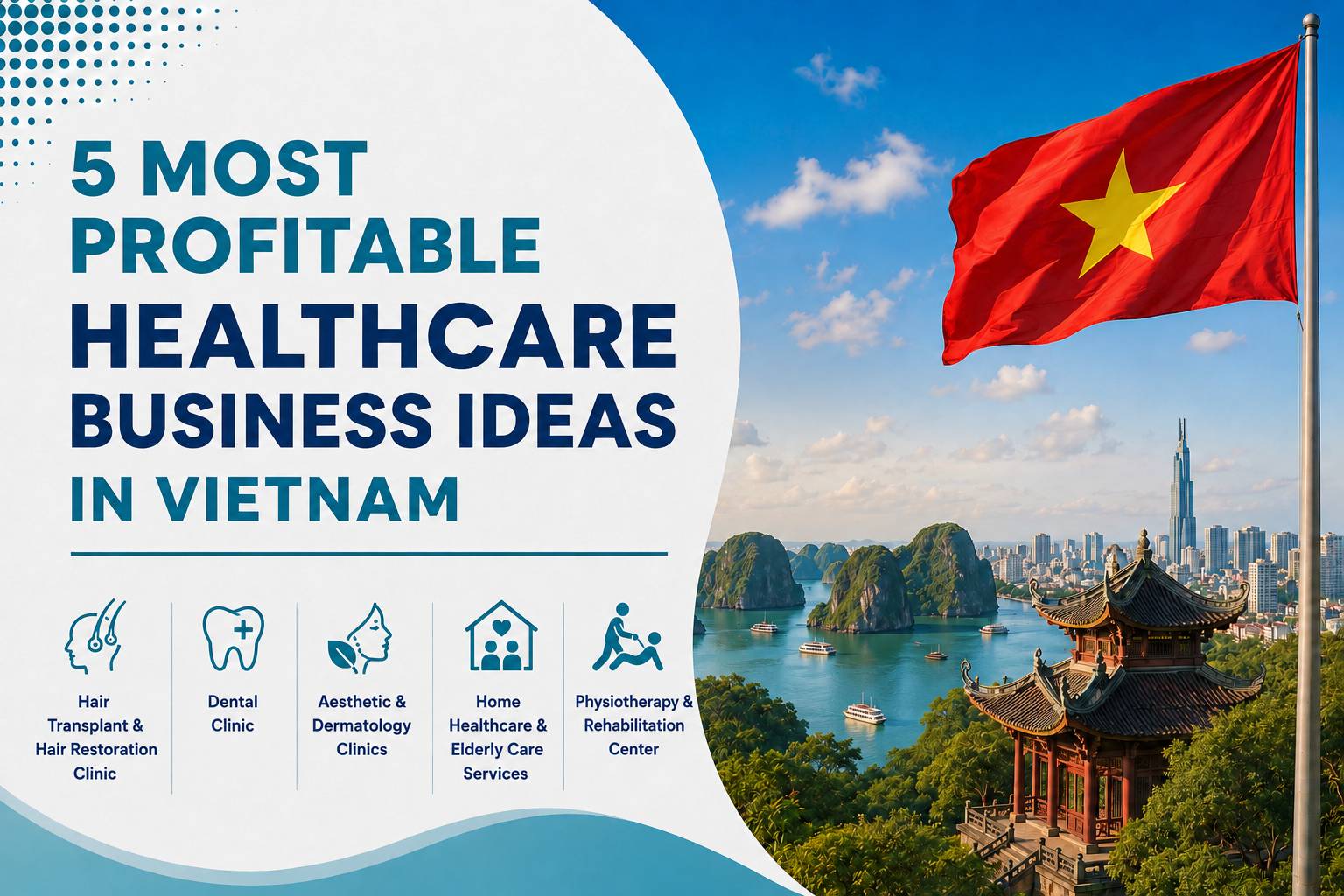
Vietnam’s healthcare sector is creating new opportunities for entrepreneurs across medical services, diagnostics, wellness, and specialised treatments. Rising healthcare awareness, changing lifestyles, and growing demand for quality private care are opening the door to new business models.
For entrepreneurs, choosing the right healthcare venture requires more than identifying market demand. Factors such as investment requirements, professional expertise, location, patient needs, and regulatory considerations all influence long-term potential. From specialised clinics to diagnostic and home healthcare services, several healthcare business ideas can be explored in Vietnam.
This guide highlights five promising opportunities while examining why Vietnam is becoming an increasingly attractive destination for healthcare investment.
Key Takeaways
- Vietnam’s healthcare sector is creating opportunities for private healthcare entrepreneurs.
- Rising healthcare spending is supporting demand for specialised medical services.
- Growing middle-class purchasing power is increasing interest in quality private healthcare.
- Government initiatives are supporting the development of the private healthcare sector.
- Specialised services such as diagnostics, aesthetics, rehabilitation, and hair restoration offer focused investment opportunities.
Why Should You Consider a Startup Healthcare Business?
Healthcare is an essential sector, but the opportunity extends beyond traditional hospitals and general medical practices. Entrepreneurs can build businesses around specific patient needs, including diagnostics, rehabilitation, preventive care, aesthetics, home healthcare, and specialised treatments.
A focused healthcare business can also create opportunities to develop expertise within a clearly defined market segment. For entrepreneurs, this can mean targeting a specific patient group rather than competing across the entire healthcare sector.
However, healthcare businesses require careful planning. Investors should consider qualified professionals, regulatory requirements, equipment, operating costs, patient safety, and the level of demand before launching. Choosing a specialised and sustainable business model can help create a stronger foundation for long-term growth.
Why Vietnam is a Hot Market for Healthcare Investment
Vietnam’s healthcare market is being shaped by changing demographics, rising consumer expectations, and increasing interest in private medical services. As people become more conscious of preventive care, specialised treatments, and overall wellbeing, demand is expanding beyond basic healthcare needs.
For entrepreneurs, this creates opportunities across both essential and specialised services. Private clinics, diagnostics, rehabilitation, wellness, aesthetics, and other focused healthcare models can address specific gaps in the market.
Invest in Healthcare Franchise in Vietnam
Join DHI TodayGrowing Healthcare Market
Vietnam’s healthcare sector is expanding as the population becomes more urbanised and healthcare awareness increases. Demand is growing not only for essential medical care but also for specialised services that offer greater convenience, expertise, and personalised treatment.
This creates opportunities for entrepreneurs to explore businesses such as diagnostic centres, speciality clinics, rehabilitation facilities, dental practices, and other healthcare services. Private healthcare can also complement the public system by providing patients with additional choices and specialised treatment options.
For investors, the opportunity lies in identifying healthcare segments where demand is increasing and where a well-managed business can deliver consistent, professional patient care.
Rising Middle-Class Spending on Healthcare
As Vietnam’s middle class expands, healthcare is increasingly becoming an area where consumers are willing to spend more for quality, convenience, and specialised services. Patients are becoming more proactive about their health and are seeking solutions that go beyond basic medical treatment.
This shift can benefit businesses offering specialised consultations, diagnostics, preventive care, aesthetics, dental services, wellness, and hair restoration. Consumers may also place greater importance on modern facilities, experienced professionals, technology, and overall patient experience.
For entrepreneurs, rising healthcare spending creates room for businesses that can combine professional expertise with reliable service delivery and a strong understanding of local consumer expectations.
Government Support for Private Healthcare
Vietnam’s healthcare system includes both public and private providers, with the private sector playing an increasingly important role in expanding access to healthcare services. Government policies have encouraged private investment and participation in healthcare development.
For entrepreneurs, this creates a more favourable environment for exploring private healthcare ventures across clinics, diagnostics, specialised treatment centres, and supporting services. However, healthcare remains a regulated sector, so investors must understand the applicable licensing, professional, facility, and operational requirements before starting a business.
A clear understanding of these requirements is essential for building a healthcare venture that can operate sustainably while meeting Vietnam’s healthcare standards.
Increasing Demand for Specialized Medical Services
Healthcare demand is becoming more specialised as consumers seek targeted solutions for specific medical, aesthetic, and lifestyle-related needs. Instead of relying only on general healthcare providers, patients are increasingly exploring specialised clinics and treatment centres.
This creates opportunities in areas such as hair restoration, fertility care, dental treatment, rehabilitation, diagnostics, aesthetic medicine, and other specialised services. Such businesses can differentiate themselves by focusing on a particular treatment category and building expertise around it.
For entrepreneurs, specialised healthcare can offer a clearer market position and the opportunity to develop a strong reputation within a defined segment. The key is matching the service with genuine local demand and ensuring the required clinical expertise is available.
Most Profitable Healthcare Business Ideas in Vietnam
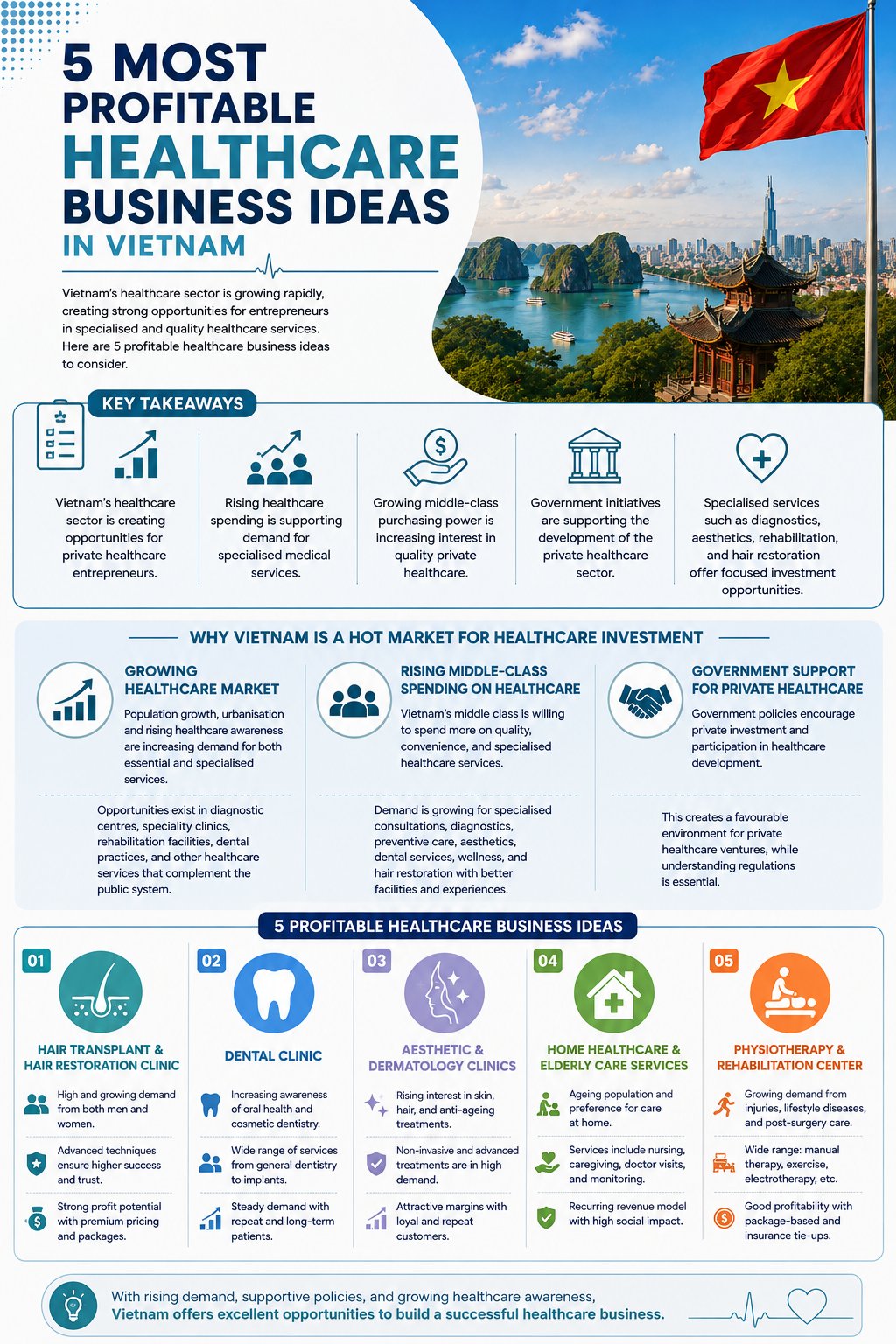
Vietnam offers opportunities across both essential healthcare and specialised medical services. Entrepreneurs can choose between clinic-based models, home healthcare, rehabilitation, and specialised treatments. The right opportunity depends on investment capacity, professional requirements, location, and patient demand.
1. Hair Transplant & Hair Restoration Clinic
Hair loss is a common concern among both men and women, creating demand for professional hair restoration solutions. Unlike general healthcare businesses, a specialised hair restoration clinic can focus entirely on consultation, diagnosis, transplantation, and post-treatment care. This makes it a focused business model with opportunities to build expertise and a strong patient base. Entrepreneurs can establish an independent clinic or enter the market through an established franchise. DHI International is particularly relevant for this category, offering a specialised hair restoration franchise model supported by clinical training, operational guidance, marketing resources, and its Direct Hair Implantation technique. For entrepreneurs, this creates an opportunity to enter a specialised healthcare segment with an established business framework.
2. Dental Clinic
Dental care offers a broad business opportunity because patients require services ranging from routine check-ups and preventive care to orthodontics, implants, cosmetic dentistry, and restorative treatments. Entrepreneurs can develop a general dental practice or focus on a specialised service such as orthodontics or aesthetic dentistry. A clinic’s location, dentist availability, equipment, treatment pricing, and patient experience can strongly influence its performance. Franchise models can provide established operating procedures, branding, marketing support, and training, while independent clinics offer greater control over services and pricing. For investors, dental care can be attractive because many treatments require follow-up appointments, allowing clinics to develop long-term relationships with patients.
3. Aesthetic & Dermatology Clinics
Aesthetic and dermatology clinics address both medical skin concerns and appearance-related treatments. Business opportunities can include acne treatment, pigmentation care, hair and scalp treatments, laser procedures, skin rejuvenation, and other dermatological or aesthetic services. Growing awareness of personal appearance and professional skincare can support demand for specialised clinics. However, this segment requires qualified professionals, appropriate equipment, proper facility standards, and compliance with applicable healthcare regulations. Entrepreneurs can differentiate their business through specialised treatments, experienced practitioners, technology, and patient experience. A franchise model can add established treatment protocols, staff training, marketing support, and operational systems, making it an option for investors who prefer a structured approach.
4. Home Healthcare & Elderly Care Services
Home healthcare allows patients to receive professional support without travelling to a hospital or clinic. Business opportunities can include nursing care, post-surgical assistance, elderly care, rehabilitation support, medication assistance, and daily living services. As families look for convenient ways to support older relatives and patients recovering at home, this model can address a practical healthcare need. Entrepreneurs can build a service around trained caregivers and healthcare professionals, supported by scheduling and patient-management systems. Unlike a traditional clinic, the business may require less investment in a large physical facility, although staffing, transportation, training, insurance, and service quality remain important considerations.
5. Physiotherapy & Rehabilitation Center
Physiotherapy and rehabilitation centres can serve patients recovering from injuries, surgeries, neurological conditions, sports injuries, and mobility-related problems. Services may include physiotherapy sessions, rehabilitation programmes, exercise therapy, mobility training, and recovery support. Entrepreneurs can also develop specialised centres for sports rehabilitation, elderly mobility, or post-operative recovery. The business depends heavily on qualified physiotherapists, suitable treatment facilities, equipment, and consistent patient care. Repeat sessions can also create ongoing patient relationships rather than one-time visits. Investors should evaluate local demand, competition, practitioner availability, facility requirements, and operating costs when considering this healthcare business model.
Comparison Table of Healthcare Business Ideas
Different healthcare models require different levels of investment, expertise, infrastructure, and ongoing management. Comparing these factors can help entrepreneurs identify the opportunity that best matches their resources and business objectives.
| Healthcare Business | Primary Services | Investment Level | Business Potential |
| Hair Transplant & Hair Restoration Clinic | Hair restoration, hair transplantation, consultations, post-treatment care | High | Premium specialised services with strong scope for brand differentiation |
| Dental Clinic | General dentistry, orthodontics, implants, cosmetic dentistry | Medium to High | Recurring consultations and treatment-based revenue |
| Aesthetic & Dermatology Clinic | Skin treatments, dermatology, laser procedures, aesthetic services | Medium to High | Premium treatment services and repeat customers |
| Home Healthcare & Elderly Care | Nursing, elderly care, recovery support, home assistance | Medium | Recurring service demand and flexible operating model |
| Physiotherapy & Rehabilitation Centre | Physiotherapy, rehabilitation, mobility and recovery programmes | Medium | Recurring service demand and flexible operating model |
Challenges of Starting a Healthcare Business in Vietnam
Healthcare businesses require more planning than many conventional businesses because patient safety, professional qualifications, and regulatory compliance directly affect operations. Entrepreneurs should consider these challenges before committing capital.
- Licensing & Compliance: Healthcare facilities must meet applicable licensing and professional requirements before providing services.
- Qualified Professionals: Recruiting and retaining appropriately qualified doctors, nurses, technicians, or therapists can be essential to daily operations.
- Initial Investment: Equipment, facility setup, technology, staffing, and working capital can make healthcare businesses capital-intensive.
- Patient Trust: A new healthcare brand needs to establish credibility through professional service, transparent communication, and consistent patient experiences.
- Operating Costs: Salaries, equipment maintenance, medical supplies, rent, insurance, and marketing can significantly affect profitability.
- Competition: Entrepreneurs need a clear service proposition to differentiate their clinic from existing healthcare providers.
A franchise can help address some operational challenges by providing established systems, training, branding, and business support.
How to Start a Healthcare Franchise Business in Vietnam
Starting a healthcare franchise requires both business planning and careful attention to healthcare-specific requirements. Entrepreneurs can approach the process through the following steps:
- Identify the Healthcare Segment: Decide whether you want to enter hair restoration, dental care, aesthetics, rehabilitation, diagnostics, or another specialised service.
- Evaluate Franchise Brands: Compare brand reputation, franchise fees, investment requirements, training, clinical protocols, marketing support, and operational assistance.
- Assess the Local Market: Study demand, target patients, competitors, location options, pricing, and the availability of qualified professionals.
- Review Regulatory Requirements: Understand the licences, professional requirements, facility standards, and other approvals applicable to the chosen healthcare service.
- Set Up the Facility: Work with the franchisor on location, clinic design, equipment, technology, staffing, and operational preparation.
- Complete Training & Launch: Train the clinical and administrative team, complete the required setup, launch marketing activities, and begin patient services.
For a specialised model such as DHI’s hair restoration franchise, entrepreneurs can also benefit from established clinical training and operational guidance instead of building the entire business framework independently.
Conclusion
Starting a healthcare business in Vietnam can be a promising opportunity for entrepreneurs who identify the right segment and understand the market they want to serve. From dental and aesthetic clinics to rehabilitation and home healthcare, several models are worth exploring.
However, specialised healthcare businesses can offer a more focused path. Hair restoration stands out as an opportunity where growing consumer interest meets specialised medical expertise and premium services.
For entrepreneurs who want to enter this segment with an established business model, DHI International offers a dedicated hair restoration franchise backed by its specialised DHI technique, clinical training, and operational support. This makes it an opportunity worth considering for investors looking to build a healthcare business in Vietnam.
FAQ
1. Which healthcare business is most profitable in Vietnam?
Specialised healthcare businesses such as hair restoration, dental care, aesthetics, diagnostics, and fertility services can offer strong profit potential. Among these, hair restoration stands out as a focused opportunity with premium treatment services and specialised demand.
2. How much investment is required to start a healthcare business in Vietnam?
Investment varies by healthcare segment, location, facility size, equipment, staffing, licensing, and business model. Entrepreneurs should consider setup costs, professional expenses, marketing, working capital, and ongoing operational costs when planning their investment.
3. Can foreign investors own healthcare businesses in Vietnam?
Yes, foreign investors can establish healthcare businesses in Vietnam, subject to applicable ownership, registration, professional, licensing, and regulatory requirements. Specific requirements depend on the healthcare service, business structure, investment model, and activities involved.
4. Is buying a healthcare franchise better than starting independently?
Yes, a healthcare franchise can provide advantages through an established brand, proven business model, specialised training, operational guidance, marketing support, and established processes. This can make entering a specialised healthcare segment more structured than starting independently.
5. How long does it take for a healthcare business to become profitable?
The timeline varies depending on investment, location, patient demand, pricing, operating costs, staffing, and business management. Specialised healthcare businesses may need time to build patient trust, generate referrals, and achieve consistent treatment volumes.