
Hair plays an important role in how people feel about their appearance. So, when it starts becoming thinner, the hairline changes, or the scalp becomes more visible, the experience can be difficult to deal with. For some, the change happens gradually over several years. For others, increased shedding can appear within a few months, making it difficult to understand what has changed.
Hair loss can affect both males and females and can be caused by various reasons, including genetic factors, hormonal changes, dietary deficiencies, and certain medical conditions. There are different types of hair loss, and not all can be treated the same.
Some conditions will result in temporary shedding, whereas others will cause progressive loss of volume. Let’s look at some of the causes, symptoms, and treatments available.
Key Takeaways
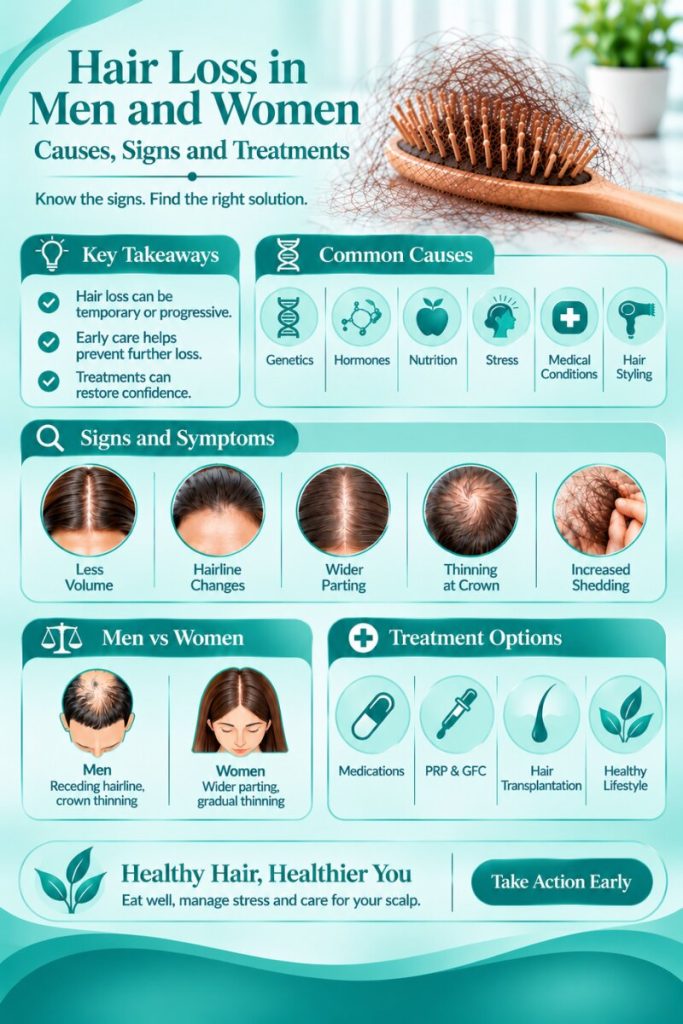
- Hair loss can be temporary or progressive, depending on its underlying cause.
- Hereditary factors, hormonal changes, and medical conditions can affect hair growth.
- Men and women may experience different patterns of thinning.
- Early assessment can help identify the condition and prevent avoidable damage.
- Medications, PRP, GFC, and hair transplantation may be considered for suitable patients.
- Maintaining scalp health and following a balanced lifestyle can support healthy hair.
What Is Hair Loss?
Hair loss, also known as alopecia, is a condition in which hair falls out more than usual, leading to gradual thinning, reduced hair density, or bald patches on the scalp or other parts of the body. It can affect both men and women and may develop gradually or suddenly. Depending on the underlying cause, hair loss can be temporary or permanent.
It is important to note that we naturally shed hair. Our hair grows in a cycle, so we will naturally lose some old hair and start growing new hair. Generally, we lose around 50-100 hairs per day.
Issues can occur when we start shedding too much hair, not growing new hair, or losing volume. Often, people will notice less volume in their ponytail or more scalp showing. Knowing how long the hair loss has been occurring and what pattern it is occurring in can help identify the cause.
Concerned About Hair Fall?
Book Your Appointment Now!Common Causes of Hair Loss in Men and Women
Hair loss can be caused by various reasons. Identifying the cause is key to finding the right treatment.
- Genetics – Hair loss can be hereditary and cause slow thinning around the crown, temples, and center.
- Hormones – Changes to your hormones can happen during pregnancy, menopause, thyroid issues, and hormone imbalances.
- Nutrients – Low iron, lack of protein, and certain vitamin deficiencies can cause excessive hair loss.
- Stress/illness – Stress (physical/emotional), infections, surgery, and significant weight loss can cause temporary hair loss.
- Medical Conditions – Thyroid issues, autoimmune conditions and hair infections can impact your hair follicles.
- Hair styling – Excessive heat styling, chemicals, and tight hairstyles can cause breakage.
Signs and Symptoms of Hair Loss in Men and Women
Hair loss can be hard to spot in the early stages. However, noting any small changes can be useful. Signs of hair loss can include:
- Less Volume – Your ponytail feels thinner, or your usual hairstyle is not as full.
- Hairline Changes – Temples start to recede, or the front hairline is moving back.
- Larger Parting – More scalp visible down the middle of your hair.
- Loss of Volume – Less volume in the crown area.
- Sudden Patches – Small patches of hair loss in the scalp, eyebrows, or beard.
- Increased Shedding – More hairs than usual falling out when washing, brushing, or gently manipulating.
If you are also experiencing itching, pain, redness, or flaking, this could be a scalp issue and should be seen by a medical professional.
Hair Loss in Men vs. Hair Loss in Women
| Comparison | Hair Loss in Men | Hair Loss in Women |
| Common pattern | Usually begins around the temples and crown. | Often causes gradual thinning across the top of the scalp. |
| Hairline changes | Receding hairline is common. | The front hairline often remains intact. |
| Scalp visibility | Bald spots may develop around the crown and temples. | Wider central parting and increased scalp visibility are common. |
| Major contributing factors | Genetics and sensitivity to DHT. | Genetics, hormonal changes and nutritional deficiencies. |
| Hormonal factors | DHT plays an important role in hereditary hair loss. | Pregnancy, menopause, PMOS/PCOD and thyroid disorders may contribute. |
| Common age of onset | Can begin during the late teens or twenties. | Can occur at different ages, particularly around hormonal transitions. |
| Treatment options | Medications, PRP, GFC and hair transplantation, depending on suitability. | Medications, PRP, GFC and hair transplantation, depending on suitability. |
| Hair transplantation | May be suitable for progressive pattern baldness with adequate donor hair. | May be suitable for selected women with sufficient donor hair and an appropriate hair loss pattern. |
Hair Loss Treatment Options for Men and Women
There is no one treatment for all types of hair loss. A specialist may assess your scalp, family history, medical history and pattern of thinning to decide on the best treatment.
Medications for Hair Loss
Often, medication will be considered if hair follicles are still active but producing thinner hairs.
- Minoxidil is a common topical medication that can encourage growth. This can help maintain volume in suitable patients. Finasteride is an oral medication often used for male pattern hair loss. It works by reducing DHT production.
- Finasteride will not be suitable for everyone, especially females. It should be treated by a qualified doctor.
PRP Hair Treatment
PRP stands for Platelet Rich Plasma, this involves taking a sample of your blood and processing it so you have a higher concentration of plasma. This is then injected into specific areas of your scalp.
The platelets contain growth factors to help with tissue repair. It can be used in specific cases of pattern hair thinning to help activate the follicles and increase volume.
Clinical studies have shown positive results; however, this will depend on the patient’s condition, treatment, and individual response.
Growth Factor Concentrate (GFC) Treatment
GFC stands for Growth Factor Concentrate. This is a non-surgical treatment. Growth factors are taken from your own blood and processed. This is then injected into specific areas of your scalp.
The aim is to help the local area around the hair follicles. It may be considered for specific patients suffering from thinning.
However, the treatment and evidence are still developing. A specialist should explain the expected benefits, limitations, and suitability.
Hair Transplant
If your hair loss has progressed and certain areas do not have enough natural coverage, a hair transplant can be considered.
Healthy follicles are taken from a donor area, usually the back or sides of the scalp and implanted in the areas suffering from thinning/baldness.
DHI (Direct Hair Implantation) is a specialist technique using an implanter tool to place the individual follicles. The surgeon has control of the angle, direction and depth to give a natural hairline and distribution to suit your current hair.
Both males and females can be considered for a hair transplant. This will depend on having an appropriate donor area and pattern of hair loss. This treatment requires careful planning, as you may still suffer from hair loss.
Treatment for Underlying Conditions
Sometimes the first step to getting your hair back to a healthy state will be treating another medical issue.
Correcting iron deficiency, thyroid issues, and scalp infections can help improve shedding. If you suspect your medication is contributing to your hair loss, your treating doctor can discuss your options.
It is important to treat the underlying cause, as not all medical causes can be solved with cosmetic treatments.
How to Prevent Hair Loss and Maintain Healthy Hair?
Not all types of hair thinning can be prevented. However, taking proper care of your hair can help minimise unnecessary damage. Here are some tips to help maintain healthy hair:
- Eat a balanced diet rich in protein, vegetables, fruits, whole grains, and essential minerals.
- Be gentle when handling wet hair. Use a wide-tooth comb to minimise breakage.
- Limit the use of chemical treatments. Allow sufficient time between colouring, bleaching, and other chemical treatments.
- Avoid tight hairstyles that put constant tension on your hair.
- Keep your scalp clean and use appropriate hair-care products. Seek professional advice if you experience persistent scalp irritation.
- Avoid crash diets, as sudden weight changes and inadequate nutrition can affect your hair growth cycle.
- If you experience persistent hair shedding, do not rely solely on cosmetic products. Seek professional advice to identify the underlying cause.
Having a routine can help protect your hair. However, if you are still suffering from thinning, you should seek professional advice.
Take the First Step Towards Healthier Hair!
Book an AppointmentConclusion
There are many reasons why your hair may be losing volume. The correct treatment will depend on the underlying cause. Genetic and hormonal changes may cause progressive thinning however stress, dietary deficiencies and medical conditions can cause different types of shedding.
Identifying early signs and knowing the cause can make a real difference. Depending on your situation, medical treatments, non-surgical treatments or hair transplant may be appropriate. An appropriate assessment should be carried out.
If you have noticed any changes to your hairline, scalp coverage or volume, consider seeing a hair specialist. An informed treatment plan can help you manage your condition.
FAQs
1. Is hair loss more common in men than women?
Males are more likely to suffer from visible pattern baldness. However, females often suffer from hereditary thinning. Usually, it will just be a difference in appearance.
2. Can stress cause hair loss in both men and women?
Yes. Large physical or emotional stress can cause Telogen Effluvium. This can cause increased shedding in both males and females. However, this often improves when the cause is resolved.
3. Is hair loss reversible?
This depends on the cause. If it is temporary hair loss due to illness, stress or dietary deficiencies, it may improve. However, hereditary thinning will generally require ongoing management. Scarring can cause permanent damage to the follicles.
4. Can nutritional deficiencies lead to hair loss?
Yes. Low iron, lack of protein, and certain vitamin/mineral deficiencies can cause issues with normal hair growth. It is important to identify the deficiency before supplementing.
5. When should I consult a hair loss specialist?
If you are suffering from continued thinning, changes to your hairline, bald patches or scalp irritation, you should seek professional advice. If you are suffering from sudden or unexplained changes.
6. Is hair transplantation suitable for both men and women?
Yes. Selected males and females can have a hair transplant. This will depend on having enough donor hair, an appropriate pattern of hair loss, a healthy scalp, and an individual medical assessment.