
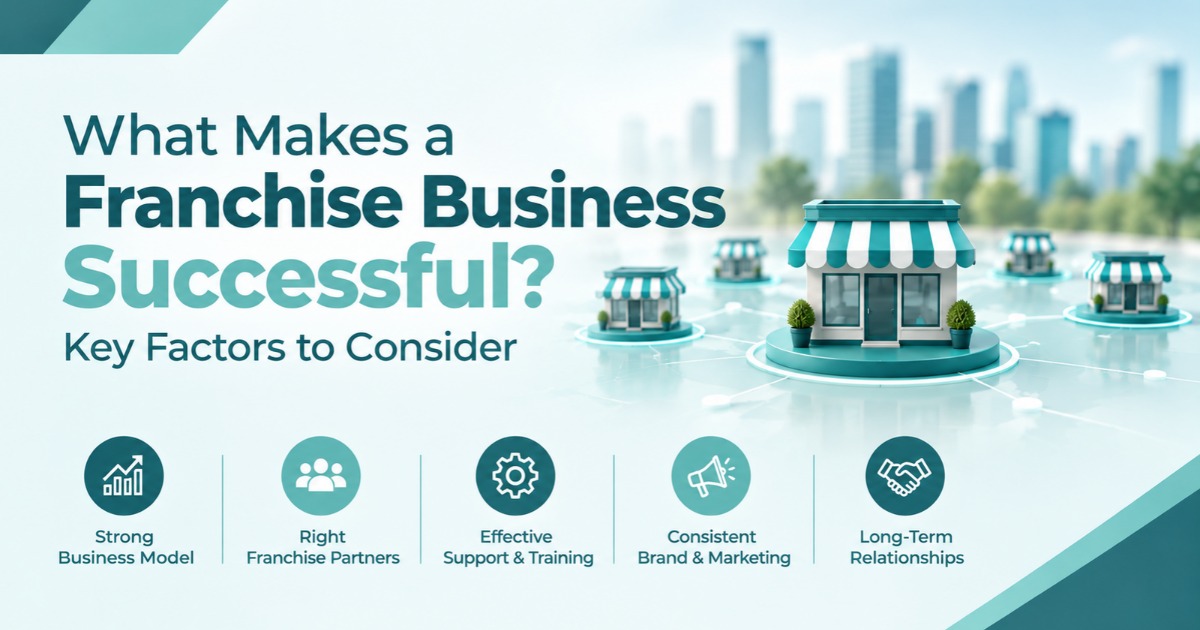
A franchise can give you access to an established brand, operating system, training, and ongoing support. However, buying a franchise does not automatically create a successful franchise business. Your results depend on the strength of the franchise model, local market demand, financial planning, execution, and the relationship between you and the franchisor.
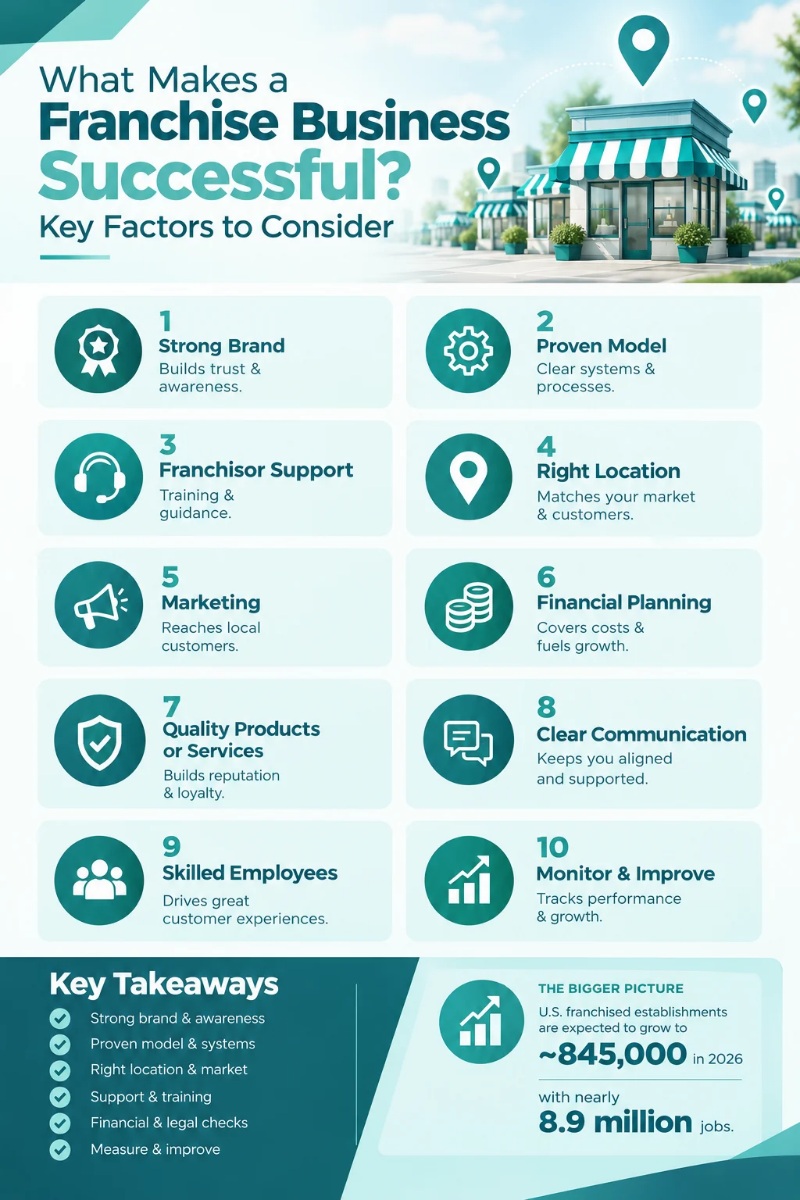
The International Franchise Association’s 2026 Economic Outlook estimates that U.S. franchised establishments will grow from 832,521 to approximately 845,000 units in 2026, with franchise employment expected to reach nearly 8.9 million jobs. These figures show the scale of franchising, but individual performance still depends on how well a franchise is selected and operated.
Key Takeaways
- A strong brand can help you build initial awareness and customer confidence.
- A proven business model should have clear systems, processes, and financial requirements.
- Location, market demand, pricing, and local competition directly affect performance.
- Training and ongoing franchisor support can influence operational consistency.
- Financial and legal due diligence should happen before you sign an agreement.
- A successful franchise business requires regular performance measurement and improvement.
10 Key Factors That Make a Franchise Business Successful
1. A Strong and Recognized Brand
Brand recognition can reduce the time and money required to introduce a new business to your market. However, you should examine whether customers in your target location actually know and trust the brand.
Review brand reputation, customer feedback, online visibility, existing locations, and franchisee satisfaction before making a decision.
2. A Proven Business Model
A successful franchise business needs more than a popular name. It requires a repeatable operating model covering pricing, sales, staffing, customer service, procurement, marketing, and daily operations.
Ask the franchisor how the model has performed across different locations and what systems are available to help franchisees implement it.
3. Strong Franchisor Support
Training and support can significantly affect how efficiently you launch and manage your business. Your franchisor should clearly explain what support you receive before and after opening, including:
- Initial training
- Operational guidance
- Marketing support
- Technology and software
- Recruitment guidance
- Site selection
- Business reviews
- Ongoing training
4. The Right Location and Target Market
Even a strong franchise can struggle in an unsuitable location. Your site should match the habits, income levels, accessibility requirements, and needs of your target customers. Before signing a lease, study:
- Local population
- Customer demographics
- Competitors
- Rent and property costs
- Footfall or accessibility
- Parking and transportation
- Future development in the area
Location decisions should be supported by actual market data rather than assumptions.
5. Effective Marketing and Brand Promotion
A successful franchise business needs a consistent marketing strategy at both brand and local levels.
National campaigns may create awareness, while local marketing helps you reach customers in your specific territory. Depending on the industry, this can include search marketing, social media, referrals, community partnerships, email marketing, events, and local promotions.
Ask whether the franchisor provides marketing assets, digital support, lead generation, and guidelines for local campaigns.
6. Proper Financial Planning
Financial discipline is one of the most important foundations of a successful franchise business. Your budget should cover:
- Franchise fee
- Property and rent
- Equipment
- Interiors
- Staff salaries
- Technology
- Insurance
- Marketing
- Licences
- Inventory
- Working capital
Do not focus solely on projected revenue. The FTC specifically warns that gross sales figures may not reflect actual profits because rent, salaries, overheads, and other expenses can substantially affect earnings.
7. Quality Products or Services
Customers ultimately judge a business by the value and quality they receive. For a healthcare franchise, quality becomes even more important because patient safety, professional qualifications, clinical protocols, and treatment outcomes directly affect reputation.
Your due diligence should therefore cover the quality standards, suppliers, technology, training, and service protocols behind the franchise.
8. Strong Franchisee-Franchisor Communication
A successful franchise business depends on a working relationship between the franchisee and franchisor.
Before investing, speak with existing franchisees. Ask about communication, support, marketing, operational challenges, supplier relationships, and how the franchisor responds when a location faces difficulties.
9. Skilled Employees and Effective Management
Your team directly affects customer experience and daily performance.
Recruit people with the skills required for the business and establish clear responsibilities from the beginning. You should also understand employee turnover, salary costs, training requirements, and local availability of skilled professionals.
Labour remains a significant concern across franchising. In the IFA’s 2025 Franchisor Survey, 37% of respondents identified the availability, quality, and cost of labour as their top business challenge.
10. Ability to Adapt and Grow
A successful franchise business must respond to changes in customer preferences, technology, regulations, and competition while maintaining the franchisor’s required standards.
Ask whether the franchise regularly updates its technology, services, marketing systems, training, and operating procedures.
What Should Investors Look for in a Franchise Opportunity?
Before choosing a franchise, examine these areas:
- Brand reputation and history
- Franchise fees and royalties
- Total investment
- Expected operating expenses
- Territory rights
- Training and support
- Marketing obligations
- Supplier arrangements
- Contract duration and renewal
- Exit and transfer conditions
- Financial performance information
- Current and former franchisee feedback
The ACCC states that a franchise disclosure document helps prospective franchisees make informed decisions and must contain specific information about the franchise system. In Australia, prospective franchisees generally must receive the disclosure document at least 14 days before entering the franchise agreement.
Requirements differ by country, so you should always review the applicable local regulations.
How to Build a Successful Franchise Business Step by Step
Step 1 – Define Your Investment Budget
Calculate how much capital you can commit without creating excessive financial pressure. Include working capital rather than allocating your entire budget to setup costs.
Step 2 – Identify the Right Industry
Select an industry that matches your experience, interests, local demand, and available capital. Healthcare, education, personal services, food, and professional services are among the sectors represented in franchising.
Step 3 – Research Franchise Brands
Compare several brands rather than relying on one presentation. Study their history, locations, franchisee turnover, support systems, reputation, and financial requirements.
Step 4 – Evaluate the Business Model
Understand exactly how the franchise generates revenue and where its major expenses arise. Ask what responsibilities remain with you after the franchise agreement is signed.
Step 5 – Study the Market and Location
Conduct local research before committing to a site. A strong franchise model still needs sufficient customers in the territory.
Step 6 – Review the Franchise Agreement
Have a qualified franchise lawyer review the agreement. Pay attention to territory, fees, renewal, termination, restrictions, marketing contributions, suppliers, and transfer conditions.
Step 7- Complete Financial and Legal Due Diligence
Verify financial projections, contracts, licences, property costs, tax obligations, and regulatory requirements. If the franchisor provides earnings claims, ask for the underlying information supporting them.
Step 8- Complete Training
Use the franchisor’s training programme fully. Learn the operational system before opening rather than treating training as a formality.
Step 9- Launch With a Local Marketing Strategy
Combine the franchisor’s brand resources with marketing tailored to your location and customer profile.
Step 10- Monitor and Improve Performance
Track revenue, margins, customer acquisition costs, repeat customers, staffing costs, reviews, and operational efficiency. Use these figures to identify areas that require attention.
What Makes a Healthcare Franchise Successful?
Healthcare franchising requires additional considerations because the business involves patient care. A successful healthcare franchise should have:
- Qualified healthcare professionals
- Clear clinical protocols
- Appropriate licensing
- Strong patient-safety procedures
- Consistent staff training
- Reliable equipment and technology
- Ethical marketing practices
- Clear patient communication
- Effective aftercare systems
- Strong operational management
DHI International’s franchise model includes doctor training, clinical protocols, operational support, marketing resources, CRM technology, and business guidance. DHI states that its network includes 75 clinics across 45 countries and more than 56 years of experience in hair restoration. These are DHI’s own reported figures and should be assessed as part of your independent due diligence.
For an entrepreneur considering a hair restoration franchise, these systems can help establish consistent clinical and operational processes while reducing the need to develop every system independently.
How to Measure Franchise Business Success
Revenue is important, but it should not be your only measure. Track a combination of financial and operational indicators:
| Metric | What it tells You |
| Revenue growth | Whether sales are increasing |
| Gross margin | How much remains after direct cost |
| Net profit | Overall business profitability |
| Customer acquisition cost | Cost of gaining each customer |
| Repeat customer rate | Customer retention and loyalty |
| Staff turnover | Workforce stability |
| Customer reviews | Service quality and reputation |
| Lead conversion rates | Effectiveness of sales processes |
| Break even point | Revenue required to cover costs |
Review these metrics regularly and compare them against your original business plan.
Conclusion
Building a successful franchise business requires more than purchasing a recognised brand. You need a suitable market, realistic financial plan, reliable systems, strong staff, effective marketing, and a productive relationship with your franchisor.
The franchise model can provide valuable infrastructure, but your research and day-to-day management remain critical. As the FTC notes, franchising can provide training and support, yet there is no guarantee of success.
If you are considering a healthcare franchise, DHI International offers a specialised hair restoration franchise model with training, clinical protocols, operational support, marketing resources, and an international clinic network.
Interested in building a hair restoration franchise with an established international brand? Explore the DHI franchise opportunity and connect with the team to discuss investment requirements, training, support, and territory availability.
FAQs
1. What makes a franchise business successful?
A successful franchise business typically depends on a strong business model, suitable location, sufficient capital, effective management, trained employees, quality services, marketing, franchisor support, and regular performance monitoring.
2. What are the most important factors to consider before buying a franchise?
Review the brand, total investment, fees, territory, market demand, franchisor support, franchise agreement, financial information, operating costs, regulations, and feedback from existing franchisees.
3. Is a successful franchise guaranteed to make a profit?
No. A franchise provides a business model and, depending on the brand, training and support, but profitability depends on factors such as location, costs, market demand, management, competition, and execution.
4. How important is location to franchise success?
Location can have a major effect on customer access, visibility, operating costs, and local competition. You should conduct demographic and competitor research before selecting a site.
5. What support should a franchisor provide?
Depending on the franchise, support may include initial training, operational guidance, marketing resources, technology, site selection, recruitment assistance, business reviews, and ongoing training.
6. How much money is needed to start a franchise?
There is no universal amount. Your total investment depends on the industry, brand, franchise fee, property, equipment, staffing, marketing, licensing, and working-capital requirements.
7. Is franchising better than starting an independent business?
The two models involve different advantages and responsibilities. Franchising may provide established systems, brand resources, and support, while an independent business gives you greater control over branding and operations. Your choice should depend on your capital, experience, goals, and willingness to follow an established model.
8. What makes a healthcare franchise successful?
A successful healthcare franchise requires qualified professionals, appropriate licensing, strong clinical protocols, patient-safety systems, consistent training, suitable technology, ethical marketing, effective operations, and reliable franchisor support.