
How to Grow Hair Faster After Hair Fall: A Complete Guide
Hair naturally grows continuously. However, this process can be affected by genetics, hormonal changes, nutritional deficiencies, stress, and certain medical conditions. When more hair falls out than the body can replace, gradual thinning, reduced hair density, and visible scalp areas may develop.
To know how to grow your hair faster after hair fall you need to understand why you are experiencing this issue. Whether you’re experiencing temporary hair loss, breakage or hair loss, each situation will have a different cause.
This guide will explain how hair grows, what causes hair loss, what foods are needed, and good hair care practice. We will also look at medical treatments.
Key Takeaways
- Not all hair loss is excessive.
- Whether your hair can grow back will depend on the condition of your follicles and the cause of the issue.
- Protein, iron, zinc, and vitamins are all important for healthy hair growth.
- Medical treatments can help treat certain types of hair loss.
- Early diagnosis can help treatment.
Understand Why Hair Fall Happens
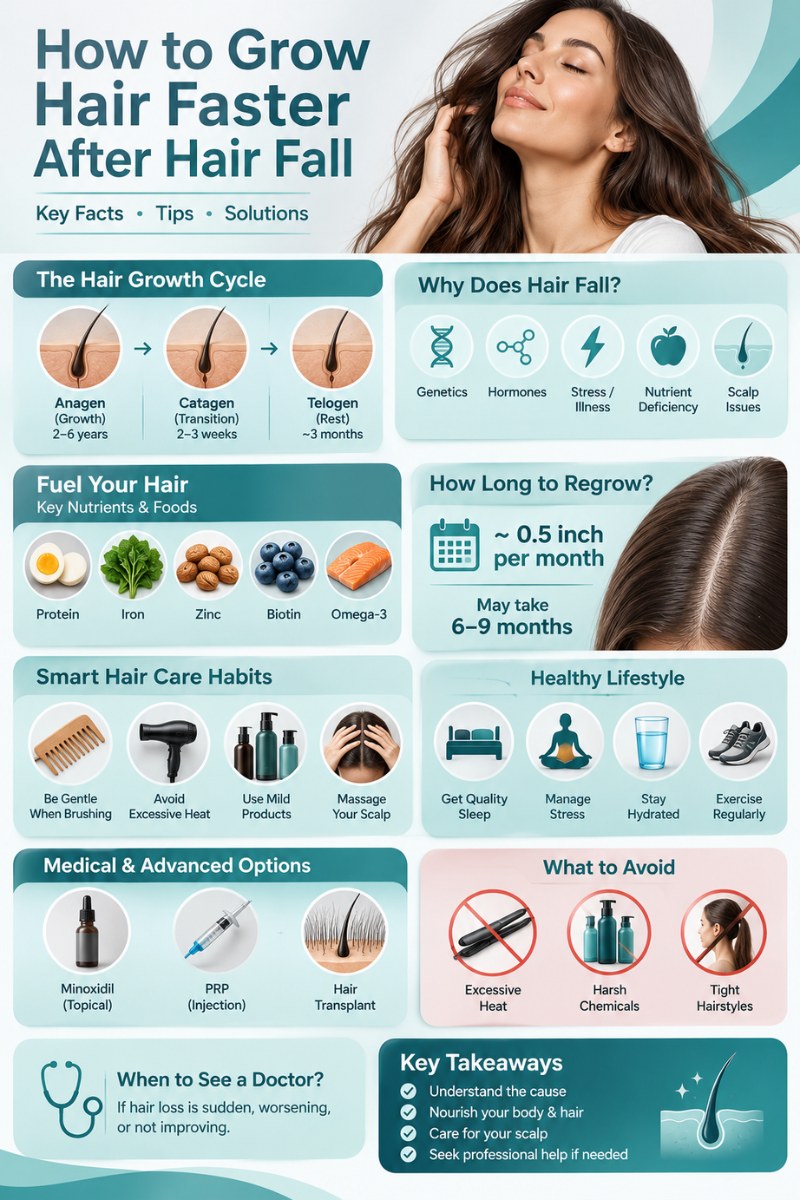
Hair grows in 3 phases:
- Anagen: Hair is produced by the hair follicles. This can last for several years.
- Catagen: Hair growth reduces, and hair follicles begin to shrink.
- Telogen: Hair goes into a resting phase.
It is normal to lose hair every day (up to 50-100 hairs). However, if you are losing a lot of hair or noticing your hair is thinning, it could be a problem.
Common reasons for hair loss:
- Additionally, genetics contribute to male and female pattern hair loss. Men often experience thinning hair on the front and crown. Women may notice their parting widening and less dense overall.
- Hormones: Pregnancy, giving birth, menopause, thyroid issues, and other hormonal changes can cause issues with hair growth.
- Stress/illness: Physical or mental stress, high temperature, surgery, and significant weight loss can cause temporary hair loss.
- Deficiency: Not having enough protein, iron, or other essential vitamins can cause issues.
- Scalp Issues: Infections, irritation, and some autoimmune conditions can cause damage to the follicles.
How Long Does Hair Take to Regrow?
Hair will grow around half an inch per month on the head. However, this can vary. Therefore, your hair will not grow back quickly.
If you are experiencing temporary hair loss such as telogen effluvium, your hair may start to grow once the cause has been treated. However, it can take 6-9 months for your hair to regrow fully.
If you are losing hair due to genetics you may lose more unless treated.
Diet and Nutrition for Faster Hair Growth
Hair follicles require adequate nutrients to maintain their growth and normal functioning. A balanced diet can help prevent nutritional deficiencies that contribute to hair loss.
Essential Vitamins and Minerals for Healthy Hair Growth
Some key nutrients include:
- Vitamin D: keeps hair follicles healthy.
- Vitamin C: Help absorb iron and produce collagen.
- Vitamin B12: Keep red blood cells healthy.
- Vitamin E: Antioxidant.
- Iron & Zinc: Keep cells healthy.
Protein-Rich Foods That Help Strengthen Hair
Hair is made mainly from a structural protein called keratin. Insufficient protein intake can affect hair growth. Include eggs, fish, milk, paneer, lentils, beans, and yoghurt in your meals.
Best Foods to Reduce Hair Fall and Support Hair Growth
Eat a variety of foods including:
- Spinach and other leafy vegetables: High in iron and folate.
- Eggs & Dairy: High in protein and vitamin B12.
- Nuts & Seeds: High in zinc.
- Citrus & Amla: High in vitamin C.
- Fish & Flax Seeds: High in omega 3.
The Role of Iron, Zinc, and Biotin in Hair Health:
Iron helps transport oxygen through the blood, while zinc supports cell growth and repair. Biotin helps with metabolising nutrients. However, it is rare to be deficient in these. Taking extra supplements will unlikely help if you are getting enough. Taking too much can cause issues.
How to Maintain a Balanced Diet for Stronger Hair:
Include protein, whole grains, fruits, vegetables, and healthy fats in your daily meals. Avoid crash diets and extreme calorie restriction, as inadequate calorie and nutrient intake can trigger excessive hair shedding.
Lifestyle Changes That Support Regrowth.
Healthy lifestyle habits can support overall hair health and help reduce some factors associated with excessive shedding.
- Get sufficient sleep and maintain a regular sleep schedule.
- Manage stress through exercise, yoga, or meditation.
- Stay hydrated throughout the day.
- Avoid sudden weight loss and restrictive diets.
Exercise regularly. These will make you feel generally healthier but will not help with genetic hair loss.
Hair Care Habits to Avoid.
Overwashing or Underwashing Your Hair:
Everyday hair care practices can contribute to breakage and scalp problems if not followed correctly.
Using Excessive Heat Styling Tools:
Frequent use of straighteners, curling irons, and blow dryers can weaken hair strands. Reduce using heat and try using lower heat settings.
Applying Harsh Hair Care Products:
Using harsh chemicals, colouring too frequently and using the wrong products can all cause damage to your hair shaft and cause irritation. Use products suitable for your hair.
Brushing Wet Hair Roughly:
Wet hair is more vulnerable to breakage. Use a wide-toothed comb and gently detangle your hair without pulling or applying excessive force.
Ignoring Scalp Health and Hair Problems:
Persistent dandruff, itching, redness, and scalp infections require attention. Consult a specialist if these problems continue.
Medical and Clinical Treatments for Regrowth.
If you are experiencing regular or progressive hair loss you may need to seek medical treatment. This depends on the type of hair loss you are experiencing, state of your follicles and medical history.
Common treatments include:
- Minoxidil: This is a topical treatment. It can help with certain pattern hair loss. It can help encourage growth and reduce thinning. It can take several months to see a difference and you will usually need to use it.
- PRP: Platelet rich plasma is taken from your blood and injected into your scalp. This can be used as part of a regime to help regrow hair. Results can vary.
- GFC: Growth Factor Concentrate is a concentrated growth factor taken from your blood. This can be used as a regenerative treatment. Research is still being done.
- Prescription: Depending on your diagnosis, your dermatologist will suggest medication to help certain types of hair loss.
Speak to a professional for the right treatment.
Hair Transplant: When Is It the Right Option?
If you are suffering from permanent pattern hair loss and you have suitable donor hair, you may be able to have a hair transplant. Healthy follicles are moved from the donor site to the area where your hair is thinning.
DHI (Direct Hair Implantation) is an advanced hair transplantation technique in which hair follicles are implanted using a specialised implanter. This allows the doctor to control the angle, depth and direction of each follicle, helping achieve natural hair growth patterns, a well-defined hairline and uniform hair distribution. The technique also enables precise placement of follicles in the recipient area according to the patient’s individual hair restoration needs.
However, not everyone will be suitable for a hair transplant. A specialist will need to look at your pattern of hair loss, donor hair, scalp, and long-term goals.
Looking for Hair Transplant?
Book an AppointmentHome Remedies: What Works and What Doesn’t?
Using home remedies such as coconut oil & aloe vera can help condition your hair and reduce dryness. Gently massaging your scalp can be a part of your hair care routine.
However, there isn’t enough evidence to prove they will help with genetic hair loss or if your follicles are not growing due to them being inactive.
Onion juice & homemade mixtures are not proven to help and can cause irritation.
Find the cause and use medical treatments.
When To See A Doctor?
If you are experiencing:
- Sudden or excessive hair loss.
- Visible bald spots or recession.
- Gradual thinning or widening partings.
- Ongoing itchiness, redness or irritation.
- Hair loss that is not improving with improved diet & hair care.
Early assessment can help find the cause and best treatment.
Conclusion:
There are many factors that can affect healthy hair growth. This includes genetics, nutrients, hormones, scalp health & follicle health. Eating a balanced diet & taking care of your hair can help with normal growth; however, it may not be enough for progressive hair loss.
Understanding the cause is the most important step. If you are experiencing ongoing thinning or excessive hair loss, speak to a qualified specialist to find the right medical & hair restoration treatments.
FAQs:
1. Can lost hair grow back naturally?
Yes. Hair can regrow naturally after temporary shedding caused by stress, illness, or nutritional deficiencies. Genetic hair loss may require medical treatment.
2. Can oiling help regrow hair after hair fall?
Oiling can help condition hair but will not help reverse genetic hair loss.
3. Which vitamins are important for hair growth?
Vitamin D, vitamin C, and vitamin B12, along with iron and zinc, support normal hair health. Supplements should be taken only when required.
4. Can stress-related hair fall be reversed?
Yes, stress related hair loss is often temporary. Once the cause has been resolved, hair can grow better. However, this can take several months.
5. What is the best treatment for hair regrowth?
This will depend on the cause. Minoxidil, prescriptions, PRP, and other clinical treatments may be considered after medical evaluation.
6. Can hair grow back on a thinning scalp?
Yes, depending on whether the hair follicles remain active and the cause of thinning. Early diagnosis and suitable treatment can improve the chances of regrowth.