Hair Transplant Franchise: A Growing Business Opportunity in Brazil

Hair loss is becoming a growing concern for people who want solutions that deliver visible, long-term results. As awareness of hair restoration procedures increases, specialised clinics are finding greater opportunities within the aesthetic healthcare market.
Brazil is particularly relevant for entrepreneurs because of its large urban population, established private healthcare ecosystem, and strong interest in cosmetic and aesthetic treatments. This creates an opportunity to build a specialised business focused on hair restoration rather than competing across multiple healthcare services.
A hair transplant franchise can provide entrepreneurs with an established brand, clinical framework, training, and operational support, making it easier to enter this specialised segment. This guide explores why Brazil presents an attractive market and what investors should know before starting.
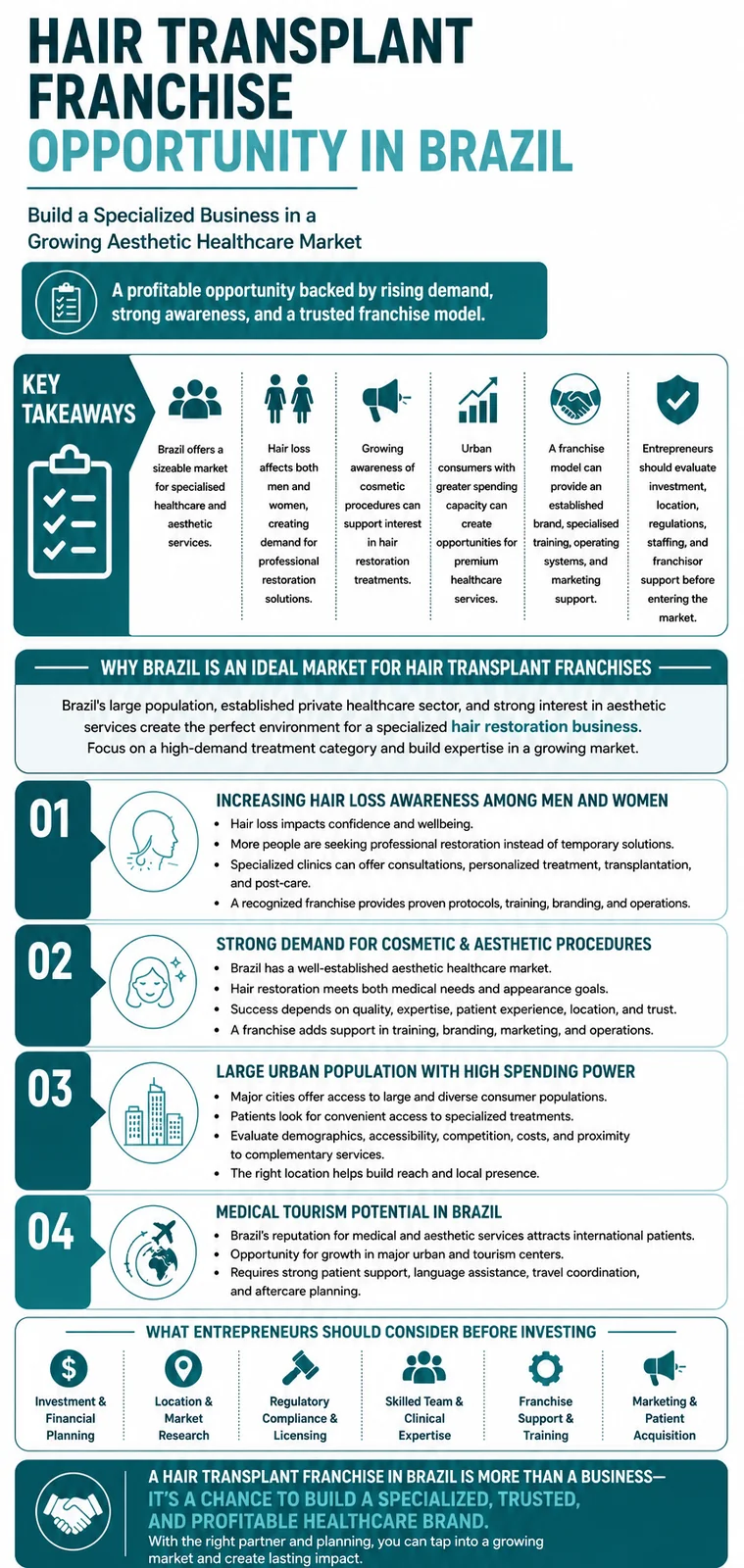
Key Takeaways
- Brazil offers a sizeable market for specialised healthcare and aesthetic services.
- Hair loss affects both men and women, creating demand for professional restoration solutions.
- Growing awareness of cosmetic procedures can support interest in hair restoration treatments.
- Urban consumers with greater spending capacity can create opportunities for premium healthcare services.
- A franchise model can provide an established brand, specialised training, operational systems, and marketing support.
- Entrepreneurs should evaluate investment, location, regulations, staffing, and franchisor support before entering the market.
Why Brazil Is an Ideal Market for Hair Transplant Franchises
Brazil’s combination of a large population, established private healthcare sector, and strong interest in aesthetic services creates a relevant environment for specialised hair restoration businesses. Hair transplantation sits at the intersection of healthcare and aesthetics, allowing clinics to serve consumers looking for professional solutions to hair loss.
For entrepreneurs, this creates an opportunity to build a focused business around a specific treatment category. Instead of developing a general healthcare facility, investors can concentrate on hair restoration, patient consultation, treatment, and follow-up care.
Increasing Hair Loss Awareness Among Men and Women
Hair loss can affect confidence, appearance, and personal wellbeing, making it a concern for both men and women. As consumers become more informed about available treatment options, more people are exploring professional hair restoration instead of relying only on temporary or cosmetic solutions.
This creates an opportunity for specialised clinics that can provide consultations, personalised treatment planning, transplantation, and post-procedure care. For entrepreneurs, a focused hair restoration business can serve a clearly defined need while developing expertise within a specialised healthcare category. A recognised franchise can further support this model through established treatment protocols, training, branding, and operational guidance.
Strong Demand for Cosmetic & Aesthetic Procedures
Brazil has a well-established aesthetic healthcare market, with consumers showing strong interest in procedures designed to improve appearance and confidence. Hair restoration fits naturally within this broader category because patients are often seeking both a medical solution to hair loss and an improvement in their overall appearance.
For entrepreneurs, this creates room for specialised clinics offering hair transplantation and restoration services. A premium treatment model can also differentiate the business from general healthcare providers. However, success depends on qualified professionals, treatment quality, patient experience, location, and the ability to build trust. A franchise can provide additional support in areas such as clinical training, branding, marketing, and operational systems.
Large Urban Population with High Spending Power
Brazil’s major cities provide access to large consumer populations, making urban locations particularly relevant for specialised healthcare businesses. Hair restoration clinics can benefit from being located where potential patients have convenient access to consultations and treatment while having the ability to spend on specialised services.
For franchise investors, location selection should therefore go beyond population size. Factors such as demographics, accessibility, competition, commercial costs, and proximity to complementary healthcare or aesthetic services should also be considered. A well-positioned clinic can make it easier to reach the target audience and establish a local presence.
Medical Tourism Potential in Brazil
Brazil’s established reputation for medical and aesthetic services can also create opportunities to attract patients beyond the immediate local market. Hair restoration is a specialised procedure where patients may travel to access experienced professionals, established techniques, or trusted healthcare brands.
For entrepreneurs, this creates an additional avenue for growth, particularly for clinics located in major urban and tourism centres. However, attracting international patients requires more than clinical expertise. Patient coordination, communication, travel assistance, treatment planning, follow-up care, and international marketing may all become important. A recognised brand with established clinical protocols can help provide greater confidence to patients considering treatment away from home.
What Is a Hair Transplant Franchise?
A hair transplant franchise allows an entrepreneur to operate a specialised hair restoration clinic using an established brand, business model, clinical framework, and support system. Instead of developing the entire concept independently, the franchisee works within the franchisor’s established standards and processes.
Depending on the franchise, support can include clinical training, treatment protocols, clinic setup guidance, marketing resources, operational assistance, and ongoing business support. Qualified medical professionals are responsible for clinical procedures, while the franchise owner can focus on managing the business and building its local presence.
For entrepreneurs entering the hair restoration market, this model can provide a structured starting point while allowing them to develop a specialised healthcare business under an established brand.
Benefits of Investing in a Hair Transplant Franchise
A specialised hair restoration business can offer entrepreneurs the advantage of entering a defined healthcare segment with an established framework. Instead of developing the brand, clinical processes, and operating systems independently, franchisees can benefit from the experience and resources of the franchisor.
Established Brand Recognition
An established brand can make it easier to build awareness and patient confidence when entering a competitive healthcare market. DHI International has specialised exclusively in hair restoration since 1970 and currently operates 75 clinics across 45 countries. This international presence gives franchise partners access to a recognised name within the hair restoration segment.
Proven Business Model
A franchise provides an established framework covering clinic operations, patient management, treatment protocols, and business processes. DHI has developed standard operating procedures across its clinics, supported by established quality systems and protocols. This allows entrepreneurs to work with an existing model instead of developing every process independently.
Clinical Training & Operational Support
Hair restoration requires specialised clinical knowledge and consistent treatment protocols. DHI states that its procedures are performed by doctors trained and certified through the London Hair Restoration Academy, with quality control applied throughout the process. Franchise partners can therefore benefit from specialised training alongside operational guidance for establishing and managing the clinic.
Marketing & Patient Acquisition Assistance
Building awareness is an important part of establishing a new clinic. A franchise can provide access to established brand assets, marketing resources, campaign support, and patient communication strategies. DHI’s franchise model is designed to provide marketing support alongside its operational and clinical framework, helping partners establish their local presence more efficiently.
Faster Return on Investment
An established brand, structured business model, and operational support can help entrepreneurs avoid some of the delays involved in building a new healthcare brand from scratch. However, the time required to recover an investment depends on factors such as location, patient volume, pricing, operating costs, and business management. ROI should therefore be assessed using realistic financial projections rather than fixed timelines.
Investment Required for a Hair Transplant Franchise in Brazil
The investment required depends on factors such as the franchise model, clinic size, location, equipment, staffing, infrastructure, and working capital. Expenses can include the franchise fee, clinic setup, specialised equipment, staff recruitment and training, marketing, licensing, and ongoing operating costs.
For an investor, the franchise fee is only one part of the total capital requirement. A realistic financial plan should account for the cost of establishing the clinic and maintaining operations until patient volumes become consistent.
DHI’s franchise programme should therefore be evaluated based on the complete investment structure, support included, recurring costs, and local Brazilian requirements. Prospective franchisees should obtain the current market-specific investment details directly from DHI before making a financial commitment.
Invest in Hair Transplant Franchise in Brazil
Join DHI TodayRevenue Opportunities
A hair restoration clinic can generate revenue through its core transplant services as well as complementary treatments and patient-care offerings. This creates opportunities to build multiple revenue streams around the same patient base.
Hair Transplant Procedures
Hair transplantation is the primary revenue stream for a specialised restoration clinic. Patients may seek treatment for different stages and patterns of hair loss, with treatment plans based on individual assessment. Revenue depends on factors such as procedure type, treatment scope, pricing, and patient volume.
PRP Treatments
Platelet-rich plasma treatments can form a complementary service within a hair restoration clinic. Depending on the patient’s condition and clinical assessment, PRP may be offered as part of a broader hair loss management plan. It can create an additional treatment category alongside transplantation.
Hair Care Products
Specialised hair care products can complement clinical treatments and support patients during their ongoing hair-care journey. Products may include clinically recommended formulations, scalp-care solutions, or other hair restoration-related products. This can create an additional revenue stream while supporting continued patient engagement.
Maintenance & Follow-up Services
Hair restoration involves more than the procedure itself. Follow-up consultations, progress assessments, aftercare, and maintenance services can help clinics maintain long-term patient relationships. These services also provide opportunities for continued patient engagement after the primary treatment.
Cosmetic Add-on Treatments
Depending on the clinic’s approved service portfolio and applicable regulations, complementary cosmetic or aesthetic treatments can provide additional revenue opportunities. These services should remain aligned with the clinic’s clinical capabilities, qualified professionals, equipment, and local regulatory requirements.
Who Should Invest in a Hair Transplant Franchise?
A hair restoration franchise can suit entrepreneurs who want to enter a specialised healthcare segment with an established business framework. A medical degree may not necessarily be required to own the business, but qualified medical professionals are essential for delivering clinical services in accordance with applicable regulations.
The model can be particularly relevant for:
- Healthcare Entrepreneurs: Professionals already familiar with medical or healthcare operations.
- Business Investors: Entrepreneurs looking for a specialised healthcare business rather than a general clinic.
- Existing Healthcare Operators: Clinic owners seeking to add a dedicated hair restoration service.
- Entrepreneurs Interested in Premium Services: Investors comfortable managing specialised treatments and patient-focused businesses.
- Multi-Unit Investors: Entrepreneurs interested in building a network of specialised clinics over time.
The right investor should also have sufficient capital, strong management capabilities, and a long-term interest in developing the local market.
Why Choose DHI International for Your Hair Transplant Franchise
Choosing a hair restoration franchise is ultimately about the strength of the clinical model, training, brand, and support behind the business. DHI International has focused exclusively on hair restoration since 1970 and currently operates 75 clinics across 45 countries.
Its franchise model gives entrepreneurs access to an established hair restoration framework rather than requiring them to develop one independently. DHI also states that its procedures are performed by doctors trained and certified through the London Hair Restoration Academy and follow established protocols accredited with UK CQC and ISO standards.
For an entrepreneur entering Brazil, this combination of specialised expertise, international presence, clinical training, standardised protocols, and operational support makes DHI a strong option to consider within the hair restoration franchise market.
Conclusion
Brazil offers entrepreneurs several ways to enter the healthcare sector, but specialised services can provide a more focused business proposition. Hair restoration is one such segment, combining medical expertise with growing consumer interest in appearance, confidence, and long-term treatment solutions.
For investors, the decision should come down to choosing a model that offers clear market demand, sustainable revenue opportunities, strong operational support, and room for growth.
A hair transplant franchise can provide the structure needed to enter this specialised segment without having to build every aspect of the business independently. For entrepreneurs looking to establish a healthcare business in Brazil, hair restoration is an opportunity worth evaluating as part of their long-term investment plans.
FAQs
1. How much does a hair transplant franchise cost in Brazil?
The investment varies based on the franchise model, clinic location, facility size, equipment, staffing, and working capital. Entrepreneurs should also consider the franchise fee, marketing expenses, licensing, and ongoing operational costs.
2. Is the hair transplant business profitable in Brazil?
Yes, hair transplant businesses can offer strong profitability potential in Brazil due to demand for specialised hair restoration and premium aesthetic services. Profitability depends on patient volume, pricing, location, operating costs, and business management.
3. Do I need to be a doctor to own a hair transplant franchise?
Not necessarily. An entrepreneur can own and manage the business, while qualified medical professionals perform clinical procedures. The clinic must meet applicable professional, licensing, and healthcare requirements governing hair transplant services in Brazil.
4. What support does a hair transplant franchise provide?
A hair transplant franchise may provide brand support, clinical training, operational guidance, marketing resources, treatment protocols, clinic setup assistance, and ongoing business support. The exact services depend on the franchisor and terms of the franchise agreement.
5. How long does it take to recover the investment?
The recovery period varies according to the initial investment, patient volume, treatment pricing, location, operating expenses, and business performance. Investors should review realistic financial projections and break-even estimates rather than relying on a fixed recovery period.
6. Which cities in Brazil offer the best opportunities for a hair transplant clinic?
São Paulo, Rio de Janeiro, Brasília, Belo Horizonte, and other major urban centres can offer attractive opportunities because of their large populations, healthcare infrastructure, and consumer spending. Location should ultimately be assessed based on demand and competition.
7. Why is DHI considered a premium hair transplant franchise?
DHI focuses specifically on hair restoration and offers a specialised clinical approach, established treatment protocols, physician training, and franchise support. Its focused expertise and premium positioning make it a strong option within the hair restoration franchise segment.