Hair Transplant Franchise Opportunity in Australia: What You Need to Know

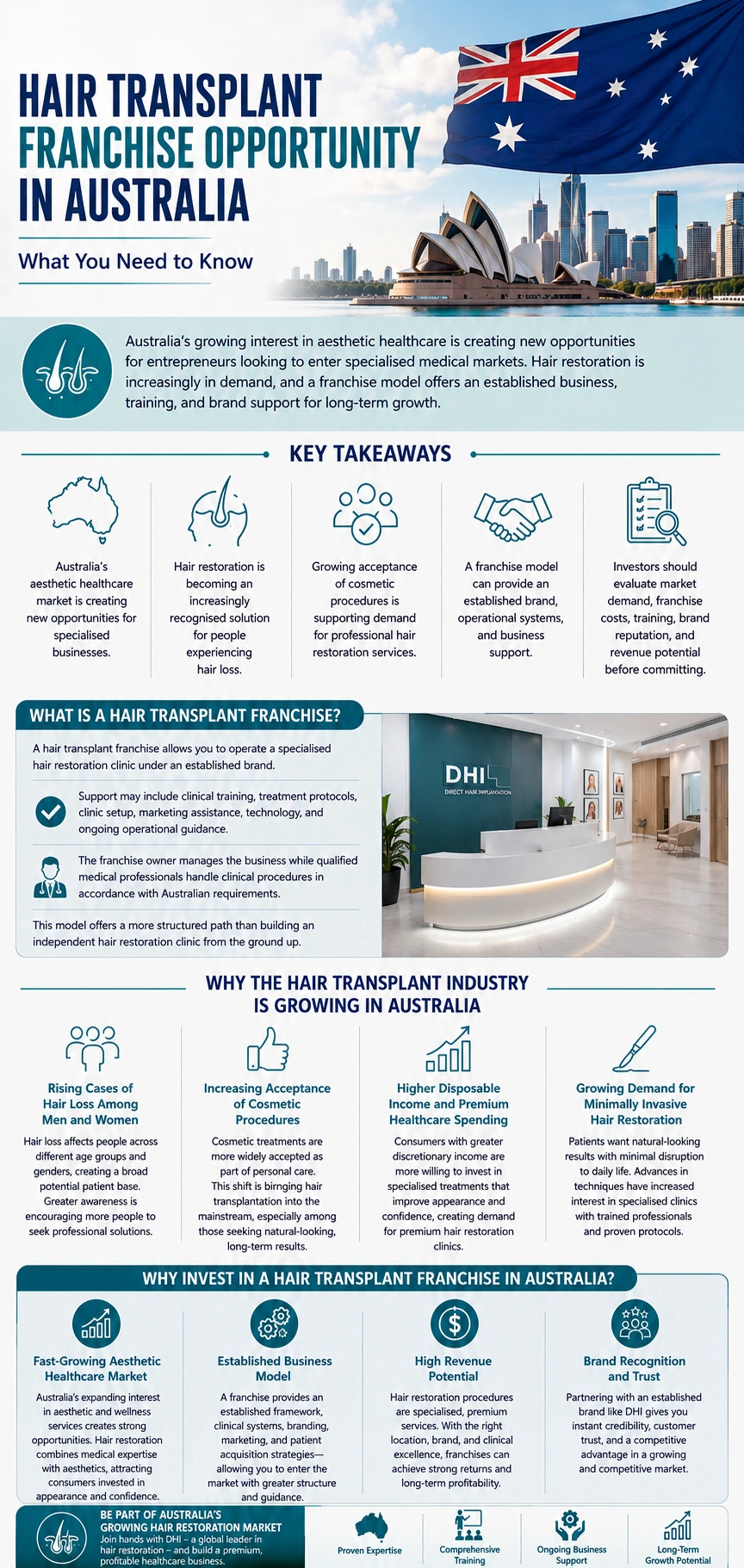
Australia’s growing interest in aesthetic healthcare is creating new opportunities for entrepreneurs looking to enter specialised medical markets. Hair restoration is particularly noteworthy, as consumers are increasingly seeking effective, minimally invasive solutions rather than temporary approaches to hair loss.
For investors, this creates an opportunity to enter a specialised healthcare business with strong consumer demand, premium treatment services, and potential for long-term growth. A hair transplant franchise can also provide the advantage of an established business model, professional training, and brand support instead of starting a clinic entirely from scratch.
This guide explores the hair transplant franchise opportunity in Australia, what is driving industry growth, and why it may be worth considering for entrepreneurs.
Key Takeaways
- Australia’s aesthetic healthcare market is creating new opportunities for specialised businesses.
- Hair restoration is becoming an increasingly recognised solution for people experiencing hair loss.
- Growing acceptance of cosmetic procedures is supporting demand for professional hair restoration services.
- A franchise model can provide an established brand, operational systems, and business support.
- Investors should evaluate market demand, franchise costs, training, brand reputation, and revenue potential before committing.
What is a Hair Transplant Franchise?
A hair transplant franchise allows an entrepreneur to operate a specialised hair restoration clinic under an established brand. Instead of developing the treatment methodology, branding, systems, and patient acquisition strategy independently, the franchisee gains access to the franchisor’s established framework and expertise.
Depending on the franchise, support may include clinical training, treatment protocols, clinic setup, marketing assistance, technology, and ongoing operational guidance. The franchise owner manages the business while qualified medical professionals handle clinical procedures in accordance with applicable Australian requirements.
For an entrepreneur entering aesthetic healthcare for the first time, this model can offer a more structured path than building an independent hair restoration clinic from the ground up.
Why the Hair Transplant Industry Is Growing in Australia
Hair restoration is becoming an increasingly visible part of Australia’s aesthetic healthcare landscape. As consumers become more informed about available treatments, they are also becoming more selective about the quality, safety, and expertise behind those procedures. Several shifts are contributing to this growing interest:
Rising Cases of Hair Loss Among Men and Women
Hair loss affects people across different age groups and genders, creating a broad potential patient base for specialised restoration services. Greater awareness of available treatments has also encouraged people to seek professional consultations instead of simply accepting hair loss as unavoidable.
Increasing Acceptance of Cosmetic Procedures
Cosmetic and aesthetic treatments have become more widely accepted as part of personal care and appearance management. This changing attitude is helping specialised procedures such as hair transplantation move into the mainstream, particularly among consumers seeking natural-looking, long-term results.
Higher Disposable Income and Premium Healthcare Spending
Consumers with greater discretionary spending are more willing to invest in specialised treatments that improve appearance and confidence. This creates opportunities for premium hair restoration clinics that combine advanced techniques with personalised patient care.
Growing Demand for Minimally Invasive Hair Restoration
Patients increasingly want procedures that offer natural-looking outcomes with less disruption to their daily lives. Advances in hair transplantation have expanded treatment choices, creating greater interest in specialised clinics with trained professionals and established treatment protocols.
Why Invest in a Hair Transplant Franchise in Australia?
The opportunity isn’t simply about the rising demand for hair restoration. For an entrepreneur, the real attraction lies in combining that demand with a specialised, premium healthcare business model and the support of an established franchise.
Fast-Growing Aesthetic Healthcare Market
Australia’s expanding interest in aesthetic and wellness services is creating room for specialised healthcare businesses. Hair restoration sits at the intersection of medical treatment and aesthetics, giving entrepreneurs access to consumers who are willing to invest in appearance, confidence, and long-term solutions.
Established Business Model
Building a hair restoration clinic independently requires developing clinical processes, staff capabilities, branding, marketing, and patient acquisition systems. A franchise provides an established framework, allowing entrepreneurs to enter the market with greater operational structure and guidance.
High Revenue Potential
Hair restoration procedures are specialised treatments that typically involve significant patient investment. This creates the potential for higher-value transactions compared with many conventional healthcare services. However, actual profitability depends on pricing, location, patient volume, operating costs, and franchise terms.
Strong Brand Recognition
In healthcare, trust can strongly influence a patient’s decision. An established hair restoration brand can give a new clinic greater credibility than an unknown independent business, while established training, protocols, and marketing support can help franchisees build their local presence.
Invest in Leading Hair Transplant Franchise in Australia
Join DHI TodayInvestment Breakdown for a Hair Transplant Franchise in Australia
The investment required for a hair transplant franchise goes beyond the initial franchise fee. Entrepreneurs need to account for clinic premises, fit-out, medical equipment, staffing, training, marketing, technology, and working capital. The actual capital requirement for an Australian clinic would depend on location, clinic size, local costs, and the final franchise arrangement. Before committing capital, investors should therefore assess:
- Franchise and setup costs
- Clinic fit-out and equipment
- Staffing and professional costs
- Marketing and launch expenses
- Working capital
- Ongoing franchise or operational fees
A detailed financial assessment with the franchisor can help determine the capital required for the specific Australian market.
Regulatory and Licensing Requirements in Australia
A hair transplant clinic in Australia operates within a regulated healthcare environment, so regulatory compliance needs to be considered from the beginning. The Medical Board of Australia specifically includes hair transplants within non-surgical cosmetic procedures, meaning registered medical practitioners providing these services must follow the relevant professional and advertising requirements. Key considerations include:
- Practitioner Registration: Medical professionals must hold appropriate Australian registration and work within their approved scope of practice.
- Training & Competence: Practitioners need appropriate training and continuing professional development relevant to their procedures.
- Advertising Compliance: Healthcare advertising must be accurate and must not create unrealistic expectations about outcomes.
- Facility Requirements: The clinic must comply with applicable state or territory legislation, regulations, and standards.
Requirements can vary by jurisdiction, so professional legal and regulatory advice should be obtained before launch.
Step-by-Step Process to Start Your Franchise in Australia
Launching a DHI franchise involves more than securing a location and opening the doors. DHI’s published franchise process moves from an initial enquiry and market discussion through location planning, training, and clinic launch.
Application and Eligibility Criteria
The process begins with a franchise enquiry to DHI’s franchise development team. The initial discussion covers the prospective partner, investment expectations, market availability, and territory. DHI then evaluates whether the proposed partnership and market align with its franchise model. For Australia, this step is particularly important because DHI currently identifies Australia as a market without an existing DHI clinic.
Location Selection and Approval
Once the franchise opportunity progresses, selecting the right clinic location becomes a key business decision. DHI states that it assists franchisees with site selection, layout and design guidelines, floor plans, and construction or fit-out requirements. The location should also be assessed for accessibility, local demand, competition, and the regulatory requirements applicable to the Australian state or territory.
Training, Launch, and Onboarding
Training is central to establishing a DHI clinic because the franchise model is built around standardised clinical and operational processes. DHI says its medical and administrative teams receive training covering the DHI technique, patient assessment, safety protocols, clinic workflows, consultation, sales, and marketing. Following certification and clinic preparation, DHI provides launch guidance, marketing assistance, operational support, quality audits, and access to ongoing innovation.
Why DHI Is a Preferred Hair Transplant Franchise Partner
Entering Australia’s hair restoration market independently means developing clinical protocols, building a brand, training teams, establishing patient acquisition systems, and creating operational processes from the ground up. DHI offers a different route: its franchise model transfers decades of specialised hair restoration experience into a structured business framework.
DHI states that it has been treating hair loss since 1970, pioneered FUE in 2003, and introduced its Direct Hair Implantation technique in 2005. Its franchise programme also provides access to international training, proprietary protocols, operational guidance, marketing support, and a global network.
For Australia specifically, the opportunity is particularly interesting because DHI currently identifies Australia as a market where it has no clinic, creating the possibility for an entrepreneur to establish the brand in a new territory.
Become a Hair Transplant Franchise Partner
Join DHI TodayFAQs
How much does a hair transplant franchise cost in Australia?
The cost varies based on the franchise brand, clinic size, location, equipment, staffing, and setup requirements.
Is a medical background required to own a franchise?
Not necessarily. An entrepreneur can own and manage the business while qualified medical professionals handle clinical procedures. However, practitioners must meet Australia’s registration, training, and professional requirements applicable to hair transplantation.
How profitable is a hair transplant clinic?
Profitability depends on patient volume, treatment pricing, location, operating costs, staffing, and franchise fees. Hair restoration can offer strong revenue potential because procedures are specialised and typically positioned within the premium aesthetic healthcare segment.
What services can a franchise offer?
A hair restoration franchise can offer services such as hair transplant procedures, consultations, patient assessments, treatment planning, and related hair restoration solutions. The exact services depend on the franchise brand, clinical capabilities, and applicable Australian regulations.
How long does it take to break even?
There is no fixed break-even period for a hair transplant franchise. It depends on initial investment, clinic location, patient acquisition, treatment volume, operating expenses, pricing, and the efficiency of the business model.
Does the franchisor provide training?
Yes. DHI’s franchise model includes training for medical and administrative teams covering its treatment technique, patient assessment, safety protocols, clinic operations, consultation, sales, and marketing, along with ongoing operational and quality support.
What licenses are required in Australia?
Requirements depend on the state or territory and the services provided. Medical practitioners performing hair transplantation must meet Australian registration and professional requirements, while clinics must comply with applicable healthcare, facility, safety, and advertising regulations.
Why choose a franchise instead of starting independently?
A franchise provides an established brand, proven operating framework, specialised training, marketing support, and ongoing guidance. Starting independently offers greater control, but requires developing the clinical systems, branding, patient acquisition strategy, and operational processes yourself.