
Best Franchise Businesses for Sale in Australia

For many Australians, owning a business is more than a career move. It’s a chance to build financial independence, create long-term wealth and have greater control over their future. While starting a business from scratch can be rewarding, it also comes with uncertainty. That’s one reason why more entrepreneurs are exploring franchise businesses as a practical path to business ownership.
Australia has one of the world’s most developed franchise sectors. According to the Franchise Council of Australia (FCA), there are more than 1,100 franchise systems operating nationwide, spanning industries such as healthcare, food, retail, education, fitness, and professional services. The sector contributes billions of dollars to the Australian economy and supports hundreds of thousands of jobs.
If you’re looking for the best franchise businesses to invest in, this guide explores the industries showing strong potential, what makes them attractive, and the brands worth considering.
Key Takeaways
- Australia offers franchise opportunities across healthcare, food, fitness, education, retail, and service industries.
- Buying a franchise reduces many risks associated with starting a business independently.
- The best franchise depends on your budget, skills, lifestyle and long-term goals.
- Australia’s ageing population, growing health awareness, and expanding service economy continue to create new franchise opportunities.
- Understanding franchise agreements, legal obligations, and ongoing costs is important before making a final decision.
What is a Franchise Business?
A franchise business is a business model where an individual, known as the franchisee, purchases the rights to operate under an established company’s brand, systems, and operating procedures.
Instead of creating your own brand, you run a business that’s already recognised by customers. In return, you usually pay an initial franchise fee along with ongoing royalty or marketing fees. The franchisor typically provides: Initial training and onboarding, operational support, marketing assistance, brand recognition, established business systems, and supplier networks. For many first-time business owners in Australia, this level of support can significantly reduce the learning curve while improving the chances of long-term success.
Best Franchise Businesses for Sale in Australia
Not every industry offers the same growth potential. Consumer demand, market trends, and economic conditions all influence how successful a franchise can become.
Here are some of the most promising franchise businesses currently available in Australia.
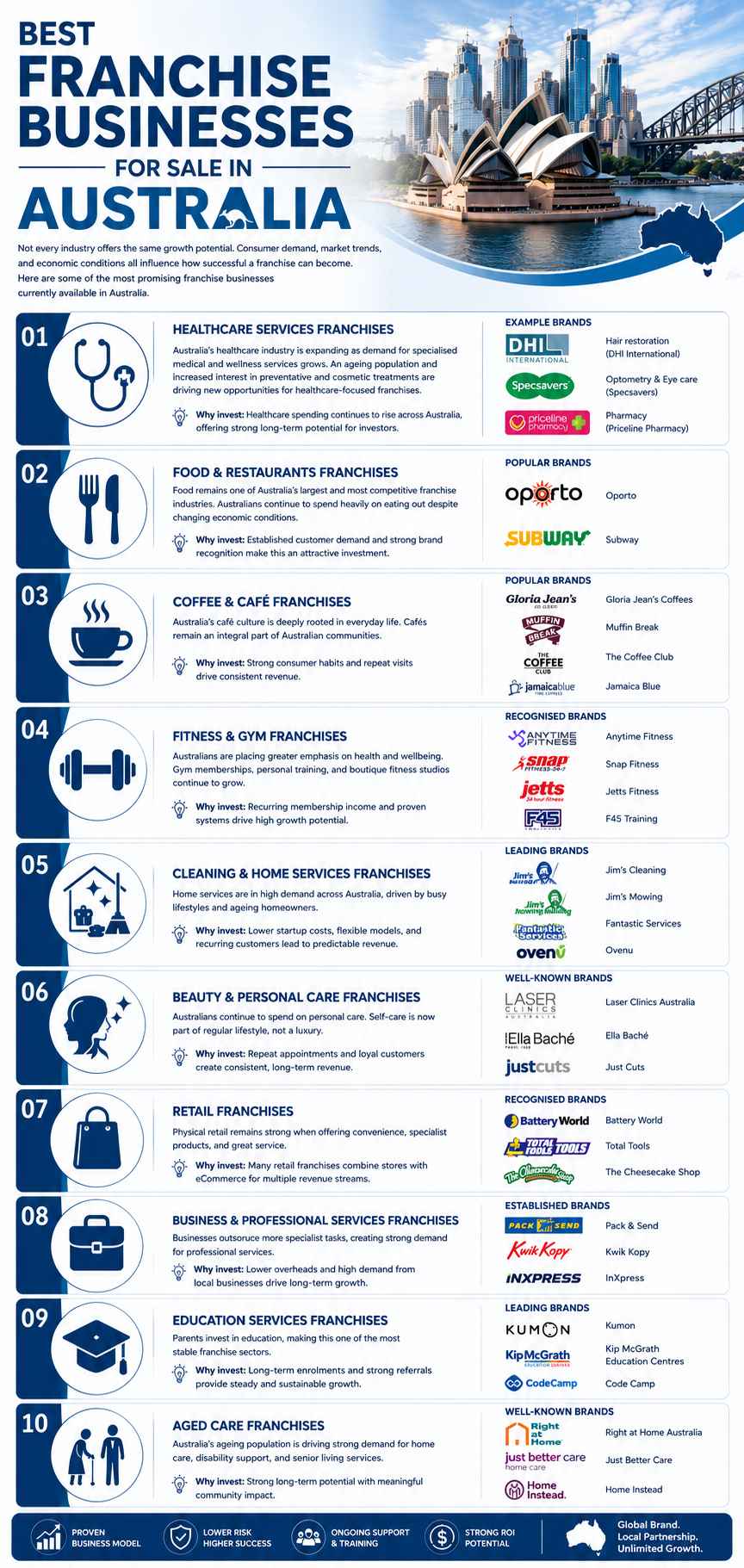
1. Healthcare Services Franchises
Australia’s healthcare industry is expanding as demand for specialised medical and wellness services grows. An ageing population and increased interest in preventative and cosmetic treatments are driving new opportunities for healthcare-focused franchises.
Hair restoration is one area seeing strong growth, with more Australians seeking clinically backed solutions for hair loss.
Hair restoration: For entrepreneurs interested in healthcare, a hair restoration clinic can offer a unique opportunity within a growing market. Brands such as DHI International provide franchise opportunities that combine internationally recognised treatment protocols, specialised training, and operational support. Since healthcare businesses operate within a regulated environment, franchisees should always understand Australian healthcare compliance requirements before investing.
Optometry & Eye care: Entrepreneurs or investors can trust optometry franchise opportunities with Specsavers, one of Australia’s leading eye care brands.
Pharmacy: Those looking to enter the pharmacy and health retail space may consider brands like Priceline Pharmacy, a leading brand in Australia’s pharmacy and health retail sector.
With healthcare spending continuing to rise across Australia, this sector offers strong long-term potential for investors seeking sustainable business opportunities.
Invest in a Leading Hair Transplant Franchise
Join DHI Today2. Food & Restaurants Franchises
Food remains one of Australia’s largest and most competitive franchise industries. From quick-service restaurants to takeaway concepts and family dining, Australians continue to spend heavily on eating out despite changing economic conditions.
Consumers today also expect healthier menu options, sustainable packaging, and digital ordering experiences. Well-known brands operating franchise models in Australia include: Oporto and Subway
Although food franchises often require higher startup costs and ongoing operational management, established customer demand can make them an attractive investment.
3. Coffee & Café Franchises
Australia’s café culture is deeply rooted in everyday life. Whether it’s grabbing a flat white before work or meeting friends over brunch, cafés remain an integral part of Australian communities.
This makes coffee franchises an appealing option for entrepreneurs who enjoy hospitality and customer service. Popular Australian café franchise brands include: Gloria Jean’s Coffees, Muffin Break, Jamaica Blue or The Coffee Club
Location plays a major role in determining the success of any café franchise, making thorough market research essential before investing.
4. Fitness & Gym Franchises
Australians are placing greater emphasis on health and wellbeing than ever before. Gym memberships, personal training, and boutique fitness studios continue to grow as more people prioritise active lifestyles.
Fitness franchises often appeal to investors because they can generate recurring membership income while benefiting from established operational systems. Recognised fitness franchise brands include Anytime Fitness, Snap Fitness, Jetts Fitness, F45 Training
As demand for preventative health continues to increase, the fitness industry remains one of Australia’s strongest franchise sectors.
5. Cleaning & Home Services Franchises
Home services have become increasingly popular across Australia, driven by busy households, ageing homeowners, and growing demand for professional maintenance services.
Compared to retail or hospitality businesses, many cleaning franchises require relatively lower startup investment while offering flexible operating models. Leading franchise brands include: Jim’s Cleaning, Jim’s Mowing, Fantastic Services, or Ovenu.
These businesses often benefit from recurring customers and ongoing service contracts, helping generate more predictable revenue throughout the year.
6. Beauty & Personal Care Franchises
Australians continue to spend on personal care, even during changing economic conditions. From skincare treatments to beauty services, consumers increasingly view self-care as part of their regular lifestyle rather than an occasional indulgence. This steady demand makes beauty one of the more resilient franchise businesses in Australia.
Many beauty franchises operate with repeat appointments, creating consistent revenue and long-term customer relationships. Well-known Australian franchise brands include: Laser Clinics Australia, Ella Baché, or Just Cuts.
Before investing, it’s worth researching local competition, staffing requirements, and the services most in demand within your target suburb.
7. Retail Franchises
Retail remains one of Australia’s largest franchise sectors. While online shopping has changed consumer behaviour, physical stores continue to perform well when they offer convenience, specialist products, or strong customer service.
Many retail franchises now combine brick-and-mortar stores with eCommerce, giving franchisees multiple ways to generate revenue. Recognised franchise brands include: Battery World, Total Tools or The Cheesecake Shop.
The success of a retail franchise often depends on location, inventory management, and understanding the buying habits of the local community.
8. Business & Professional Services Franchises
As Australia’s small business sector continues to grow, so does the demand for professional support services. Many businesses prefer outsourcing specialist work rather than hiring full-time employees, creating opportunities for service-based franchises.
These businesses generally require lower stock levels than retail operations and often have lower overhead costs. Established franchise brands include: Pack & Send, Kwik Kopy and InXpress.
If you have previous experience in finance, sales, or management, this category can provide excellent long-term growth while serving local businesses.
9. Education Services Franchises
Parents across Australia continue to invest in their children’s education, making this one of the most stable franchise sectors. Demand extends beyond school tutoring and includes early learning, STEM education, coding classes, music programs, and language training.
Education franchises often benefit from strong word-of-mouth referrals and long-term student enrolments. Leading franchise brands include: Kumon, Kip McGrath Education Centres and Code Camp.
With education increasingly focused on future-ready skills, businesses offering academic support and digital learning continue to see steady demand.
10. Aged Care Franchises
Australia’s ageing population is creating one of the country’s fastest-growing service sectors. According to the Australian Bureau of Statistics, people aged 65 and over now account for a significant and growing share of the population, increasing demand for home care, disability support, and senior living services.
For investors looking beyond traditional retail or hospitality, aged care represents a business with strong long-term potential and meaningful community impact. Well-known franchise brands include: Right at Home Australia, Just Better Care and Home Instead.
This sector is highly regulated, so understanding Australian healthcare standards, staffing requirements, and compliance obligations is essential before purchasing a franchise.
Why Buy a Franchise in Australia?
Buying a franchise allows you to start a business with the backing of an established brand rather than navigating every challenge on your own.
Instead of spending years building customer trust, developing systems, and creating marketing strategies, franchisees gain access to a proven business model from day one.
Some of the biggest reasons Australians choose franchises include:
- Recognised brand name
- Proven operating systems
- Initial and ongoing training
- National marketing support
- Supplier relationships
- Easier access to business finance in some cases
- Support from experienced franchise networks
While no business investment is risk-free, these advantages often help reduce many of the common challenges faced by independent startups.
How Much Does it Cost to Buy a Franchise in Australia?
The cost of buying a franchise in Australia varies significantly depending on the industry, brand, location, and business size. Some home-based service franchises may require less than AUD 50,000, while established food, retail, or healthcare franchises can require more than AUD 500,000. Here’s a general guide:
| Franchise Type | Estimated Investment |
| Home & Cleaning Services | AUD 20,000–80,000 |
| Education Services | AUD 30,000–150,000 |
| Coffee & Cafés | AUD 150,000–500,000+ |
| Food & Restaurant | AUD 250,000–1 million+ |
| Fitness Centres | AUD 150,000–500,000 |
| Healthcare Clinics | Varies based on equipment, premises, and licensing |
Beyond the upfront franchise fee, you’ll also need to budget for:
- Store fit-out or clinic setup
- Equipment and inventory
- Working capital
- Staff recruitment and training
- Marketing contributions
- Royalty fees
- Insurance and licensing costs
Many Australian lenders offer finance options for eligible franchise purchases, particularly when investing in an established franchise network with a strong performance history.
Pros and Cons of Buying a Franchise Business in Australia
Like any investment, buying a franchise comes with both opportunities and limitations. Understanding both sides helps you make a more informed decision.
Pros
- Operate under a recognised brand.
- Access proven business systems.
- Receive ongoing training and operational support.
- Benefit from established marketing campaigns.
- Lower risk compared to starting an unknown business.
- Faster route to market.
Cons
- Initial franchise fees can be significant.
- Ongoing royalty and marketing fees reduce profits.
- Business decisions may be limited by franchise rules.
- Franchise agreements often include strict operating standards.
- Success can depend on the reputation of the wider franchise network.
The right choice ultimately depends on your financial goals, experience, preferred industry, and willingness to follow an established business model rather than building one independently.
How to Choose the Right Franchise Business in Australia
Not every franchise will suit your lifestyle, experience, or financial goals. A recognised brand is important, but it’s only one part of making a successful investment. Before purchasing a franchise, consider the following:
Assess Your Budget: Calculate total investment, including franchise fees, operating costs, cash flow needs, and emergency funds for initial months of business operations.
Choose an Industry You Understand: Select an industry you enjoy and understand, as long-term involvement requires interest, making daily operations more engaging and manageable.
Research the Brand: Investigate franchisor history, financial health, reputation, and support. Speak with current franchisees to gain insights into real operational experiences.
Study Local Demand: Assess local market demand, competition, and demographics, as business performance varies by location across different regions in Australia.
Understand the Franchise Agreement: Carefully review all agreement terms, including fees, rights, obligations, and exit conditions. Seek independent legal and financial advice before signing.
Taking the time to evaluate these factors can help you choose a franchise business that aligns with both your personal ambitions and long-term financial objectives.
Legal & Regulatory Checklist Before You Buy in Australia
Buying a franchise is a significant financial commitment, and understanding your legal responsibilities is just as important as choosing the right business.
Before moving forward, make sure you:
- Review the Franchise Disclosure Document.
- Read the Franchise Agreement thoroughly.
- Understand all upfront and ongoing fees.
- Confirm your territory rights and any exclusivity arrangements.
- Review the franchisor’s financial performance where available.
- Seek advice from a franchise lawyer.
- Consult an accountant about financial projections and tax obligations.
- Check local council approvals and licensing requirements.
- Arrange appropriate business insurance.
- Understand your obligations under Australia’s Franchising Code of Conduct.
Completing these checks can help minimise risk and ensure you’re making an informed investment decision.
DHI Hair Transplant Franchise: An Investment with Long-Term Potential
Healthcare remains one of Australia’s most resilient industries, with hair restoration gaining recognition as part of this landscape. Hair loss affects millions globally, and advancements in minimally invasive procedures have encouraged more individuals to seek professional treatment. For entrepreneurs exploring healthcare franchise businesses, hair transplant clinics present a specialised opportunity within a growing market.
Among recognised brands is DHI, an international hair restoration company known for its Direct Hair Implantation technique. Its franchise model typically offers clinical training, operational guidance, marketing support, and established treatment protocols, enabling partners to build a business around a globally recognised brand.
Healthcare franchises are attractive due to consistent long-term demand rather than short-term trends. As awareness of hair restoration grows, clinics prioritising qualified professionals and high clinical standards are well positioned for sustainable growth. However, investors should conduct due diligence, including understanding Australian regulations, licensing, staffing, and local market demand.
Start Your Hair Transplant Franchise in Australia
Join DHI TodayConclusion
Australia’s franchise sector spans many industries, from cafés and fitness to healthcare and retail. Choose a franchise that fits your goals, budget, and local demand.
Success still requires planning, financial discipline, and strong customer service. Research options carefully, speak with franchisees, and seek advice before committing.
FAQs
What is a franchise business?
A franchise business allows an individual to operate under an established brand using the franchisor’s proven systems, products, and operating processes. In return, the franchisee pays an initial fee and, in most cases, ongoing royalties or marketing contributions.
Are franchises a good investment in Australia?
They can be, particularly when backed by a reputable brand, strong market demand, and a sustainable business model. Like any investment, success depends on choosing the right industry, understanding the costs involved, and managing the business effectively.
How much does it cost to buy a franchise in Australia?
The investment varies widely. Smaller service-based franchises may start from around AUD 20,000, while larger food, retail, or healthcare franchises can require investments exceeding AUD 500,000, depending on the brand and location.
What is the most profitable franchise in Australia?
There isn’t a single answer, as profitability depends on factors such as industry, location, operating costs, and management. Healthcare, food, fitness, education, and home services are among the sectors that continue to attract strong consumer demand.
What is the difference between buying a new franchise and an existing one?
A new franchise starts from the ground up, allowing you to build your customer base from the beginning. An existing franchise may already have established customers, staff, and revenue, but it’s important to review its financial performance before purchasing.
What business is booming in Australia?
Several industries continue to perform well, including healthcare, aged care, fitness, education, home services, and technology-enabled businesses. Consumer demand, demographic changes, and ongoing investment in health and wellbeing continue to support growth across these sectors.
Do I need previous business experience to buy a franchise?
Not necessarily. Many franchisors provide comprehensive training and ongoing operational support. However, having strong leadership, communication, financial management, and customer service skills can significantly improve your chances of long-term success.
Related Blogs

 Siddharth Kumar
Medical Tourism in Vietnam: A Growing Business Opportunity
 Siddharth Kumar
Medical Aesthetics Market in Chile: Trends & Opportunities