
How to Evaluate a Franchise Business Before Investing in Chile
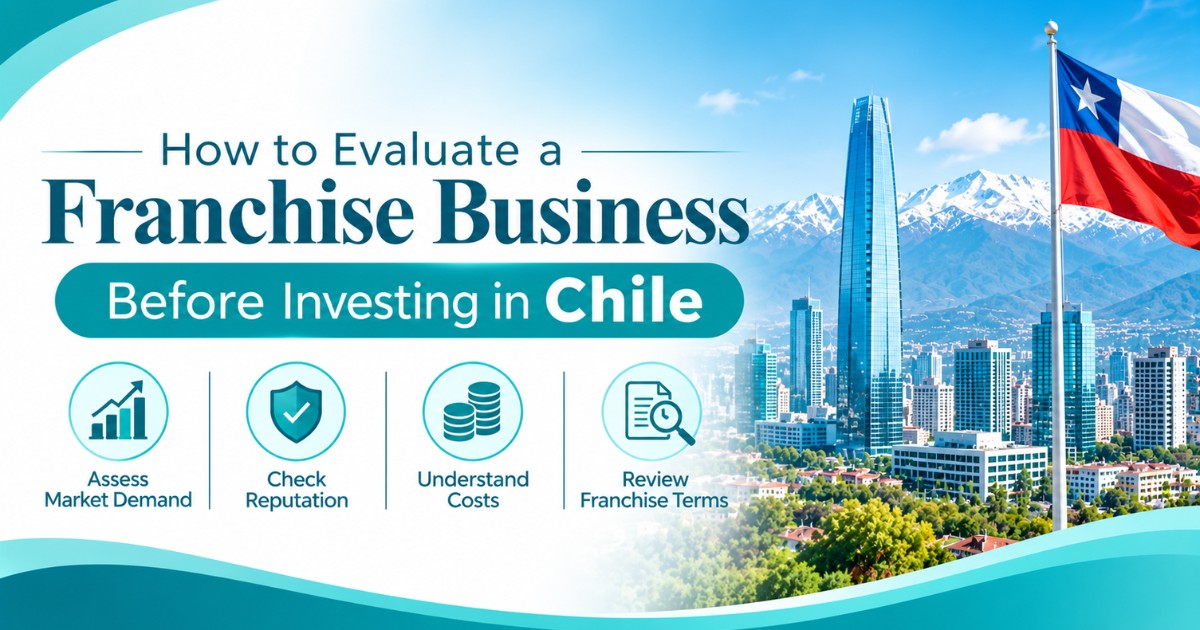
Investing in a franchise can offer a structured way to enter a new market. However, choosing the right opportunity requires more than recognising an established brand. Investors must evaluate customer demand, competition, operating costs, legal requirements, and the support offered by the franchisor.
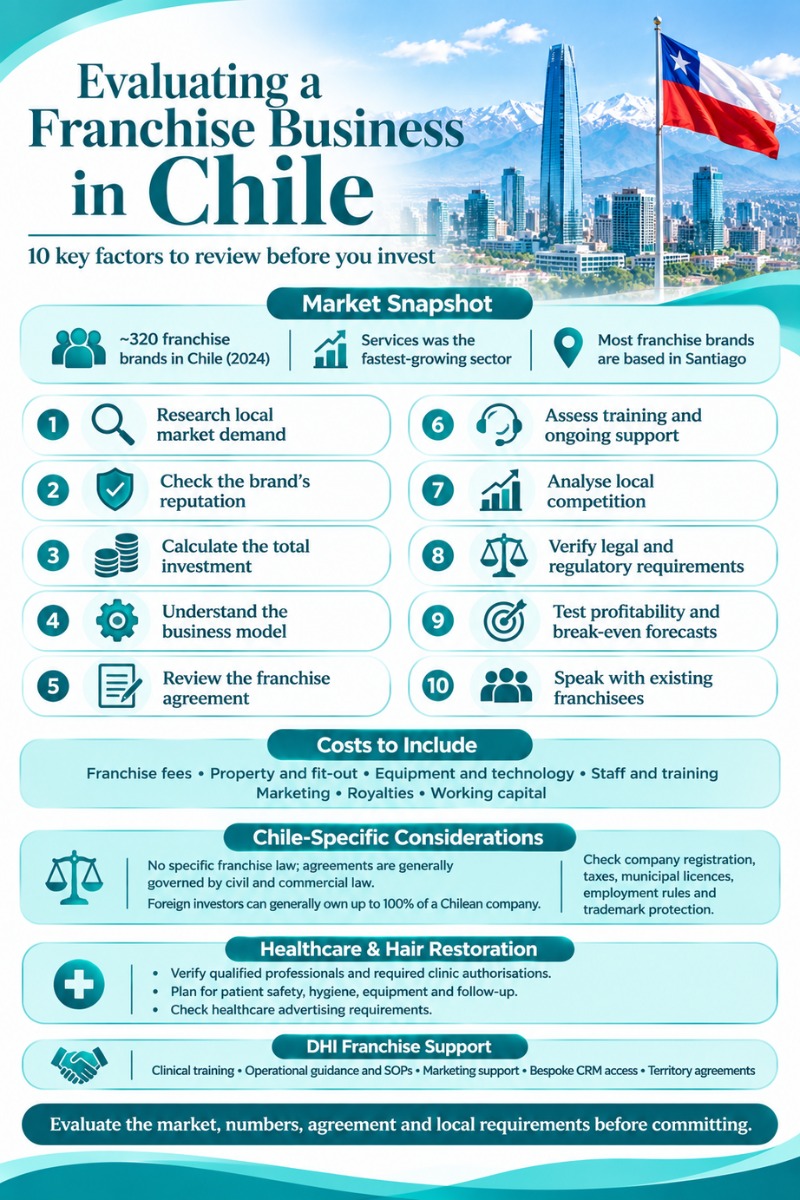
Chile offers franchise opportunities across food, retail, education, healthcare, and services. According to the 2024 U.S. International Trade Administration Country Commercial Guide, there were around 320 franchise brands in 2024. Most are based in Santiago, but there are some found in Valparaíso, Biobío, and Antofagasta. The fastest-growing sector was services.
However, just because there are opportunities in the market does not mean every franchise will be successful. It is important to understand whether the franchise business will fit the local market. This guide will highlight 10 key factors to consider when investing in a franchise business in Chile. We will also cover any extra considerations for health and hair restoration businesses.
Key Takeaways
- Around 320 franchise brands in Chile in 2024.
- Demand, investment, competition, and brand reputation are key factors to consider.
- There is no specific franchise legislation in Chile. Most agreements will be governed by civil and commercial law.
- Most foreign investors will be able to own up to 100% of a Chilean company.
- Healthcare franchises will need professionals and authorisations.
- Financial forecasts should be independently assessed.
Why Is Franchise Evaluation Important Before Investing in Chile?
A franchise investment involves more than an initial fee. Investors must consider property, equipment, staffing, marketing, royalties, and working capital. Underestimating these expenses or choosing a business that does not match local demand can affect profitability.
Chile has a well-established franchise market. Most businesses will be based within Santiago, but there are opportunities throughout the country in Valparaíso, Biobío, and Antofagasta.
Evaluating these factors beforehand helps investors understand financial risks, market suitability, and legal responsibilities before signing an agreement.
10 Factors to Evaluate Before Investing in a Franchise in Chile.
1. Research Market Demand in Chile:
Understand what consumers want, how much they spend, how much income they have, and the demand for the products/services. Some businesses may be popular in Santiago but may not be the best choice in a smaller city. You should also consider the economic factors. In 2025, Chile’s GDP increased by 2.5% (World Bank). However, you should also consider any research into your industry.
2. Evaluate the Franchise Brand’s Reputation:
Consider the franchisor’s background, any feedback from customers, how well they are established in the market, and how well they perform in their locations. If you are investing in an international brand, consider whether they have a good reputation and branding to appeal to local audiences.
3. Understand the Total Franchise Investment:
Consider the full costs of setting up the franchise:
- Initial franchise/ licensing costs.
- Property rental and fitting out.
- Equipment and technology.
- Staff costs, salary and training.
- Marketing costs.
- Royalty costs.
- Initial working capital.
Currency conversion and taxes. If you have royalty payments abroad, you may be liable for withholding tax depending on the type of payment. Please visit the Chilean Internal Revenue Service to find out more. Ask the franchisor for a detailed breakdown of costs.
4. Analyze the Franchise Business Model:
Understand how the franchise generates revenue and what responsibilities the franchisee must manage. Examine pricing, customer volume, staffing, suppliers, operating hours, and recurring expenses. Also clarify the franchisor’s control over pricing, marketing, and daily operations.
5. Review the Franchise Agreement Carefully:
Carefully consider the following factors:
- Length of contract and renewal terms.
- Initial and ongoing royalty fees.
- Territory rights.
- Training and support.
- Trademarks and IP.
- Performance expectations.
- Termination and dispute resolution.
There is no specific franchise legislation in Chile. Most will be governed under civil and commercial law. Ask a commercial solicitor in Chile to review the contract and discover any potential risks.
6. Assess Training and Operational Support:
Evaluate whether the franchisor provides initial training, operational manuals, staff development, marketing resources, technology, and ongoing assistance. For specialised businesses such as healthcare clinics, consistent training and operational guidance are particularly important.
7. Evaluate Competition in the Local Market:
Research similar businesses in your proposed location. Compare their pricing, customer reviews, services, and market positioning.
Chile’s franchise market includes brands originating from countries such as the United States, Spain, Peru, Argentina, and Brazil. Understanding this competitive landscape can help you identify opportunities to differentiate.
8. Verify Legal and Regulatory Requirements in Chile:
Consider what requirements you have for registering your company, paying taxes, obtaining municipal licences, employing staff, and any industry-specific authorisations.
Most foreign investors can set up businesses in Chile. You can generally own up to 100% of a company. You can choose to form a local company or branch. If you are investing in an international brand, you should also consider whether your trademarks are protected. Find out more from INAPI.
9. Calculate Potential Profitability and Return on Investment:
Consider the profitability of the business. Think about realistic revenue and costs. This will include property, staff, utilities, royalties, marketing, taxes, maintenance and working capital.
Calculate how much it will take to reach the breakeven point and how long it is likely to take to get your investment back. Consider different scenarios to see how the profitability can be impacted if you have fewer customers or increased costs. Ensure you verify the franchisor’s forecasts.
10. Speak With Existing Franchisees:
Speak with existing franchise owners about training quality, communication, marketing assistance, actual operating expenses, and customer acquisition challenges. Their experiences can help you understand whether the franchisor delivers the promised support and whether initial investment estimates are realistic.
How to Compare Different Franchise Opportunities in Chile?
| Factor | Consider |
| Initial Investment | Franchise Fees and Set-Up Costs. |
| Brand Reputation | Presence in Market and Customer Feedback. |
| Business Model | Income Sources and Costs. |
| Training | Initial and Ongoing Staff Training. |
| Support | Marketing and Operational Support. |
| Contract Terms | Length and Territory Rights. |
| Profitability | Income and Break-Even Point. |
| Suitability | Consumer Demand and Competition. |
Choose the correct franchise to suit your budget, goals, and local market.
What Should You Consider Before Investing in a Healthcare Franchise in Chile?
Healthcare franchises need extra consideration. 54% of Chile’s 425 hospitals are privately run.
This gives an idea of how much the private sector is used in the country.
Consider the following:
- Healthcare Demand: What treatments and services will be needed?
- Professionals: Ensure medical professionals are verified using the National Registry of Individual Health Providers.
- Clinic Authorisation: Check what sanitary authorisations are needed using the Ministry of Health in Chile and the Chilean Health Code.
- Patient Safety: What clinical processes, hygiene, equipment, and follow-up will be in place?
- Costs: Qualified staff, property, and equipment.
- Advertising: Ensure your advertising complies with consumer protection rules. Find out more from SERNAC.
Speak to local legal and healthcare professionals to understand what permissions you will need for your clinic and services.
Why Consider DHI International for a Hair Restoration Franchise?
Opening a hair restoration clinic will require trained medical professionals, the correct technology, and clinical processes. It is important to consider the franchise opportunity and clinical support. We offer a hair restoration franchise to help support our partners:
- Clinical Training: Doctors will receive theory and practical training on the Direct Hair Implantation (DHI) technique.
- Operational Support: We can help with running your clinic, consultations, and patients.
- Operational Processes: We provide standard operating procedures.
- Marketing: We can support with marketing, websites, and landing pages.
- Technology: We can support access to our bespoke CRM system.
- Territory: Long-term territory agreements.
All of these factors are covered in our official DHI Franchise Programme.
We offer franchise opportunities within hair restoration. An indicative investment of USD 150,000 200,000 will be required. We may be able to offer flexible options for those already running clinics. Speak to our franchise team to find out what investment will be required.
Before investing in Chile, you should consider the healthcare regulations, demand, and clinic requirements. Our team can help you understand the franchise model.
Start a Franchise Business in Chile
Join DHI TodayConclusion:
Investing in a franchise business in Chile requires market research, financial planning, and an understanding of local regulations. Although the country offers opportunities across several industries, the right investment depends on choosing a business model that suits customer demand and can operate sustainably.
Evaluate the brand, investment requirements, agreement terms, competition, and franchisor support before committing capital. Healthcare investors must also consider professional qualifications, clinic authorisations, and patient safety. A thorough evaluation can help investors manage risks and establish a stronger foundation for long-term business operations.
FAQs
Are franchise businesses profitable in Chile?
A franchise can be profitable depending on customer demand, location, operating costs, competition, and franchisor support. Investors should assess financial projections and calculate the break-even point. Returns are not guaranteed.
What legal requirements should franchise investors know about in Chile?
Chile has no dedicated franchise law. Agreements generally follow its civil and commercial legal framework. Investors should also review company registration, taxation, trademark protection, employment obligations, and industry-specific permits.
Can a foreign investor own a franchise business in Chile?
Yes. Foreign investors can generally own up to 100% of a Chilean company, subject to certain exceptions. They must also complete any company registration and tax requirements.
How can I calculate the ROI of a franchise business?
Compare the total investment with expected net profit over a defined period. Include setup expenses, franchise fees, rent, salaries, royalties, taxes, and working capital. Use realistic revenue projections and different financial scenarios.
What should I check before investing in a hair restoration franchise in Chile?
Evaluate clinical training, treatment protocols, technology, operational support and brand reputation. Verify medical professionals’ qualifications, sanitary authorisations and local healthcare requirements.
How can I inquire about a DHI International franchise in Chile?
Visit our official DHI International franchise site to learn more about the business model, investment, and support we can offer. Speak to our franchise team to understand the requirements of the market.