
Proper aftercare for a hair transplant is essential during recovery. After the transplant procedure, newly transplanted grafts need time to settle, heal, and begin growing.
A proper aftercare regimen protects the transplanted area and supports comfortable healing. Simple steps like proper washing, sleeping in the right position, avoiding exercise, and keeping the scalp out of direct sunlight can help during the first few days of healing.
DHI International provides patients with a customised post-operative care plan, including instructions on scalp care, medications, and activity restrictions.
Key Takeaways
- Hair transplant aftercare begins immediately after the procedure.
- The first few days are crucial for protection of newly transplanted grafts.
- Wash your scalp correctly, following your surgeon’s recommendations.
- Sleep with your head elevated during the initial recovery period.
- Avoid heavy exercise, smoking, alcohol, and sweating during the early recovery period.
- Protect the scalp from direct sunlight and environmental pollution.
- Temporary shedding may appear within the first few weeks.
- New hair growth may begin around 3-4 months after transplantation.
Why Is Hair Transplant Aftercare Important?
Post-operative care supports scalp healing and helps protect the transplanted grafts during the early recovery period. It is especially important to avoid excessive touching, rubbing, scratching, pressure, and sweating of the head.
Post-transplant care can help you manage temporary effects such as redness, swelling, crusting, and shedding.
Hair Transplant Aftercare Timeline: What to Expect
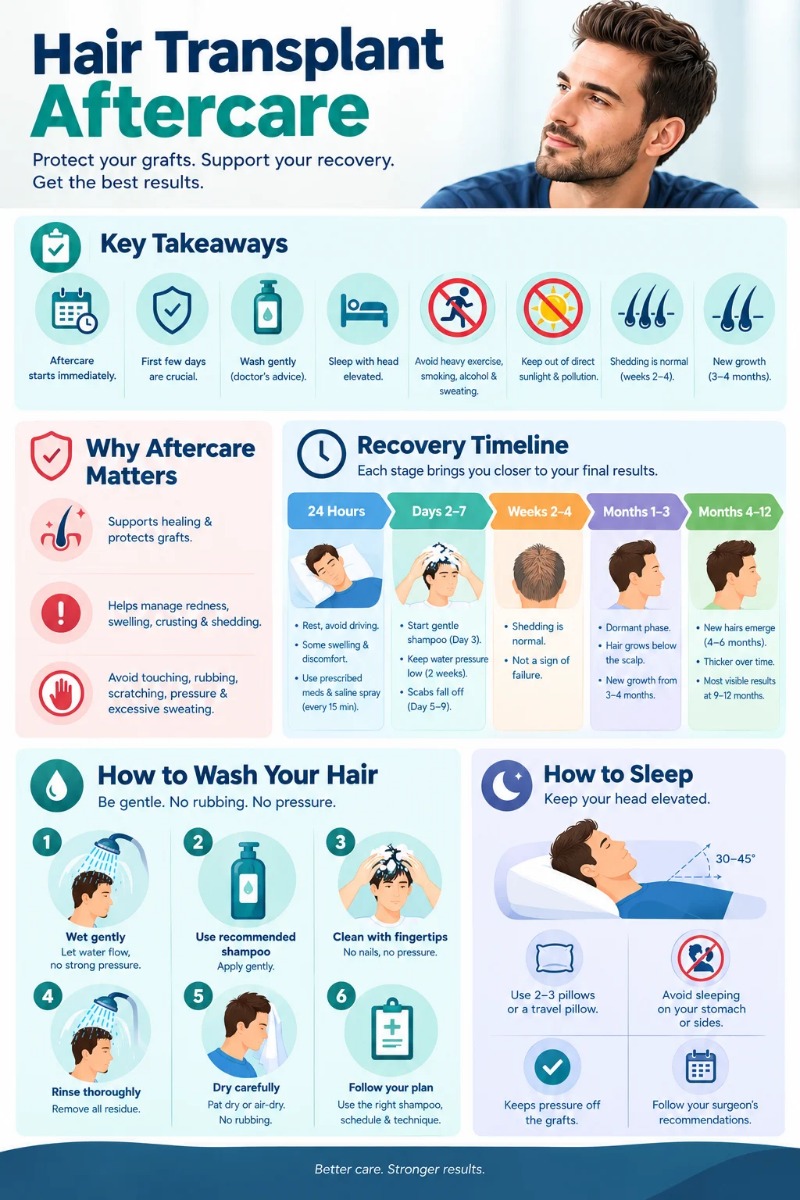
Although each patient has a different recovery timeline, people can expect certain stages after a hair transplant.
First 24 Hours After Hair Transplant
The first 24 hours are about resting and protecting the transplanted hair.
Patients should rest on the first day and avoid driving while the effects of anaesthesia are still present. Usually, you need two days of rest before going anywhere.
On the first day, people can experience some swelling and discomfort. Follow the medication and scalp-care instructions your surgeon gives. Spray saline water on the implanted hairs every 15 minutes during the first three days.
Days 2–7: Protecting the Newly Transplanted Grafts
Protecting the grafted area remains crucial during the first week. You can begin normal scalp shampooing on Day 3, but keep direct shower-jet pressure away from the implanted hairs for two weeks.
Scabs might form in the grafted area. The scabs usually start falling off around Day 5 and will be removed completely by Days 7-9.
Do not scratch or pick at the scabs. Let them loosen and shed naturally, following your surgeon’s instructions.
Weeks 2–4: The Shedding Phase
Shedding is expected within the first few weeks after a hair transplant. Post-transplant guidelines: implanted hairs may start falling out during the second to fourth week. This temporary shedding is part of the expected hair-growth cycle after transplantation and does not necessarily indicate transplant failure.
It is normal to be shocked if the implanted hairs fall out; however, early shedding does not necessarily mean transplant failure. Follow the post-operation hair care regimen and attend scheduled follow-ups as advised.
Months 1–3: Early Hair Growth Stage
There might be a time when nothing seems to grow after the healing and shedding phases.
It might be the dormant period of the hair recovery process. The implanted hairs might be lying below the scalp, waiting to enter a new phase of hair growth. New hair growth may begin around three to four months after transplantation. Patience is vital since the changes could be subtle.
Months 4–12: Hair Growth and Maturation
Around months four to six, you may see new hairs emerge.
The first hairs are usually fine and then thicken. Hair growth does not happen evenly across the entire implantation site. Most visible improvement occurs over the later stages of growth, with final results typically becoming visible around 9-12 months, although the timeline can vary. Keep following your doctor’s recommendations during this period.
Planning a Hair Transplant?
Book an AppointmentHow to Wash Your Hair After a Hair Transplant
During the first few days after a hair transplant, your scalp and newly implanted grafts need gentle handling.
Step 1: Wet your scalp gently – Avoid directing strong shower pressure onto the transplanted area. Let the water flow gently over the scalp.
Step 2: Apply the recommended shampoo – Use the shampoo your doctor recommends. Apply it gently without rubbing or scratching the transplanted area.
Step 3: Clean the scalp with your fingertips – After the initial healing period, you may be advised to gently massage the scalp with your fingertips. Avoid using your nails or applying pressure directly to the grafts.
Step 4: Rinse thoroughly – Rinse the shampoo away with water, keeping the pressure gentle. Make sure no shampoo residue remains on the scalp.
Step 5: Dry the scalp carefully – Avoid rubbing your hair with a towel. Instead, gently pat the surrounding areas dry or let your scalp air-dry, according to your doctor’s instructions.
Step 6: Follow your personalised aftercare instructions – Your doctor may recommend a specific washing schedule, shampoo, or technique based on your scalp condition and recovery stage.
How to Sleep After a Hair Transplant
Your sleeping position can help reduce swelling and avoid contact with the newly transplanted hair follicles.
- Elevate your head during the initial recovery period. Follow your surgeon’s specific instructions regarding the position and duration.
- Avoid sleeping directly on the transplanted hair follicles.
Do’s and Don’ts After Hair Transplant
Following simple precautions can help protect your scalp during recovery.
| Do’s | Don’ts |
| Follow your surgeon’s aftercare instructions | Do not scratch or pick the grafts |
| Wash the scalp gently as instructed | Avoid direct shower pressure on grafts |
| Sleep with your head elevated initially | Do not sleep directly on the transplanted area |
| Stay hydrated and eat a balanced diet | Avoid smoking and alcohol during early recovery |
| Attend recommended follow-up appointments | Avoid heavy exercise and excessive sweating |
| Protect your scalp from direct sunlight | Do not expose the scalp to harsh environmental conditions |
| Use recommended medication and products | Avoid unapproved hair products or treatments |
| Wear headwear only when your surgeon advises | Avoid unapproved hair products or treatments |
Sun Protection After Hair Transplant
Your scalp may be sensitive after a hair transplant procedure, so it needs protection from sunlight.
Avoiding direct sun exposure during the first days after surgery. Your surgeon may prescribe suitable head protection once the grafts settle. Any cap or hat must be loose enough to avoid rubbing or applying pressure to the transplanted area.
Diet and Nutrition After Hair Transplant
- Proper nutrition can contribute to patients’ health and recovery after a hair transplant procedure.
- Eat a nutrient-rich diet, including protein, iron, biotin, and vitamin E, as part of your post-transplant diet. Hydration is also suggested.
- Eat different nutrients instead of taking supplements unless your doctor prescribes them.
- Before choosing vitamins and other supplements, consult your doctor because they may interact with other medications.
Medications and Hair Care Products After Hair Transplant
In addition to caring for your scalp and avoiding certain practices during recovery, your surgeon may prescribe medication. Patients may be prescribed antibiotics and anti-inflammatory medication for several days after the procedure.
Make sure to follow your surgeon’s guidelines on taking prescription drugs and do not take any without consulting your surgeon.
Avoiding gels, sprays, hair dryers, straighteners, and other styling tools during the early recovery period. Use only products recommended by your medical professionals until your scalp is fully healed.
Signs of a Problem After Hair Transplant
Some inflammation, reddening, crusting, and shedding are normal parts of recovery.
However, patients should contact their healthcare providers if they develop unusual, worsening, or concerning symptoms.
Possible complications include folliculitis or bacterial infection if care is improper, so contact your medical team promptly if you notice these symptoms.
Do not try to diagnose your problem; contact your surgeon with any questions about your symptoms.
Conclusion
Hair transplant aftercare is essential to keep the scalp healthy during healing and throughout the hair growth process.
The first few days after surgery require special attention to washing, resting, activity levels, and protecting the transplanted area from irritation and infection. Healing involves scabbing and shedding, which leads to hair regrowth.
DHI International recommends following personalised post-operative guidelines and attending follow-ups to assess healing.
Give yourself time, as judging the result too soon won’t help. With proper aftercare and regular consultations with a doctor, you can support your scalp’s health as you regain hair.
FAQs:
How many days should I rest after a hair transplant?
DHI International suggests taking about two days off after the procedure. However, many patients manage to gradually return to their usual activities.
Can I touch my transplanted hair?
Do not touch, rub, scratch, or pick at the transplanted hair. Follow all your surgeon’s recommendations for washing your scalp.
When can I exercise after a hair transplant?
DHI recommends avoiding strenuous physical activities for about two weeks after the surgery. You can do light exercise earlier, with your surgeon’s permission.
How long does transplanted hair take to grow?
New hair growth is expected three to four months after the transplant. Hair will continue to grow thicker over time.
Is shedding after a hair transplant normal?
Some shedding is normal between the second and fourth weeks after the transplant surgery. It is part of the natural hair growth cycle.
When can I wear a cap or helmet after a hair transplant?
DHI International discourages wearing a cap or helmet. Loose and comfortable caps are recommended at first.
Can I go swimming after a hair transplant?
DHI International discourages swimming within 30 days after the hair transplant surgery. Swimming should not be done in pools or spas, as chlorine could irritate the healing scalp.