
Receding Hairline: Causes, Early Signs, and How to Stop
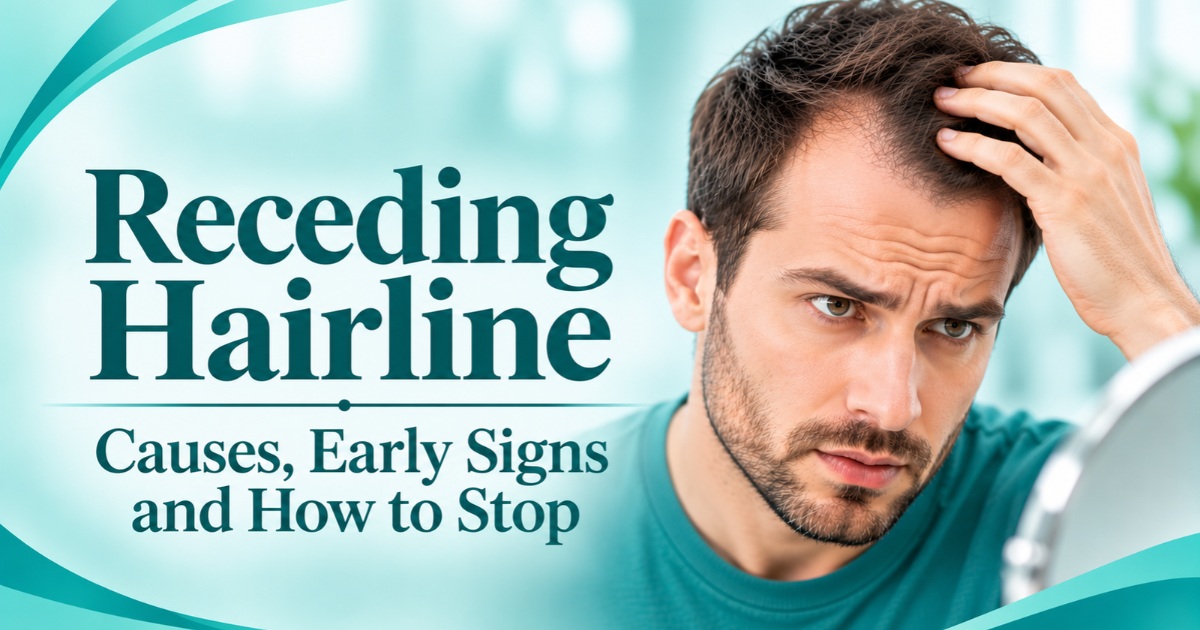
A receding hairline is one of the common early signs of hair loss. You may first notice your hairline moving backward near the temples, thinning around the forehead, or increased hair shedding. While genetics is a major contributing factor, hormonal changes, stress, certain medical conditions, and tight hairstyles can also play a role. Understanding the cause early can help you explore suitable ways to manage hair loss and protect your existing hair.
Key Takeaways
- A receding hairline can develop gradually due to genetics, hormonal changes, or other factors.
- Early signs include temple recession, thinning around the forehead, and increased shedding.
- Identifying the underlying cause is essential before choosing a treatment.
- Medical treatments may help manage hereditary hair loss when started early.
- Hair transplants can restore hair in suitable candidates with sufficient donor hair.
- Healthy hair-care habits can help reduce avoidable damage and breakage.
What Is a Receding Hairline?
A receding hairline refers to the gradual movement of your front hairline backwards, often beginning around the temples. It may develop evenly on both sides or form an M-shaped pattern. Although it is commonly associated with male pattern hair loss, women can also experience changes in their frontal hairline. The progression varies from person to person and depends on the underlying cause.
What Are the Early Signs of a Receding Hairline?
A receding hairline may develop slowly, making the initial changes difficult to notice. Paying attention to your hairline, density, and shedding patterns can help you recognise the signs early.
- Hairline Moving Backward at the Temples – One of the earliest signs is gradual recession around the temples. You may notice that the corners of your hairline appear higher than before, creating an M-shaped pattern. Comparing photographs taken over several months can help you identify changes that might otherwise go unnoticed.
- Thinning Hair Around the Forehead – You may notice reduced hair density along the front of your scalp, making the skin more visible through your hair. The frontal hair may also appear finer or less full than before. These changes can be associated with pattern hair loss, although other scalp or health conditions may contribute.
- Changes in Hair Density and Thickness – Hair around the hairline may gradually become finer, shorter, and less dense. This process, known as miniaturisation, occurs when susceptible follicles produce progressively thinner strands. As the hair loses thickness, your forehead may appear more prominent, even before significant recession becomes noticeable.
- Increased Hair Shedding – You may notice more hair on your pillow, comb, or shower floor. Some shedding is normal, but a persistent increase can indicate an underlying issue. Hair shedding does not always mean your hairline is receding, so a professional assessment can help distinguish temporary shedding from progressive hair loss.
Concerned About Hair Fall?
Book Your Appointment Now!What Causes a Receding Hairline?
A receding hairline can develop for several reasons, and identifying the cause is important for choosing the right approach. Hereditary hair loss is one of the most common causes, but hormonal changes, prolonged stress, certain medical conditions, and repeated tension from tight hairstyles can also affect hair growth. In some cases, more than one factor may contribute to the changes you notice.
- Genetics and Hereditary Hair Loss – Genetics plays a major role in pattern hair loss. If hair thinning or baldness runs in your family, you may have a higher chance of experiencing a receding hairline. In genetically susceptible follicles, hair gradually becomes finer and shorter over time. This process can begin in early adulthood and progress differently from person to person.
- Hormonal Changes and Androgenetic Alopecia – Androgenetic alopecia, commonly known as pattern hair loss, is influenced by genetic sensitivity to androgens, particularly dihydrotestosterone (DHT). In susceptible individuals, DHT can cause hair follicles to shrink, producing progressively thinner strands. Men commonly experience recession at the temples, while women more often notice diffuse thinning over the top of the scalp.
- Stress and Certain Medical Conditions – Physical or emotional stress can trigger temporary excessive shedding, known as telogen effluvium. Illness, surgery, significant weight loss, nutritional deficiencies, and certain medical conditions may also disrupt the hair growth cycle. This type of shedding does not always cause a permanent receding hairline, so identifying and addressing the underlying trigger is important.
- Traction Alopecia From Tight Hairstyles – Repeated tension from tight ponytails, braids, buns, extensions, or other pulling hairstyles can damage hair follicles around the hairline. This condition is called traction alopecia. You may first notice broken hairs, tenderness, or thinning near the temples and forehead. Changing hairstyles early can help prevent further damage, while prolonged traction may lead to permanent hair loss.
How to Stop a Receding Hairline
If you are wondering how to stop receding hairline progression, start by understanding why it is happening. There is no single solution for every type of hair loss. A combination of medical guidance, appropriate treatment, and consistent hair-care habits may help manage the condition. Early evaluation is particularly important when you notice progressive thinning or changes around the temples.
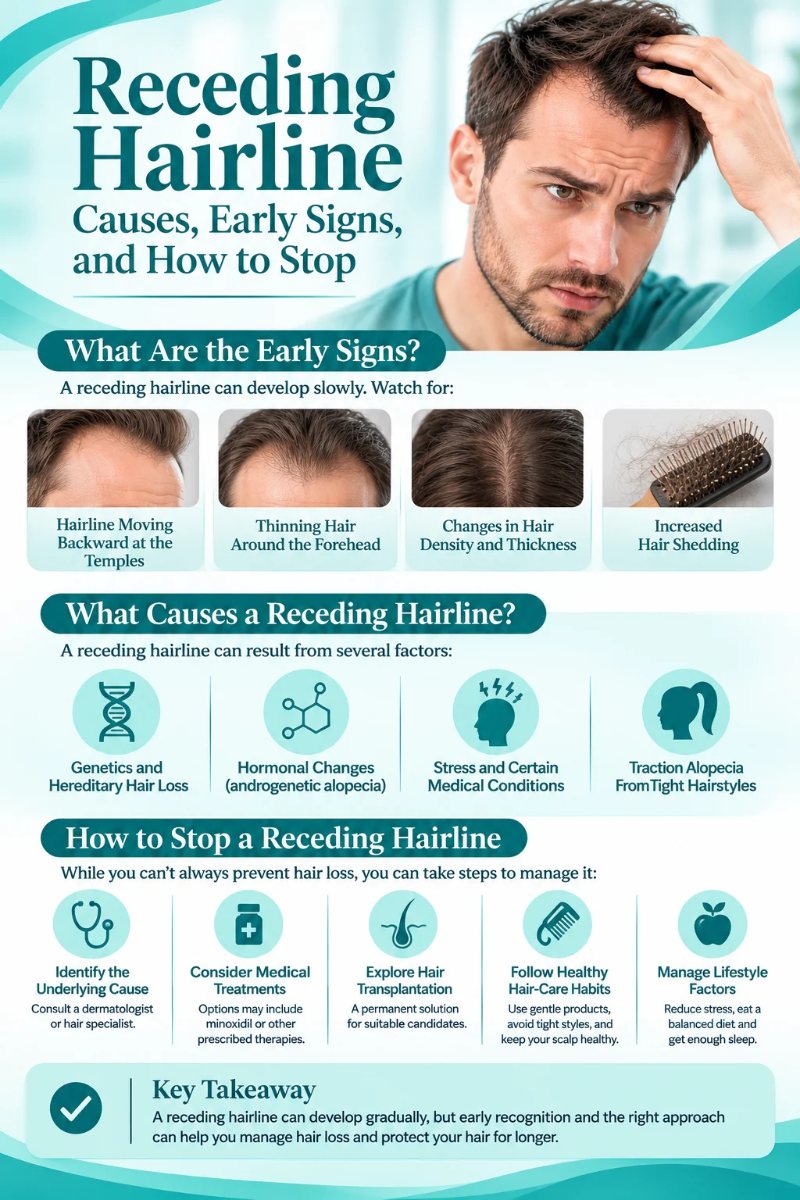
- Identify the Underlying Cause – A dermatologist or hair restoration specialist can examine your scalp, review your medical and family history, and assess your hair-loss pattern. Depending on your symptoms, blood tests or other investigations may be recommended. Identifying whether the problem is hereditary, stress-related, nutritional, or caused by another condition helps determine the most appropriate treatment.
- Use Medically Recommended Hair Loss Treatments – Treatments such as topical minoxidil may help slow hair loss and support regrowth in suitable individuals. Prescription medicines, including finasteride for eligible men, may also be considered after medical evaluation. These treatments do not work for everyone and may require ongoing use to maintain results. Avoid starting medication without discussing its benefits and possible side effects with a qualified doctor.
- Follow a Balanced Diet and Healthy Hair Care Routine – Your hair needs adequate protein, iron, zinc, and other nutrients for healthy growth. Include a balanced mix of vegetables, fruits, whole grains, and protein-rich foods in your diet. Use gentle hair-care products, avoid excessive heat styling, and handle wet hair carefully. Supplements should only be taken when a deficiency is identified or a healthcare professional recommends them.
- Avoid Hairstyles That Pull on the Hairline – Repeatedly wearing tight ponytails, braids, buns, or extensions can place unnecessary tension on your hair follicles. Choose looser hairstyles and avoid styles that cause scalp pain, pulling, or discomfort. If you notice broken hairs or thinning around your temples, changing your styling habits early may help prevent traction-related hair loss from progressing.
- Manage Stress and Maintain Scalp Health – Long-lasting stress can contribute to excessive hair shedding in some people. Regular physical activity, adequate sleep, and relaxation practices may support overall well-being. Maintain a clean scalp and seek medical advice if you experience persistent itching, scaling, or inflammation. These habits cannot reverse genetic hair loss on their own, but they can help address avoidable contributors to hair problems.
What Are the Treatment Options for a Receding Hairline?
Treatment depends on the cause, extent of hair loss, and condition of your hair follicles. Options may include –
- Medical Treatments for Hereditary Hair Loss – Topical minoxidil is commonly recommended for suitable people with hereditary hair loss. It may help slow thinning and support hair regrowth, although results take time and vary between individuals. Finasteride may be prescribed for eligible men after reviewing potential side effects. Your doctor can explain the correct use, expected response, and need for continued treatment.
- PRP and Other Clinically Offered Hair Restoration Treatments – Platelet-rich plasma (PRP) therapy involves drawing a small blood sample, processing it to concentrate platelets, and injecting the preparation into selected scalp areas. It may be considered as part of a hair restoration plan for certain types of hair loss. Other options, such as low-level laser therapy, may also be discussed. Suitability and expected results should be assessed by a qualified specialist.
- Hair Transplant for a Receding Hairline – A hair transplant moves healthy follicles from a donor area, usually the back or sides of your scalp, to areas affected by hair loss. It may help restore a receding hairline when you have sufficient donor hair and stable expectations. Techniques such as FUE, FUT, and DHI differ in how follicles are extracted and implanted. A specialist can assess your suitability and plan the hairline.
- How to Choose the Right Treatment – The right treatment depends on your diagnosis, age, hair-loss progression, donor hair availability, and personal goals. Medication may be suitable for early hereditary thinning, while a hair transplant may be considered for established hairline recession. PRP or other procedures may be recommended in selected cases. Discuss the benefits, limitations, costs, and maintenance requirements with a qualified specialist before deciding.
Take the First Step Towards Healthier Hair!
Book an AppointmentConclusion
A receding hairline can develop gradually, but recognising the early signs gives you an opportunity to seek the right care. Whether the cause is hereditary hair loss, hormonal changes, stress, or traction, treatment should begin with an accurate diagnosis. If you are exploring how to stop receding hairline progression, consult a hair restoration specialist to understand your options and choose an approach suited to your hair-loss pattern.
FAQs
1. Can a receding hairline grow back?
It depends on the cause. Hair affected by temporary shedding or early traction alopecia may recover. However, hereditary hairline recession is usually progressive and may require medical treatment or a hair restoration procedure.
2. At what age does a receding hairline start?
A receding hairline can begin in the late teens or twenties, particularly with hereditary hair loss. However, the age of onset and rate of progression vary depending on genetics and individual factors.
3. Can a receding hairline stop naturally?
Some temporary hair shedding may settle once its underlying cause is addressed. However, hereditary hair loss generally continues without management. A professional assessment can help determine whether treatment is necessary.
4. Does a receding hairline always mean baldness?
No. A receding hairline does not always lead to complete baldness. The extent of hair loss varies, and some people experience only gradual temple recession without significant thinning elsewhere.
5. Can a hair transplant fix a receding hairline?
Yes. A hair transplant can restore hair in recessed areas by moving healthy follicles from a donor region. Your suitability depends on donor hair availability, hair-loss progression, and the results you expect.
6. What is the best treatment for a receding hairline?
There is no single best treatment for everyone. Minoxidil, prescription medication, PRP, and hair transplantation may be considered depending on the cause and stage of hair loss. A specialist can recommend a suitable approach.