
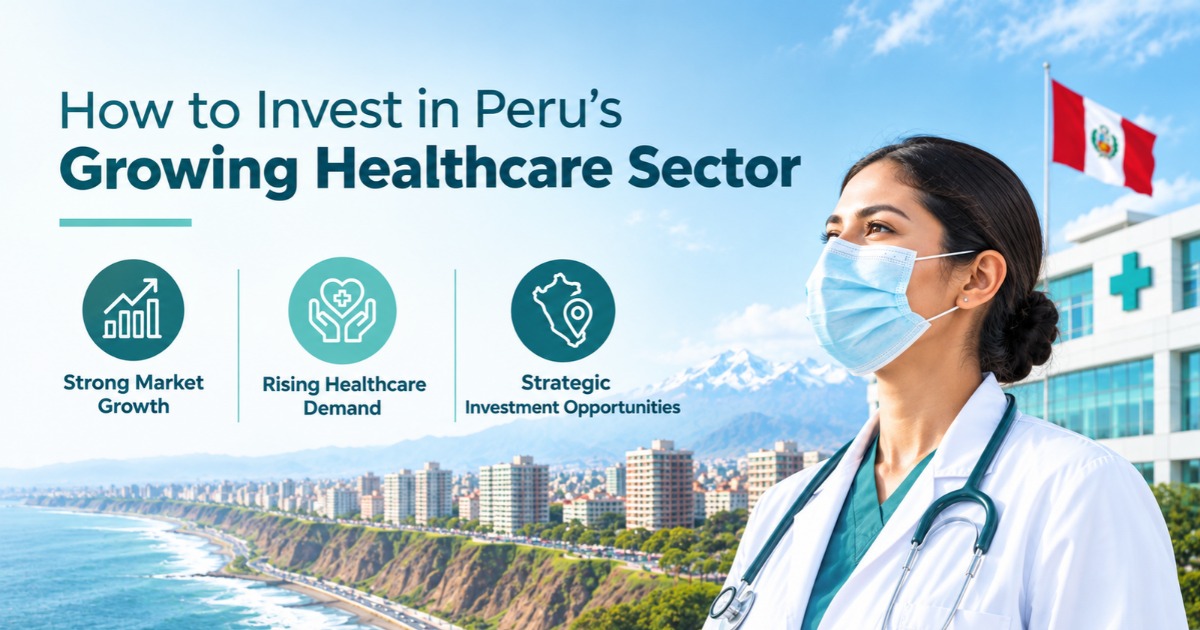
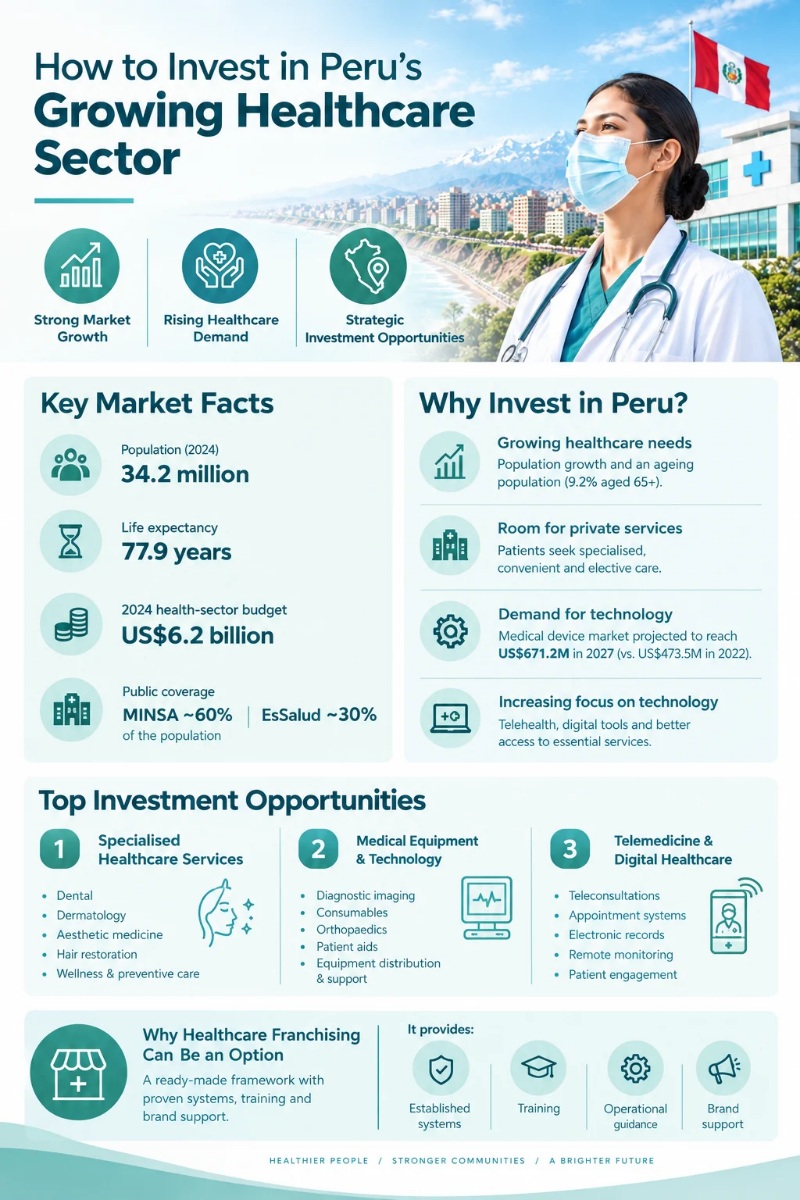
Peru’s healthcare sector is developing alongside a growing population, rising demand for specialised services, and continued investment in medical infrastructure and technology. In 2024, Peru’s population reached approximately 34.2 million, while life expectancy at birth reached 77.9 years, according to the Pan American Health Organization (PAHO).
For investors, this creates opportunities across healthcare services, medical technology, digital healthcare, and specialised treatments. If you are researching how to invest in Peru, understanding local demand, regulations, operating costs, and the right business model should come before committing capital.
Key Takeaways
- Peru has a mixed public-private healthcare system with opportunities for private healthcare providers and specialised services.
- Medical devices, digital healthcare, and specialised clinics are among the areas worth researching.
- Lima can offer access to a large concentration of healthcare demand, while other cities may provide opportunities with different competitive conditions.
- Healthcare franchising can give investors access to established systems, training, operational guidance, and brand support.
- Due diligence on regulations, medical staffing, location, investment requirements, and patient demand is essential.
Overview of Peru’s Healthcare Sector
Peru’s healthcare system includes public and private providers. The U.S. Department of Commerce describes it as “a mix of public and private entities”, with the public sector continuing to account for a substantial share of healthcare delivery. MINSA serves around 60% of Peru’s population, while EsSalud covers approximately 30%.
Healthcare investment is also receiving public attention. Peru’s 2024 health-sector budget was reported at approximately US$6.2 billion, with priorities including hospital and primary-care capacity, cancer prevention, vaccination, and mental health.
There are also clear areas where additional capacity can be useful. Coverage differs considerably between Lima and rural areas, while shortages of medical professionals, specialists, and certain supplies remain challenges.
These conditions make it important to assess a specific healthcare segment rather than treating the entire market as one investment category.
Why Invest in Peru’s Healthcare Sector?
Several factors can support healthcare investment in Peru.
Growing healthcare needs
PAHO reported that Peru’s population increased from about 26.6 million in 2000 to 34.2 million in 2024. People aged 65 and above accounted for 9.2% of the population in 2024.
Room for private healthcare services
Public healthcare remains dominant, but private providers can serve patients seeking specialised, convenient, or elective services.
Demand for healthcare technology
Peru’s medical device market was projected by the U.S. Department of Commerce to reach approximately US$671.2 million in 2027, compared with US$473.5 million in 2022. Diagnostic imaging, consumables, dental products, orthopaedics, patient aids, and other devices are included in the market.
Increasing focus on technology
PAHO’s 2024 work in Peru highlighted the use of technology alongside healthcare workforce development and efforts to improve access to essential services.
Invest in Healthcare Franchise in Peru
Join DHI TodayKey Healthcare Investment Opportunities in Peru
1. Specialised Healthcare Services
Specialised services can offer opportunities where patients are willing to seek dedicated expertise and personalised care. Potential areas include –
- Hair restoration and hair transplant clinics
- Dental clinics
- Dermatology
- Aesthetic medicine
- Cosmetic treatments
- Preventive and wellness services
Hair restoration deserves particular attention because it combines medical expertise with elective healthcare demand. A specialised clinic can build its business around consultation, diagnosis, treatment, aftercare, and long-term patient support.
Start Hair Restoration Clinic in Peru
Join DHI Today2. Medical Equipment and Technology
Medical devices represent another potential investment segment. The projected growth in Peru’s medical device market reflects demand across diagnostic imaging, consumables, dental products, orthopaedics, patient aids, and other equipment.
You could explore opportunities in equipment distribution, maintenance, diagnostic technology, clinic systems, or specialised medical devices. Local partnerships can be important, particularly when dealing with hospitals, procurement procedures, installation, and technical support.
3. Telemedicine and Digital Healthcare
Digital healthcare can help address geographical differences in access to medical services. Investment opportunities may include –
- Teleconsultation platforms
- Digital appointment systems
- Electronic medical records
- Remote monitoring
- Digital patient engagement
- Healthcare administration software
Before investing, assess internet access, patient adoption, data protection requirements, clinical workflows, and integration with local healthcare providers.
Why Healthcare Franchising Can Be an Option for Investors in Peru
Starting an independent healthcare business requires you to develop clinical protocols, recruit and train professionals, establish a brand, create operational systems, and build patient demand.
A franchise can provide an existing framework for these activities. Depending on the franchisor, you may receive training, operating procedures, marketing support, technology, site-selection guidance, and ongoing business assistance.
DHI’s current franchise information states that its model includes doctor training, operational support, marketing resources, CRM access, website assistance, and standard operating protocols. DHI International has a global network of 75 clinics across 45 countries and has treated more than 500,000 patients worldwide.
How to Invest in a Healthcare Franchise in Peru
Step 1 – Research the Local Healthcare Market
Study patient demographics, competitors, pricing, healthcare access, and demand in your target city.
Step 2 – Identify the Right Healthcare Segment
Decide whether your focus will be hair restoration, dental care, dermatology, aesthetics, diagnostics, digital healthcare, or another specialised area.
Step 3 – Compare Franchise Opportunities
Review brand reputation, territory availability, franchise fees, operating requirements, training, technology, marketing support, and renewal terms.
Step 4 – Understand Investment and Operating Costs
Prepare a complete budget covering:
- Franchise fees
- Clinic rent or property
- Interior fit-out
- Medical equipment
- Staff salaries
- Insurance
- Marketing
- Technology
- Working capital
- Regulatory and professional costs
Avoid evaluating an opportunity solely on its advertised return or payback period.
Step 5 – Review Training and Medical Support
Healthcare businesses require qualified professionals and appropriate clinical processes. Check exactly what training and certification the franchisor provides.
Step 6 – Select the Right Location
Consider population density, accessibility, nearby hospitals and clinics, competition, parking, visibility, and the socioeconomic profile of your target patients.
Step 7 – Understand Local Regulations
Peru’s Ministry of Health maintains specific regulations covering investment in the health sector, while healthcare businesses may have additional licensing and professional requirements depending on their activities.
Obtain advice from qualified local legal and healthcare professionals before signing agreements or opening a facility.
Step 8 – Develop a Business and Marketing Plan
Your plan should cover patient acquisition, pricing, staffing, projected revenue, operating expenses, digital marketing, referral networks, and expansion.
Major Cities to Consider for Healthcare Investment in Peru
- Lima should receive particular attention because it is Peru’s largest metropolitan market and has a high concentration of healthcare providers, specialists, businesses, and consumers.
- Arequipa can be researched as a regional healthcare centre serving southern Peru.
- Trujillo is another city worth evaluating because of its regional economic importance and established healthcare infrastructure.
However, city selection should follow market research rather than assumptions. Compare patient demand, competition, commercial rents, professional availability, and local purchasing power before making a decision.
Challenges of Investing in Peru’s Healthcare Market
Healthcare investment requires careful planning. Common challenges include:
- Regulatory and licensing requirements
- Shortages of specialised healthcare professionals
- Differences in healthcare access between urban and rural areas
- Competition among established providers
- Medical equipment procurement and maintenance
- Currency and operating-cost considerations
You can reduce these risks by working with local legal advisers, healthcare professionals, accountants, and experienced franchise partners. Building realistic financial projections and maintaining sufficient working capital can also help manage early-stage pressure.
Hair Restoration as a Healthcare Business Opportunity in Peru
Hair restoration can be a specialised healthcare opportunity for investors who want to enter the medical aesthetics segment. Demand can include men and women seeking solutions for different forms of hair loss, while related services can create additional patient touchpoints.
DHI International’s franchise model focuses exclusively on hair restoration and franchise partners receive theoretical and hands-on training, clinical and operational support, marketing assistance, and access to standardised protocols.
Partners looking to start a DHI franchise may need to invest approximately US$150,000–200,000, with lower-investment options potentially available for those who already operate a clinic. The franchise model also indicates potential for 30-40% annual sales growth and profit margins of up to 70%. Actual investment requirements and financial performance may vary by location, clinic setup, operating costs, and local market conditions.
For investors researching how to invest in Peru through a specialised healthcare franchise, hair restoration can therefore be evaluated alongside other healthcare segments rather than viewed separately from the wider sector.
Conclusion
Understanding how to invest in Peru starts with identifying a genuine healthcare need and matching it with a commercially sustainable business model. Specialised healthcare services, medical technology, digital healthcare, and healthcare franchises all offer areas worth researching.
If hair restoration interests you, a DHI franchise can provide access to an established international model, medical training, operational systems, and ongoing support. DHI International invites prospective franchise partners to enquire for detailed information about availability, investment requirements, and the franchise process.
FAQs
1. Can foreigners invest in Peru’s healthcare sector?
Foreign investors can explore healthcare opportunities in Peru, but the specific legal structure, licensing, professional requirements, taxation, and investment conditions depend on the business model. Obtain advice from qualified Peruvian legal and financial professionals before investing.
2. Is healthcare franchising available in Peru?
Healthcare franchising can be explored in specialised areas such as hair restoration, dental care, aesthetics, and other services. Availability, territory rights, investment requirements, and regulatory conditions depend on the individual franchisor and location.
3. What healthcare services are in demand in Peru?
Opportunities can be researched across specialised medical services, diagnostics, dental care, dermatology, aesthetics, digital healthcare, medical equipment, and hair restoration. Demand varies by city and patient segment.
4. How much does it cost to start a healthcare business in Peru?
There is no single investment figure. Costs depend on the healthcare segment, location, facility size, equipment, staffing, licensing, technology, marketing, and working capital. Franchise models may require additional fees and investment.
5. What should you consider before investing in a healthcare franchise?
Review the franchisor’s track record, territory rights, fees, training, medical support, operating requirements, marketing assistance, regulatory obligations, projected costs, and exit or renewal terms. Independent legal and financial due diligence is advisable.
6. Can you start a hair transplant clinic franchise in Peru?
A hair transplant franchise can be explored if the franchisor has territory availability and the proposed clinic meets local medical and business requirements. DHI International provides franchise training, operational support, marketing resources, and clinical protocols, subject to the specific franchise arrangement.